Mastering the art of preparing high-quality seafood at home transforms a standard dinner into a restaurant-level experience. Grilled scallops are a favorite for home cooks because they offer a unique combination of natural sweetness, gentle brininess, and a soft, custardy texture. Achieving that perfect sear requires minimal effort when you understand the fundamentals of heat and ingredient selection.
To elevate your culinary skills, it is essential to choose premium ingredients for teppanyaki dishes that maintain structural integrity under high heat. By focusing on the balance of flavors, you ensure that every component on your plate earns its place alongside the delicate protein. If you are wondering what to serve with scallops, remember that sides should provide acidity or crunch to complement the richness of the seafood. This guide provides everything you need to know to create a meal that highlights the pure, oceanic essence of grilled scallops.
Key Takeaways
- Select sashimi-grade, wild-caught proteins for the best texture and flavor profile.
- Bring seafood to room temperature before cooking to ensure even heat distribution.
- Use high-smoke-point oils to achieve a perfect crust without burning the delicate surface.
- Pair your meal with sides like citrus-dressed greens or vegetable purées to balance sweetness.
- Maintain high heat during the searing process to lock in natural juices effectively.
The Art of Selecting Fresh Scallops
When you want to serve delicious seafood, the quality of your scallops is paramount. Mastering the selection process ensures that your seared scallops turn out perfectly every time you fire up the grill.
Understanding Dry vs. Wet Scallops
The most important distinction to make at the market is between dry-packed and wet-packed scallops. Dry scallops are processed without any additives, allowing them to maintain their natural, sweet flavor profile.
In contrast, wet scallops are soaked in a solution of sodium tripolyphosphate. This chemical helps the meat retain water, which often leads to a rubbery texture and prevents a proper sear when cooking.
Identifying Quality and Freshness at the Market
When shopping for fresh scallops, look for pieces that are firm to the touch and have a slightly translucent, pearly white color. Avoid any that appear dull, slimy, or have a strong, fishy odor.
High-quality scallops should smell like the ocean—clean and slightly sweet. If you notice a milky liquid in the container, it is often a sign that they have been treated with chemicals or are not as fresh as they should be.
Proper Storage and Preparation Before Grilling
Once you bring your delicious seafood home, keep it cold until you are ready to cook. The best method is to place the scallops in a bowl filled with ice and store them in the coldest part of your refrigerator.
Before grilling, pat the scallops completely dry with paper towels. Removing excess moisture is essential for achieving that beautiful, golden-brown crust that defines a professional-grade meal.
Essential Tools for Perfect Grilled Scallops
Having the correct gear is the secret to ensuring your next scallop recipe turns out perfectly every time. When working with delicate seafood, the right equipment protects the texture while helping you achieve that signature golden crust. Investing in a few key items will transform your backyard grilling experience into a professional culinary event.
Choosing the Right Grill Grates
Your grill grates serve as the foundation for your scallop dish. It is vital to use a stiff wire brush to clean the grates thoroughly before you begin cooking. This simple step prevents the cross-contamination of flavors from previous meals, ensuring the natural sweetness of the seafood shines through.
Once clean, lightly coat the grates with a high-smoke point oil, such as avocado or grapeseed oil. This creates a non-stick barrier that keeps your fresh scallops from tearing when it is time to flip them. A well-maintained surface is the best way to guarantee a beautiful presentation.
The Importance of Skewers and Grill Baskets
Stability is a major concern when grilling smaller items. Using double skewers is an excellent technique to keep your seafood steady, preventing them from spinning or falling through the grates. This method makes the flipping process much smoother and more efficient.
Alternatively, a stainless steel grill basket is a fantastic tool for those who prefer not to skewer their food. It allows you to cook multiple pieces at once while maintaining total control over the heat. Both options ensure that your scallop recipe remains intact throughout the entire cooking duration.
Temperature Control and Heat Management
Mastering heat is the final piece of the puzzle for a high-quality scallop dish. You need a high-heat environment to achieve a quick, professional-grade sear without overcooking the center. Always preheat your grill for at least fifteen minutes to ensure even heat distribution across the entire surface.
| Tool | Primary Benefit | Best Use Case |
|---|---|---|
| Double Skewers | Stability | Individual searing |
| Grill Basket | Ease of handling | Batch cooking |
| Wire Brush | Hygiene | Surface preparation |
| Infrared Thermometer | Precision | Heat monitoring |
By monitoring your grill temperature, you protect the delicate nature of fresh scallops. Consistent heat management allows you to focus on timing, ensuring every bite is tender and perfectly cooked.
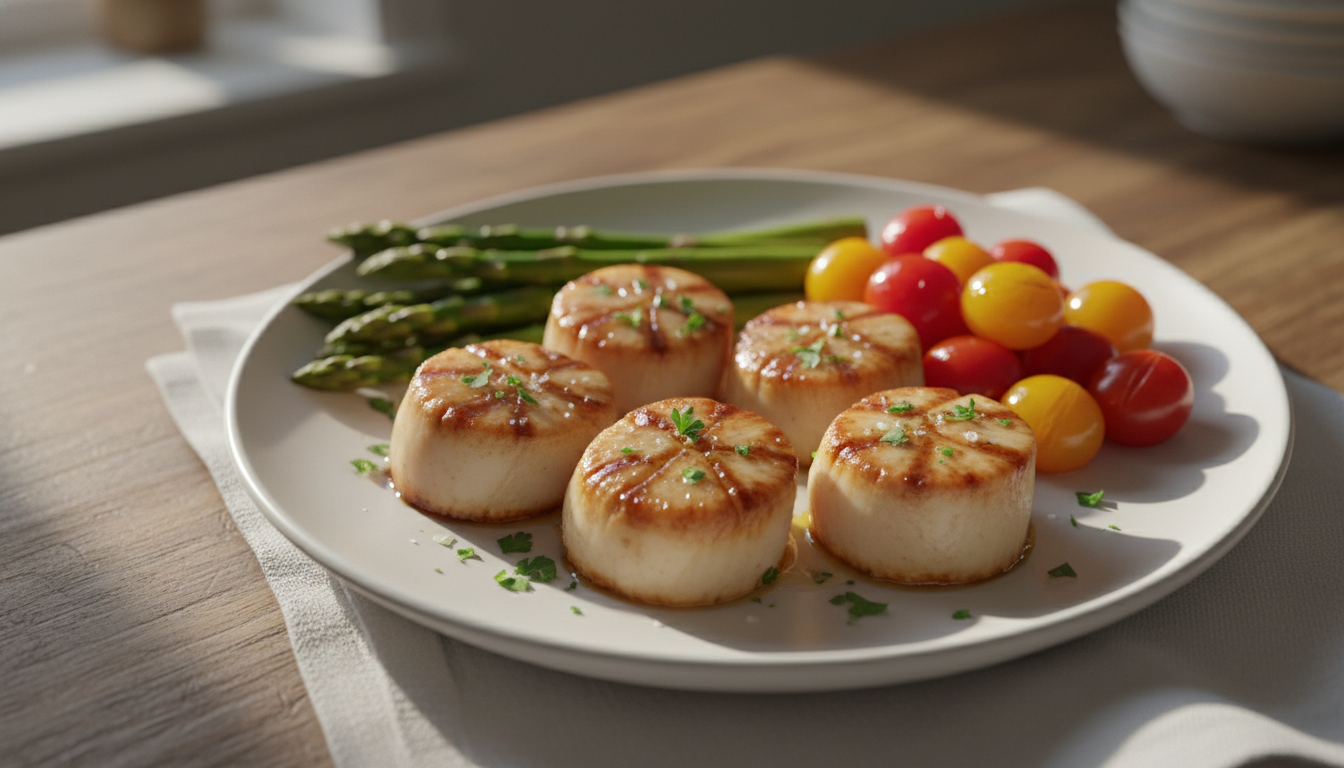
Grilled scallops lightly seasoned and served with the sides of your choice.
The secret to a memorable meal lies in how you season your ingredients before they touch the grill. When working with high-quality seafood, the philosophy of minimalist seasoning is key to enhancing rather than masking the natural flavors. By keeping your additions simple, you allow the delicate sweetness of the shellfish to shine through in every bite.
The Philosophy of Minimalist Seasoning
Many home cooks make the mistake of over-seasoning their seafood, which can easily overpower the dish. Instead, focus on using a few high-quality ingredients that complement the natural profile of the meat. This approach ensures that your tasty scallops remain the star of the show, providing a clean and elegant dining experience.
Best Dry Rubs and Herb Infusions
For a classic scallop recipe, you only need a few pantry staples. A light dusting of kosher salt and freshly cracked black pepper is often all that is required to create a delicious crust. If you prefer a bit more complexity, consider a subtle infusion of fresh thyme or finely chopped parsley.
It is vital to apply these seasonings just before you place them on the grill. Applying salt too early can draw out moisture, which prevents the perfect sear. By waiting until the last possible moment, you ensure the interior stays succulent and tender.
Balancing Flavors with Citrus and Sea Salt
Once your grilled scallops are off the heat, you can add a final layer of brightness. A gentle squeeze of fresh lemon or lime juice cuts through the richness of the seafood beautifully. This simple step transforms your dish into a vibrant, restaurant-quality meal.
Finish your plate with a light sprinkle of flaky sea salt to provide a satisfying crunch. This final touch balances the flavors and makes your grilled scallops truly stand out. Whether you are hosting a dinner party or enjoying a quiet night in, this simple scallop recipe is sure to impress.
Mastering the Grilling Technique
Transforming fresh scallops into a restaurant-quality meal starts with mastering the high-heat grilling technique. Achieving that signature golden crust while keeping the center buttery and soft is a skill every home cook can learn. By focusing on temperature control, you turn a simple seafood entree into a true culinary highlight.
Preparing the Grill for High-Heat Searing
To get the best results, you must prepare your grill for medium-high heat. Aim for a consistent temperature between 425 and 450 degrees Fahrenheit. This intense heat is necessary to create a beautiful sear without drying out the delicate meat.
Ensure your grill grates are clean and lightly oiled before you begin. A well-prepped surface prevents sticking and helps you achieve those professional-looking grill marks. Consistent heat is the foundation of any successful scallop recipe.
Timing the Sear for a Golden Crust
Once the grill reaches the target temperature, place your seasoned scallops directly over the heat. Resist the urge to move them immediately, as this prevents the crust from forming properly. Let them sear undisturbed for about two minutes on the first side.
You will notice the edges turning opaque and a golden-brown color developing on the bottom. This visual cue indicates that the protein has released from the grates. Carefully flip them once to sear the other side for an additional ninety seconds.
Avoiding Overcooking and Maintaining Tenderness
The biggest mistake many cooks make is leaving the seafood on the heat for too long. Scallops cook very quickly, and even an extra minute can change their texture from tender to rubbery. Keep a close eye on the color and firmness to ensure they remain succulent.
If you are unsure, use a pair of tongs to gently press the center of the scallop. It should feel firm yet springy to the touch. Remove them from the grill immediately once they reach this stage to preserve their natural sweetness.
| Heat Level | Searing Time (Side 1) | Searing Time (Side 2) | Result |
|---|---|---|---|
| 425°F | 2.5 Minutes | 1.5 Minutes | Light Sear |
| 450°F | 2 Minutes | 1 Minute | Deep Caramelization |
| 475°F | 1.5 Minutes | 1 Minute | Charred Crust |
Classic Side Dishes to Complement Your Scallops
When building a beautiful scallop platter, the right side dishes provide the perfect balance of flavor and texture. The goal is to enhance the natural sweetness of the shellfish without masking its delicate profile. By focusing on acidity, crunch, or silkiness, you can create a truly harmonious dining experience.
Light Vegetable Pairings for a Balanced Meal
Light vegetables are excellent for framing your seared scallops without competing for attention. Wilted spinach with a hint of garlic offers a silky texture that pairs beautifully with the tender meat. Alternatively, grilled asparagus provides a smoky, earthy note that complements the char from the grill.
Starchy Sides That Soak Up Scallop Juices
If you are looking to turn your dish into a more substantial seafood entree, consider incorporating a starch. Creamy risotto is a classic choice, as its rich, buttery base effectively absorbs the flavorful juices released during cooking. A smooth parsnip purée also works wonders, offering a subtle sweetness that mirrors the profile of the scallops.
Fresh Salads and Slaws for Texture Contrast
To keep each bite feeling light and refreshing, you should introduce a crisp element to your plate. Fresh salads featuring peppery arugula or a bright citrus vinaigrette provide the necessary acidity to cut through the richness of the butter. A crunchy fennel slaw adds a sophisticated texture contrast that elevates the entire meal.
| Side Dish Category | Best Examples | Flavor Contribution |
|---|---|---|
| Vegetables | Grilled Asparagus | Smoky and Earthy |
| Starches | Creamy Risotto | Rich and Savory |
| Salads | Fennel Slaw | Acidic and Crunchy |
Creative Flavor Profiles and Garnishes
Elevating your next scallop dish requires a touch of creativity and the right finishing touches. By focusing on both visual appeal and flavor complexity, you can transform a simple meal into a truly memorable dining experience. Small adjustments to your final presentation often make the biggest impact on your guests.
Adding Compound Butters for Richness
Compound butters are a secret weapon for any home cook looking to add a luxurious finish. You can easily whip up a batch using softened butter mixed with fresh lemon zest and chopped herbs. Spooning this mixture over your tasty scallops right after they come off the grill creates a rich, nutty sauce that melts beautifully.
- Lemon and dill butter for a bright, zesty profile.
- Garlic and parsley butter for a classic, savory depth.
- Chili-lime butter to provide a subtle, warming kick.
Incorporating Global Spices for a Modern Twist
Moving beyond traditional salt and pepper allows you to experiment with bold, international flavors. A unique scallop seasoning blend can introduce exciting dimensions that surprise the palate. Consider these global inspirations to modernize your cooking:
Try dusting your seafood with smoked paprika or za’atar for an earthy, aromatic crust. These spices work well because they do not overpower the natural sweetness of the shellfish. Carefully balancing these bold elements ensures that the delicate flavor of the meat remains the star of the plate.
The Role of Fresh Herbs and Edible Flowers
Visual presentation is just as important as the taste when serving tasty scallops. Fresh herbs like micro-cilantro or chive blossoms add a vibrant pop of color that makes your plate look professional. Edible flowers, such as pansies or nasturtiums, provide a delicate texture contrast that delights the senses.
Using these garnishes effectively turns your scallop dish into a work of art. Remember to apply them just before serving to keep them crisp and fresh. This final step ensures that your meal looks as good as it tastes, leaving a lasting impression on everyone at the table.
Pairing Beverages with Grilled Seafood
Finding the right beverage can transform a simple scallop dish into a gourmet experience. A well-chosen drink balances the natural sweetness of the seafood while highlighting the charred notes from the grill.
Selecting White Wines for Delicate Flavors
Crisp white wines with high acidity are ideal for cutting through the richness of seared seafood. Look for bottles like Sauvignon Blanc or dry Riesling to complement your scallop platter. These wines provide a refreshing contrast that keeps your palate engaged throughout the meal.
“The secret to a perfect pairing lies in matching the intensity of the wine with the subtle, sweet profile of the seafood.”
Craft Beer Pairings for Grilled Scallops
For beer enthusiasts, specific styles can harmonize beautifully with the smoky notes of the grill. A light Pilsner or a crisp Kölsch works wonders without overpowering the delicate scallop seasoning. These beers offer a clean finish that respects the integrity of the ingredients.
If you prefer something with more character, a dry-hopped Pale Ale can add a layer of complexity. Just ensure the bitterness remains low to avoid masking the natural flavors of your meal.
Non-Alcoholic Refreshments and Infused Waters
Non-alcoholic options provide a clean and palate-cleansing finish to your dining experience. Infused waters with cucumber, mint, or lemon are excellent choices that do not interfere with your scallop seasoning. These refreshing drinks keep the focus on the quality of the food while ensuring you stay hydrated.
| Beverage Type | Recommended Style | Flavor Impact |
|---|---|---|
| White Wine | Sauvignon Blanc | High acidity cuts richness |
| Craft Beer | Pilsner | Clean, crisp finish |
| Infused Water | Cucumber & Mint | Refreshing palate cleanser |
Ultimately, the best pairing is one that you enjoy most with your guests. Whether you choose a classic wine or a light infused water, the goal is to enhance the overall enjoyment of your scallop platter.
Common Mistakes and How to Avoid Them
Preparing a beautiful scallop platter should be a stress-free experience, provided you know how to navigate potential issues. Even the most seasoned home chefs can face hurdles when preparing a delicate seafood entree. By understanding a few simple techniques, you can ensure your grilled scallops turn out perfectly every time.
Preventing Scallops from Sticking to the Grill
The most common frustration when cooking is having your food adhere to the metal grates. To prevent this, always ensure your grill is thoroughly cleaned and well-oiled before you begin. A high-smoke point oil, such as avocado or grapeseed, works best for this purpose.
Using double skewers is a game-changer for stability. This simple trick prevents the scallops from spinning or sticking when you attempt to flip them. It allows you to turn multiple pieces at once with total control.
Managing Flare-ups During the Cooking Process
Flare-ups often occur when fat drips onto the hot coals or burners. While a little flame adds flavor, excessive fire can char the exterior of your seafood too quickly. Keep a spray bottle of water nearby to safely dampen any sudden bursts of flame.
You should also maintain a designated “cool zone” on your grill. If the heat becomes too intense, move your food to this area to finish cooking gently. This technique helps you maintain consistent heat without burning your meal.
Troubleshooting Texture Issues
The biggest challenge with this dish is avoiding a rubbery texture. Overcooking is the primary culprit, as these mollusks cook very quickly over high heat. Keep a close eye on the color and firmness to ensure they remain tender.
- Watch the color: Look for a golden-brown crust on both sides.
- Check the center: The middle should be opaque and slightly firm to the touch.
- Resting time: Let them sit for a minute after removing them from the heat to lock in juices.
If you find your results are consistently tough, try reducing your cooking time by thirty seconds per side. Precision is key when working with such a delicate ingredient. With these adjustments, you will master the art of the perfect grill session.
Conclusion
Mastering the art of grilling brings a new level of sophistication to your kitchen. You now possess the skills to transform simple ingredients into elegant, delicious seafood meals that rival top-tier restaurants.
Focusing on high-quality sourcing and precise heat control ensures your seared scallops turn out perfect every time. These techniques provide a solid foundation for your future culinary experiments.
Feel free to explore bold spice rubs or unique compound butters to customize your plate. Your guests will surely appreciate the effort put into crafting such tasty scallops for a memorable dinner.
Share your favorite flavor combinations with friends to spread the joy of outdoor cooking. Every meal is an opportunity to refine your craft and enjoy the process of preparing fresh, high-quality ingredients.