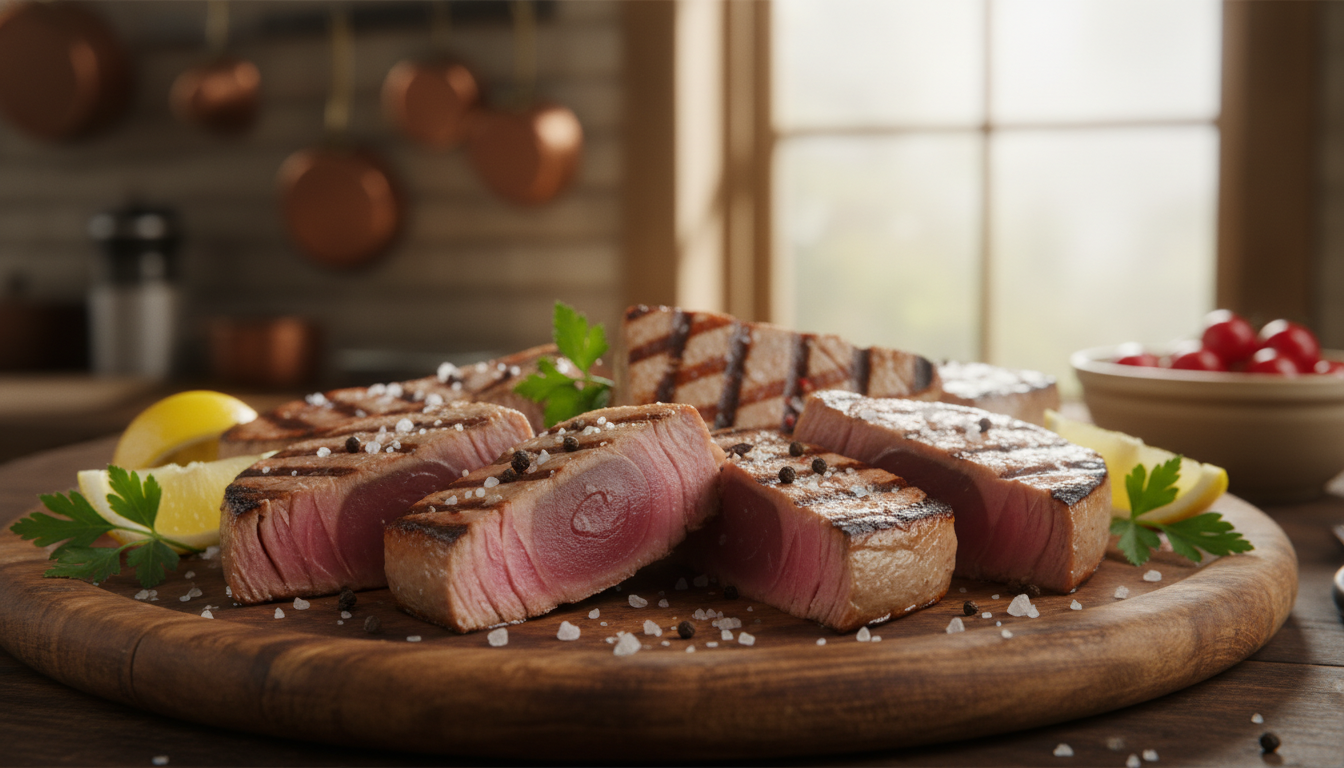
Creating a restaurant-quality meal in your own kitchen is easier than you might think. Many home cooks feel intimidated by high-end seafood, but the secret lies in simplicity. When you prepare delicious tuna sliced and grilled, you unlock a world of flavor that feels both elegant and healthy.
The key is to focus on high-quality ingredients. By keeping your preparation minimal, you allow the natural, buttery texture of the fish to shine. It is a perfect choice for anyone wanting to impress guests or enjoy a quick, nutritious dinner.
Once you master the heat, you will find that being seasoned with salt and pepper is all you need to elevate this dish. Achieving that perfect, rare center is a skill that will quickly become a staple in your culinary repertoire.
Key Takeaways
- Focus on sourcing the freshest fish available for the best results.
- High heat is essential to achieve a perfect sear while keeping the center rare.
- Minimal seasoning highlights the natural, buttery flavor of the seafood.
- Mastering this technique allows you to create impressive meals in minutes.
- Proper preparation at home is both healthy and cost-effective.
Selecting the Perfect Tuna Steak for Grilling
The foundation of any great tuna recipe begins long before you fire up the grill. Choosing the right cut of fish is the most critical step in ensuring your meal turns out perfectly. By focusing on quality, you set yourself up for success every time you cook.
Understanding Tuna Grades and Sustainability
When shopping for fish, always look for labels that indicate sustainable harvesting practices. Responsible sourcing protects our oceans while ensuring you receive a superior product. High-quality loins are often graded by their fat content and color, which directly impacts the final flavor of your dish.
Identifying Freshness by Sight and Smell
Fresh tuna should look vibrant and moist, never dull or dried out. A high-quality steak will have a firm texture and a clean, oceanic scent rather than a strong, fishy odor. If the surface appears shiny and translucent, you have likely found a fresh piece that is perfect for an easy tuna dinner.
Choosing Between Ahi and Bluefin Varieties
Different varieties offer unique textures and flavor profiles that cater to various preferences. Whether you choose Yellowfin, also known as Ahi, or the rich, buttery Bluefin, your selection will define the character of your meal. Understanding these differences helps you match the fish to your desired cooking style.
| Variety | Flavor Profile | Best Use |
|---|---|---|
| Ahi (Yellowfin) | Mild and firm | Quick searing |
| Bluefin | Rich and buttery | Special occasions |
| Albacore | Light and flaky | Light grilling |
Selecting the right variety ensures that your tuna recipe remains a highlight of your week. With these tips, you can confidently prepare an easy tuna dinner that impresses your guests and satisfies your cravings.
Essential Tools for Achieving the Perfect Sear
Achieving that signature crust on your fish requires specific gear and careful preparation. When you aim to prepare grilled tuna at home, the quality of your equipment directly influences the final texture and flavor of your meal.
Selecting the Right Grill Grates
The surface of your grill is the most critical point of contact for your food. To ensure your fish does not tear, you must maintain clean and well-seasoned grates.
Before you begin, always brush your grates with a high-heat neutral or vegetable oil. This simple step creates a non-stick barrier that is essential for a successful grilled fish recipe.
Importance of High-Heat Cooking Utensils
Using the correct utensils allows you to handle delicate proteins with precision. Avoid plastic or silicone tools that may melt under the intense heat required for a proper sear.
Instead, invest in heavy-duty stainless steel tongs or a wide, thin-edged spatula. These tools provide the grip and leverage needed to flip your fish quickly without damaging the tender flesh.
Preparing Your Grill for Optimal Temperature Control
Consistency is the hallmark of a master griller. You must ensure your grill reaches a high, steady temperature before you start cooking your grilled tuna.
Preheating your grill for at least fifteen minutes helps stabilize the heat distribution across the grates. By managing your fire effectively, you lock in natural juices while creating a beautiful, flavorful crust on the exterior of the fish.
Delicious tuna sliced and grilled, seasoned with salt and pepper.
When it comes to preparing high-quality fish, simplicity is often the secret to success. A Delicious tuna sliced and grilled, seasoned with salt and pepper. allows the natural, buttery characteristics of the fish to take center stage without being masked by heavy sauces or complex spice rubs.
The Philosophy of Minimalist Seasoning
The core philosophy behind this approach is to respect the integrity of the ingredient. By keeping your additions minimal, you ensure that the delicate flavor profile of the fish remains the star of the show. Less is truly more when you are working with premium cuts of seafood.
Why Kosher Salt and Freshly Cracked Pepper Reign Supreme
Choosing the right ingredients is vital for a successful outcome. Kosher salt is preferred by chefs because its coarse texture makes it easy to handle and distribute evenly. It dissolves perfectly to create a savory, crisp exterior.
Freshly cracked black pepper provides a bold, aromatic punch that pre-ground varieties simply cannot match. When combined, these two staples form the ultimate tuna seasoning. They create a balanced crust that enhances the richness of the fish rather than overpowering it.
Applying Seasoning for an Even Crust
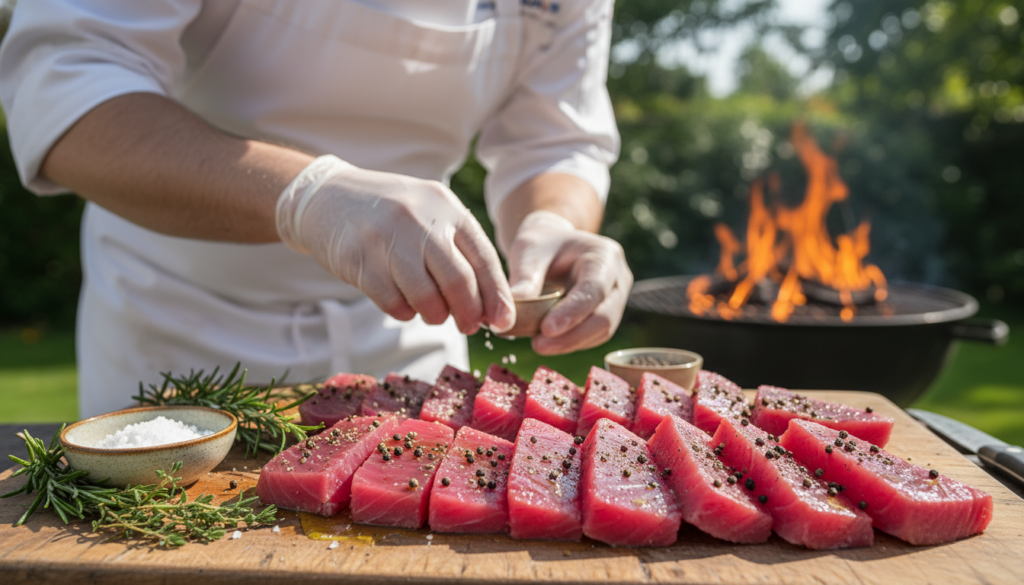
To achieve a consistent flavor, you must apply your seasoning with care. Start by patting the fish dry, as moisture can prevent the salt and pepper from adhering properly. Sprinkle the seasoning from a few inches above the steak to ensure an even, uniform coating across the entire surface.
Do not be afraid to be generous with your application. A well-crusted salt and pepper tuna will develop a beautiful, flavorful sear that locks in moisture. This simple technique is the hallmark of a perfectly executed meal that highlights the quality of your ingredients.
Preparing Your Tuna for the Grill
Achieving the perfect sear on your fish starts long before the heat hits the grates. Proper preparation is the secret to ensuring your grilled tuna cooks evenly from the edge to the center. By following a few simple steps, you can elevate your cooking game significantly.
Proper Slicing Techniques for Uniform Cooking
Consistency is vital when working with high-quality steaks. You should aim to slice your fish into uniform portions, ideally about one inch thick. This ensures that every piece of your grilled fish recipe reaches the desired level of doneness at the same time.
Bringing Fish to Room Temperature Before Grilling
Many home cooks make the mistake of placing cold fish directly onto a hot grill. Taking your tuna out of the refrigerator about 15 to 20 minutes before cooking allows the internal temperature to rise. This simple step prevents the center from remaining cold while the exterior sears, resulting in a much more tender texture.
Patting Dry for a Superior Sear
Moisture is the enemy of a beautiful, golden-brown crust. Before you apply any seasoning, use paper towels to pat the surface of the fish until it is completely dry. If you skip this step, the excess moisture will cause the fish to steam rather than sear. Dry surfaces are essential for achieving that professional-grade finish on your grilled tuna.
By taking these precautions, you ensure that your next grilled fish recipe is a success. Proper preparation is the foundation of a delicious meal that your guests will surely enjoy.
Mastering the Grilling Process
Transforming a raw steak into a culinary masterpiece happens in just a few short minutes on the grill. Mastering the heat is the most critical step in executing a successful tuna recipe that avoids the common pitfall of overcooking.
Determining the Ideal Grill Temperature
To achieve that signature crust, your grill must be exceptionally hot. You should aim for a high-heat environment, typically between 450°F and 500°F, to ensure the exterior sears instantly upon contact.
A scorching surface prevents the fish from sticking and locks in the natural juices. Always preheat your grill for at least 15 minutes before placing the fish on the grates to ensure consistent heat distribution.
Timing the Sear for Rare to Medium-Rare Results
Precision is the secret to a perfect tuna recipe. For a standard steak, you should grill over high heat for approximately 2 minutes per side to achieve a beautiful rare center.
If you prefer a medium-rare finish, add an extra 30 to 60 seconds per side depending on the thickness of the cut. Keep a close watch on the color change creeping up the sides of the steak to gauge your progress accurately.
Techniques for Flipping Without Tearing the Flesh
Handling delicate fish requires a gentle touch to maintain its structural integrity. Use a wide, thin metal spatula to slide underneath the steak in one smooth motion.
Avoid using tongs, as they can easily pierce or crush the tender meat of your salt and pepper tuna. By flipping only once, you ensure a clean, professional appearance that highlights the quality of your salt and pepper tuna preparation.
Flavor Enhancements and Complementary Sides
Creating a truly memorable meal involves balancing the bold, meaty texture of tuna with bright, acidic notes. While the fish is delicious on its own, the right accompaniments can transform it into a truly flavorful seafood dish. When you prioritize premium ingredients, you ensure that every component of your plate shines with quality.
Citrus Pairings to Brighten the Flavor Profile
Citrus elements act as a natural palate cleanser, cutting through the inherent richness of the fish. A simple squeeze of fresh lemon juice or a sprinkle of zest adds a vibrant contrast that awakens the senses. This acidity is essential for maintaining a light, refreshing profile in your tasty tuna dish.
Herbs That Elevate Simple Salt and Pepper
Fresh herbs provide an aromatic layer that complements the minimalist seasoning of your grill work. Consider using chopped parsley, chives, or even a hint of fresh dill to add complexity. These green additions bring a sophisticated finish to your flavorful seafood dish without overpowering the delicate taste of the tuna.
Selecting Sides That Balance the Richness of Tuna
Choosing the right side dishes is key to rounding out your meal perfectly. You want items that offer a different texture or temperature to keep the dining experience interesting. A crisp bean salad or a bed of lightly dressed greens provides the necessary crunch to balance the soft, buttery texture of the fish.
| Side Dish Type | Flavor Profile | Best Pairing |
|---|---|---|
| Citrus Salad | Bright & Acidic | Lemon-Herb Tuna |
| Green Beans | Crisp & Earthy | Garlic-Seared Tuna |
| Quinoa Bowl | Nutty & Light | Pepper-Crusted Tuna |
By thoughtfully selecting these additions, you ensure that every bite of your tasty tuna dish is balanced and satisfying. Experimenting with these pairings allows you to customize your meal to suit any occasion or preference.
Common Mistakes to Avoid When Grilling Tuna
Achieving a perfect sear on your fish is simple if you know how to sidestep a few frequent mistakes. Even experienced cooks can encounter challenges when preparing this delicate protein, but most errors are easily avoidable. By staying mindful of your technique, you ensure your tasty tuna dish remains a highlight of your meal.
Preventing Overcooking and Dry Texture
The most common error is leaving the fish on the heat for too long. Tuna is a lean fish that can quickly turn into a dry, flaky disappointment if it loses too much moisture. Always aim for a beautiful, rare or medium-rare center to maintain the buttery texture that makes this meal so special.
Avoiding Sticking Issues on the Grill
Nothing ruins an easy tuna dinner faster than having your steak tear apart when you try to flip it. To prevent sticking, ensure your grill grates are thoroughly cleaned and well-oiled before the fish touches the surface. You should also allow the tuna to develop a proper crust before attempting to move it, as this natural sear helps the meat release from the metal.
- Preheat your grill to a high temperature to create an immediate sear.
- Lightly brush the tuna steak with high-smoke-point oil, such as avocado or grapeseed oil.
- Avoid moving the fish prematurely; let the heat do the work for you.
Managing Flare-ups During the Cooking Process
Flare-ups can char the exterior of your tuna before the inside is ready, leading to an uneven flavor profile. If you notice flames rising, move the fish to a cooler zone of the grill until the fire subsides. Keeping a spray bottle of water nearby is a helpful trick for an easy tuna dinner, but use it sparingly to avoid cooling the grates too much.
By mastering these simple adjustments, you can consistently serve a tasty tuna dish that impresses your guests. Attention to detail is the secret ingredient to success at the grill.
Health Benefits of Incorporating Grilled Tuna into Your Diet
You might be surprised to learn that your favorite grilled fish is actually a nutritional powerhouse. While many people focus on the perfect tuna seasoning to enhance the crust, the internal benefits are just as impressive. Choosing this lean fish provides your body with high-quality fuel that supports a vibrant and active lifestyle.
Nutritional Profile of High-Quality Tuna
Tuna is packed with essential vitamins and minerals that are often missing from modern diets. It is an excellent source of Vitamin B12, niacin, and selenium, which help maintain energy levels and support immune function. Even when you keep your tuna seasoning simple with just salt and pepper, you are consuming a nutrient-dense meal that is naturally low in calories.
“The food you eat can be either the safest and most powerful form of medicine or the slowest form of poison.”
Omega-3 Fatty Acids and Heart Health
One of the most significant advantages of eating tuna is its high concentration of omega-3 fatty acids. These healthy fats are essential for cardiovascular health, as they help reduce inflammation throughout the body. Regular consumption of these fatty acids can support healthy blood pressure levels and improve overall heart function.
| Nutrient | Grilled Tuna (3oz) | Chicken Breast (3oz) |
|---|---|---|
| Protein | 25g | 26g |
| Omega-3s | High | Low |
| Calories | 110 | 140 |
Protein Content for Active Lifestyles
For those who lead an active life, protein is the building block for muscle repair and recovery. Tuna provides a complete protein source, meaning it contains all the essential amino acids your body cannot produce on its own. Whether you are a weekend hiker or a daily gym-goer, adding this fish to your diet helps maintain lean muscle mass.
By focusing on quality ingredients and a light tuna seasoning, you ensure that your meal remains healthy without sacrificing flavor. It is a simple way to prioritize your wellness while enjoying a delicious, restaurant-quality dinner at home.
Conclusion
Grilling tuna transforms a simple piece of fish into a restaurant-quality meal right in your own kitchen. This flavorful seafood dish relies on high heat and minimal prep to deliver impressive results every time.
You now possess the knowledge to select the best cuts and manage the grill with confidence. Focus on the quality of your ingredients to ensure every bite shines with natural richness.
Sharing this meal with guests creates a memorable dining experience that feels both sophisticated and effortless. You might find that your friends request this recipe for every summer gathering.
Take a moment to experiment with the dipping sauce ratios or fresh herb garnishes to suit your personal palate. Mastering this technique allows you to serve a healthy, protein-packed, and flavorful seafood dish whenever the craving strikes.
Enjoy the process of perfecting your sear and savoring the fresh, clean taste of perfectly grilled tuna. Your journey toward becoming a confident home chef starts with these simple, effective steps.