Introduction to Grilled Teppanyaki Scallops
Grilled teppanyaki scallops with garlic butter represent the pinnacle of Japanese steakhouse cuisine, offering a delicate balance of rich, savory flavors and perfectly seared seafood. The teppanyaki cooking style, which utilizes an iron griddle to cook food at high temperatures, is ideal for scallops. It ensures a beautifully caramelized crust while maintaining a tender, translucent center. Whether you are a culinary enthusiast looking to recreate this restaurant-quality dish at home or planning a luxurious gathering, understanding the nuances of this recipe is essential.
For those looking to bring professional flair to their backyard, finding an Affordable Hibachi Chef for Hire in California: Your Guide to Backyard Teppanyaki is a fantastic option. However, mastering the technique yourself can be equally rewarding.
Selecting the Best Scallops
The foundation of exceptional grilled teppanyaki scallops with garlic butter is the quality of the seafood. Sea scallops are preferred over bay scallops for this preparation due to their larger size, which allows for an optimal sear without overcooking the interior.
Dry vs. Wet Scallops
When purchasing scallops, always opt for “dry” scallops. Wet scallops are treated with a sodium tripolyphosphate (STPP) solution to extend shelf life and add water weight. When cooked, wet scallops release this excess moisture, preventing a proper sear and often resulting in a rubbery texture. Dry scallops, on the other hand, are untreated, offering a sweeter, more concentrated flavor and achieving a perfect crust on the teppanyaki grill.
The Perfect Garlic Butter Sauce
Garlic butter is the quintessential accompaniment to teppanyaki scallops. The sauce enhances the natural sweetness of the scallops without overpowering them. A traditional teppanyaki garlic butter includes high-quality unsalted butter, finely minced fresh garlic, a splash of soy sauce for umami, and sometimes a hint of lemon juice to cut through the richness.
If you are exploring upscale dining options, Luxury Private Event Catering in the LA Area: Elevate Your Gatherings often features elevated versions of this classic sauce, perhaps incorporating black garlic or truffle nuances.
Teppanyaki Grilling Techniques
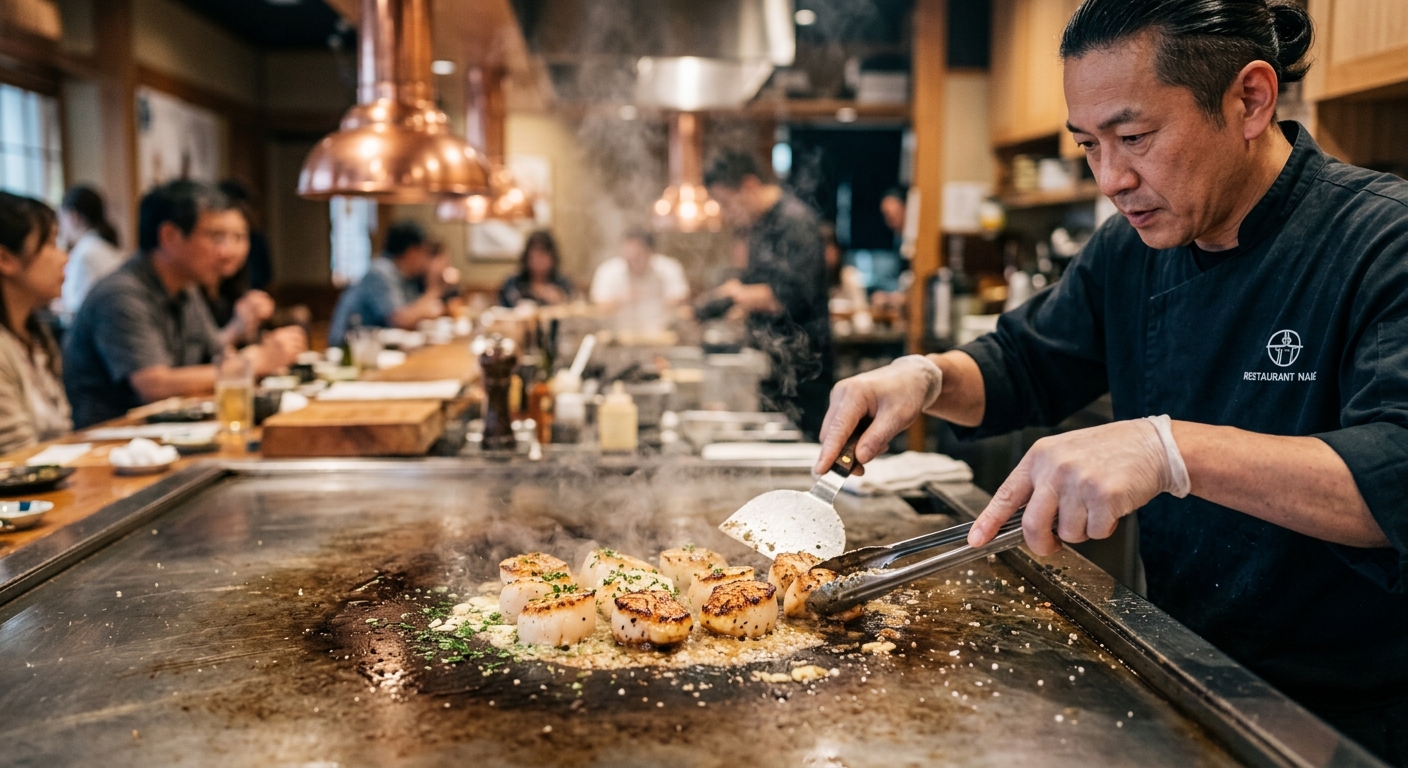
Cooking on a teppanyaki griddle requires precise temperature control. The surface must be hot enough to sear the scallops instantly, locking in juices, but not so hot that the garlic butter burns.
Preparation Steps
- Pat Dry: Thoroughly dry the scallops with paper towels. Any surface moisture will cause the scallops to steam rather than sear.
- Seasoning: Keep it simple with sea salt and freshly cracked black pepper just before grilling.
- Grill Temperature: Preheat the teppanyaki grill to medium-high (around 400°F).
- Oil the Surface: Use a high smoke point oil, such as grapeseed or avocado oil, to lightly coat the grill before adding the scallops.
For those who appreciate the theatrical elements of teppanyaki cooking, consider reviewing The Ultimate Guide to Luxury Catering with Kobe Beef Teppanyaki, which highlights how professional chefs manage different proteins on the grill.
Step-by-Step Cooking Guide
Once your grill is hot and your scallops are prepped, it is time to cook.
1. Place the scallops onto the oiled teppanyaki surface, ensuring they are not crowded. Crowding lowers the grill temperature and causes steaming.
2. Let them sear undisturbed for 1.5 to 2 minutes until a golden-brown crust forms on the bottom.
3. Flip the scallops. Immediately add a generous dollop of your prepared garlic butter to each scallop, allowing it to melt and baste the seafood.
4. Cook for an additional 1 to 1.5 minutes. The scallops should feel slightly springy to the touch. Do not overcook.
5. Remove from the grill and serve immediately, garnished with freshly chopped parsley or chives.
Comparing Scallop Types for Teppanyaki
To help you choose the best ingredient for your teppanyaki experience, here is a comparison of common scallop types.
| Scallop Type | Size | Best Cooking Method | Flavor Profile |
|---|---|---|---|
| Sea Scallops (Dry) | Large (10-20 per lb) | Pan-searing, Teppanyaki | Sweet, rich, natural marine flavor |
| Sea Scallops (Wet) | Large (10-20 per lb) | Braising, Soups | Mild, can taste slightly soapy due to STPP |
| Bay Scallops | Small (70-120 per lb) | Quick sautés, Ceviche | Very sweet, delicate |
Pairing and Serving Suggestions
Grilled teppanyaki scallops with garlic butter pair beautifully with a variety of sides. Consider serving them alongside teppanyaki-style vegetables like zucchini, onions, and mushrooms. A bed of perfectly cooked garlic fried rice or steamed jasmine rice is also an excellent choice to soak up the flavorful garlic butter sauce.
If you are planning a large event, such as a wedding, teppanyaki can be a memorable catering choice. You can learn more by reading Japanese Teppanyaki Food Truck Wedding Catering: A Complete Guide.
Conclusion
Mastering grilled teppanyaki scallops with garlic butter elevates your culinary repertoire, allowing you to bring the luxury and excitement of a Japanese steakhouse into your own home. By selecting premium dry sea scallops, preparing a balanced garlic butter sauce, and executing precise grilling techniques, you can achieve a dish that is both visually stunning and incredibly delicious. Whether cooked for an intimate dinner or a grand celebration, these scallops are guaranteed to impress.
Frequently Asked Questions
Why did my scallops turn out rubbery?
Rubbery scallops are usually the result of overcooking. Scallops cook very quickly, requiring only about 1.5 to 2 minutes per side on a hot grill. Using wet scallops can also contribute to a tough texture due to the added moisture and chemicals.
Can I make teppanyaki scallops in a regular frying pan?
Yes, while a teppanyaki griddle is ideal for its large, flat surface and even heat distribution, you can achieve similar results using a high-quality cast-iron skillet or a heavy-bottomed stainless steel pan.
What oil is best for cooking teppanyaki scallops?
It is best to use an oil with a high smoke point for the initial sear, such as avocado oil, grapeseed oil, or canola oil. Avoid using extra virgin olive oil or just butter for the initial sear, as they can burn at high temperatures. Add the butter only toward the end of the cooking process.