Introduction to Teppanyaki Seafood Excellence
Teppanyaki cooking represents a sophisticated blend of culinary skill and theatrical presentation, originating from Japan and celebrated worldwide. Among the most luxurious offerings on any teppanyaki menu are premium seafood selections. This article provides a comprehensive guide to mastering a grilled lobster and scallops teppanyaki recipe, allowing you to recreate the magic of high-end Japanese steakhouses in your own home.
Creating restaurant-quality seafood on a flat-top grill requires precise temperature control, quality ingredients, and the right combination of seasonings. Whether you are hosting an intimate dinner party or simply elevating your weekend culinary repertoire, mastering these techniques will yield extraordinary results.
Selecting the Finest Ingredients
The foundation of any exceptional seafood dish lies in the quality of its components. When preparing this teppanyaki feast, sourcing the freshest ingredients is paramount.
Choosing the Lobster
For the best results, select cold-water lobster tails, as they tend to yield firmer, sweeter meat compared to warm-water varieties. Ensure the shells are hard and free of discoloration. If using frozen tails, thaw them slowly in the refrigerator overnight to preserve their delicate texture.
Sourcing Scallops
Opt for large, dry-packed sea scallops (typically designated as U-10 or U-12). Dry-packed scallops have not been treated with phosphates, meaning they will sear beautifully and develop a caramelized crust, unlike wet-packed scallops which tend to steam in their own released moisture. If you enjoy expanding your seafood repertoire, you might also want to explore how to Master the Grill: The Ultimate Grilled Hibachi Shrimp and Scallops Recipe.
Essential Equipment for Teppanyaki Cooking
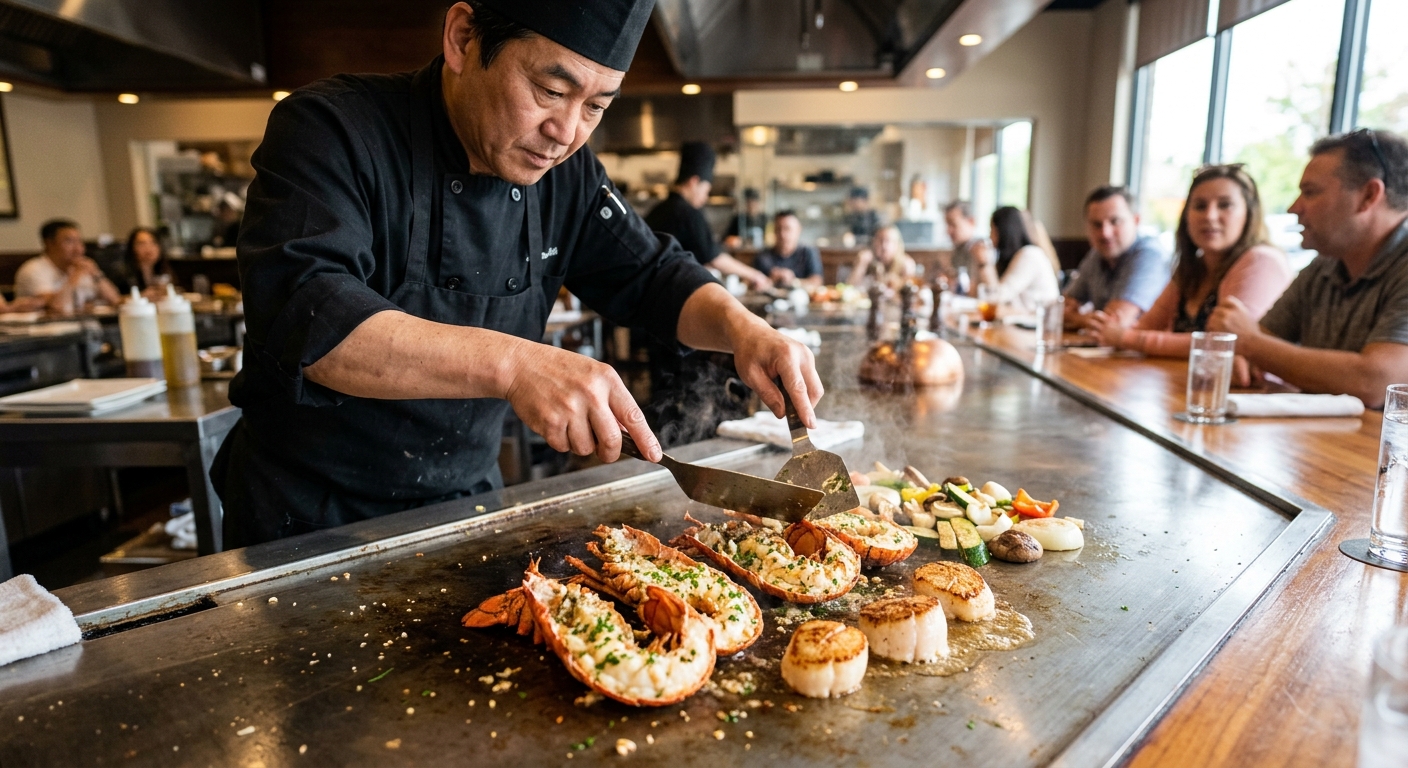
While a traditional teppanyaki iron griddle is ideal, you can achieve excellent results using a large cast-iron skillet, a flat-top griddle insert for your barbecue, or a high-quality electric griddle.
- Flat-Top Griddle or Cast Iron Pan: Provides the large, flat surface area needed for searing.
- Teppanyaki Spatulas: Two stainless steel spatulas are essential for flipping, tossing, and cutting ingredients directly on the cooking surface.
- Squeeze Bottles: For precise application of oils, soy sauce, and cooking wine.
- Basting Cover (Dome): Crucial for steaming the thickest parts of the lobster tail quickly and evenly.
If you prefer to leave the cooking to the professionals for a special event, you can consult The Ultimate Guide to Finding the Best Hibachi Chef for Hire in Los Angeles to ensure a spectacular dining experience.
The Grilled Lobster and Scallops Teppanyaki Recipe
This recipe focuses on enhancing the natural sweetness of the seafood with classic teppanyaki flavors: garlic, soy sauce, sake, and butter.
Ingredients
| Ingredient | Quantity | Purpose |
|---|---|---|
| Cold-water lobster tails | 4 (approx. 6-8 oz each) | Main protein |
| Large sea scallops (dry-packed) | 1 pound (about 12-16 scallops) | Main protein |
| Unsalted butter | 4 tablespoons | Flavor and searing |
| Garlic, finely minced | 3 cloves | Aromatic base |
| Sake (Japanese rice wine) | 1/4 cup | Deglazing and steaming |
| High-quality soy sauce | 2 tablespoons | Umami flavoring |
| Lemon juice | 1 tablespoon (freshly squeezed) | Acidity and brightness |
| Vegetable oil (or other high-smoke-point oil) | 2 tablespoons | Initial searing |
| Salt and freshly ground black pepper | To taste | Seasoning |
| Chopped green onions | For garnish | Visual appeal and fresh flavor |
Preparation Steps
1. Prepare the Seafood: Using kitchen shears, carefully cut down the center of the hard top shell of each lobster tail. Gently lift the meat out, letting it rest on top of the shell (butterfly style). Remove the small side muscle from the scallops, pat them completely dry with paper towels, and season lightly with salt and pepper.
2. Prepare the Garlic Butter: In a small bowl, mix the softened unsalted butter with the minced garlic and a pinch of salt. Set aside.
3. Heat the Griddle: Preheat your teppanyaki griddle or cast-iron pan to medium-high heat (around 400°F). Apply a thin layer of vegetable oil to the surface.
Cooking the Lobster and Scallops
4. Sear the Scallops: Place the dry, seasoned scallops onto the hot griddle. Allow them to sear undisturbed for exactly 2 to 2.5 minutes until a deep golden-brown crust forms. Flip the scallops.
5. Add the Lobster: Place the prepared lobster tails onto the griddle, meat side down first, for about 1 minute to develop a slight sear. Flip them onto their shells.
6. The Teppanyaki Magic: Add a dollop of the garlic butter on top of each lobster tail and among the cooking scallops. Squeeze the sake and soy sauce over the seafood.
7. Steam and Finish: Quickly place the basting cover (dome) over the lobster tails to trap the steam from the sake and butter. Let them steam for 2-3 minutes until the meat is opaque and firm. The scallops should finish cooking simultaneously. Remove the dome, drizzle the seafood with fresh lemon juice, and garnish with chopped green onions.
For those looking to host an outdoor gathering in the suburbs, you might want to Discover the Best Mobile Hibachi Chef in Westlake Village for an unforgettable backyard teppanyaki party.
Mastering the Teppanyaki Garlic Butter Sauce
The hallmark of excellent teppanyaki seafood is the accompanying dipping sauce. A rich, umami-packed garlic butter sauce elevates the dish significantly.
Sauce Recipe
In a small saucepan over medium-low heat, combine 1/2 cup of unsalted butter, 2 tablespoons of soy sauce, 1 tablespoon of freshly squeezed lemon juice, and 1 teaspoon of finely grated ginger. Whisk gently until the butter is completely melted and the ingredients are emulsified. Serve warm alongside the grilled seafood.
Pairing Suggestions for Teppanyaki Seafood
To create a complete teppanyaki experience, serve your grilled lobster and scallops alongside traditional accompaniments. Classic hibachi fried rice, grilled zucchini, mushrooms, and onions are excellent choices. The savory, slightly sweet profile of the seafood pairs wonderfully with a crisp, dry white wine such as Sauvignon Blanc or a chilled Junmai sake.
If you are planning a large-scale event where food presentation and quality are paramount, consider reading Japanese Teppanyaki Food Truck Wedding Catering: A Complete Guide to explore unique catering options.
Conclusion
Mastering a grilled lobster and scallops teppanyaki recipe allows you to bring the flair, flavor, and excitement of a high-end Japanese steakhouse directly to your dining table. By prioritizing high-quality, dry-packed scallops and fresh cold-water lobster, and applying precise, high-heat cooking techniques with the classic flavors of garlic, soy, and sake, you can achieve a culinary masterpiece. Whether cooking for a special occasion or simply elevating your seafood skills, this teppanyaki preparation guarantees a memorable and luxurious meal.
Frequently Asked Questions
What is the difference between wet and dry scallops for teppanyaki?
Dry scallops are natural and untreated, making them ideal for teppanyaki because they sear beautifully and form a caramelized crust. Wet scallops are treated with a chemical solution (STPP) to plump them up; they release excess water during cooking, causing them to steam rather than sear, which prevents a good crust from forming.
Can I use frozen lobster tails for this recipe?
Yes, frozen lobster tails are perfectly fine to use. However, it is crucial to thaw them properly to maintain their texture. Place the frozen tails in the refrigerator for 12-24 hours before cooking. Avoid thawing them in warm water or the microwave, as this can make the meat tough and rubbery.
How do I know when the lobster is fully cooked on the teppanyaki grill?
Lobster meat is cooked when it transitions from a translucent, grayish color to a completely opaque, bright white. The meat should feel firm to the touch, and the shells will turn a vibrant red. An internal temperature of 140°F (60°C) indicates perfectly cooked lobster; be careful not to overcook, or the meat will become tough.
What oil is best for teppanyaki cooking?
For teppanyaki cooking, which relies on high heat for searing, it is best to use an oil with a high smoke point. Safflower oil, canola oil, avocado oil, or grapeseed oil are excellent choices. Avoid using extra virgin olive oil or butter for the initial sear, as they have lower smoke points and will burn quickly on a hot griddle.