
Introduction to Hibachi Seafood Excellence
Recreating the captivating culinary experience of a Japanese steakhouse in the comfort of your own home is an endeavor that promises immense satisfaction. A grilled hibachi shrimp and scallops recipe offers a harmonious blend of delicate seafood flavors, savory soy-based sauces, and the irresistible smoky char that only a hot grill or teppanyaki griddle can provide. Whether you are seeking a refined weeknight dinner or planning an elaborate weekend gathering, mastering the art of hibachi-style seafood elevates your culinary repertoire.
Hibachi, traditionally a traditional Japanese heating device, has evolved in modern culinary parlance to represent the dynamic teppanyaki style of cooking. It relies on high heat, rapid cooking, and a meticulous balance of flavors. The combination of succulent shrimp and tender scallops is a staple in these establishments due to their rapid cooking times and ability to absorb complex marinades and buttery glazes.
The Anatomy of Perfect Hibachi Seafood
To execute a flawless grilled hibachi shrimp and scallops recipe, one must first understand the fundamental characteristics of the proteins involved. Shrimp and scallops each present unique challenges and rewards when exposed to high heat.
Selecting the Best Shrimp
For hibachi grilling, large or jumbo shrimp are highly recommended. Sizes ranging from 16/20 to 21/25 per pound provide substantial meat that withstands the intense heat of the griddle without instantly overcooking. White, brown, or tiger shrimp are all excellent choices. It is imperative that the shrimp are thoroughly peeled, deveined, and dried before cooking to ensure an appropriate sear rather than a steam.
Sourcing Premium Scallops
When purchasing scallops for this dish, always opt for dry sea scallops over wet scallops. Wet scallops are treated with a sodium tripolyphosphate solution that causes them to absorb excess water. When placed on a hot grill, this water is expelled, making it nearly impossible to achieve the coveted caramelized crust. Dry scallops, on the other hand, sear beautifully, locking in their natural sweetness and providing a stunning contrast to the savory hibachi sauces.
Essential Equipment for Hibachi at Home
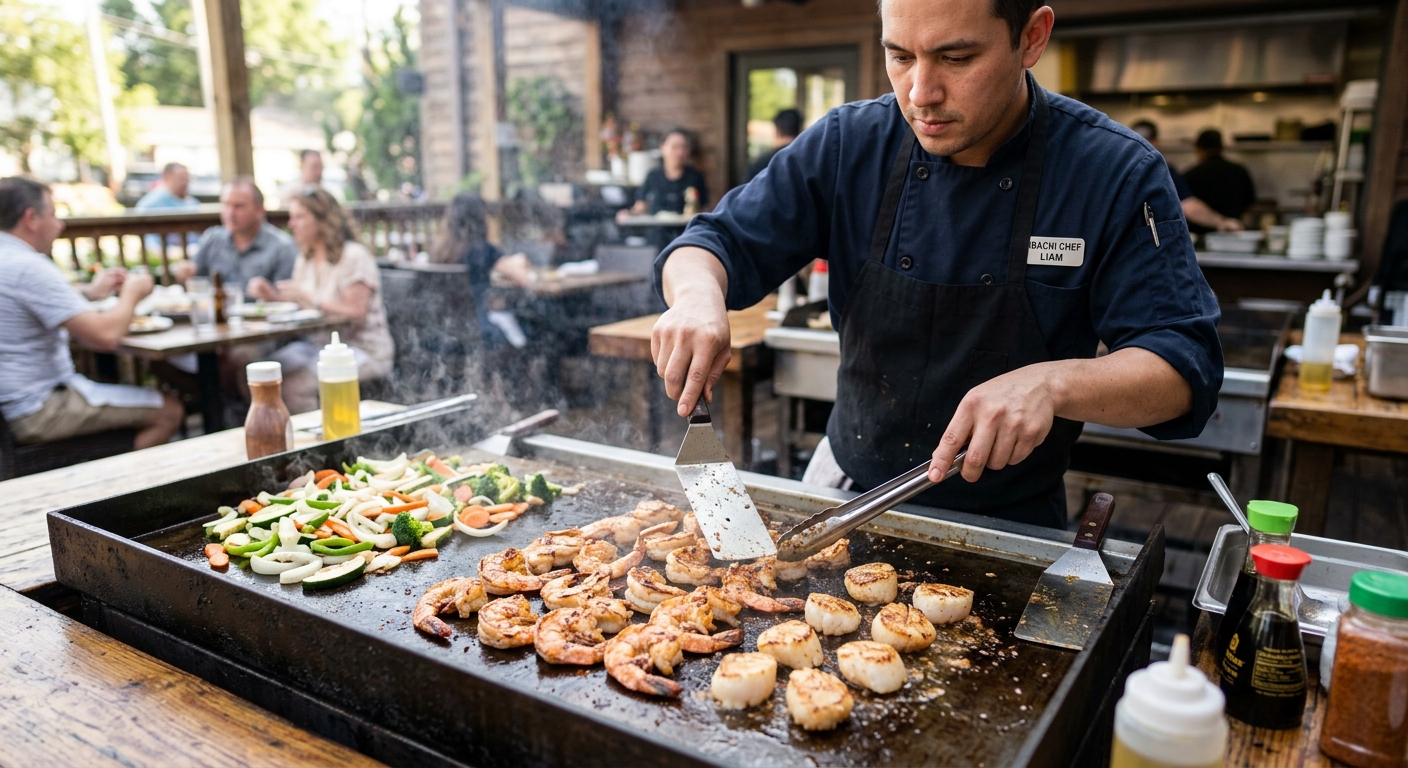
While professional chefs utilize massive, custom-built teppanyaki griddles, home cooks can achieve remarkably similar results with the right tools. A large cast-iron skillet, a flat-top griddle insert for your outdoor grill, or a standalone electric griddle are optimal choices. Cast iron, in particular, boasts excellent heat retention, which is critical for searing scallops quickly before the interior overcooks.
In addition to the cooking surface, ensure you have a sturdy spatula for swift flipping, a squeeze bottle for precisely distributing oil and soy sauce, and a domed lid if you wish to briefly steam vegetables or melt butter alongside the seafood. Proper ventilation is also necessary, as cooking at high temperatures with oils will inevitably produce a fair amount of smoke.
The Master Grilled Hibachi Shrimp and Scallops Recipe
This recipe balances the natural brininess of the seafood with a rich, garlicky, and savory compound butter and a splash of umami-rich soy sauce. It is designed to mimic the exact flavor profile found in premium Japanese steakhouses.
Ingredients List
| Ingredient | Quantity | Notes |
|---|---|---|
| Jumbo Shrimp | 1 lb | Peeled and deveined, tails on or off |
| Dry Sea Scallops | 1 lb | Side muscle removed |
| Vegetable Oil or Peanut Oil | 2 tablespoons | High smoke point oil |
| Unsalted Butter | 4 tablespoons | Divided into cubes |
| Garlic | 3 cloves | Finely minced |
| Soy Sauce | 3 tablespoons | Low sodium preferred |
| Lemon Juice | 1 tablespoon | Freshly squeezed |
| Salt and Black Pepper | To taste | Freshly ground |
| Sesame Seeds | 1 teaspoon | Toasted, for garnish |
| Scallions | 2 stalks | Finely sliced, for garnish |
Step-by-Step Cooking Instructions
Step 1: Preparation of Seafood
Begin by meticulously drying the shrimp and scallops with paper towels. Moisture is the enemy of a good sear. Once dry, lightly season the seafood with salt and freshly ground black pepper. Remove the small, tough side muscle from the scallops if it is still attached.
Step 2: Preheating the Cooking Surface
Heat your flat-top grill, teppanyaki plate, or large cast-iron skillet over medium-high heat. Allow the surface to become exceptionally hot. Test the temperature by flicking a drop of water onto the surface; it should dance and evaporate immediately.
Step 3: Searing the Scallops
Add one tablespoon of the high smoke-point oil to the hot surface. Carefully place the scallops onto the oil, ensuring they are not crowded. Press down lightly to ensure even contact. Allow the scallops to sear undisturbed for approximately two minutes until a deep golden-brown crust forms. Flip the scallops, add one tablespoon of butter and a pinch of minced garlic to the pan, and cook for an additional one to two minutes, basting the scallops with the melting garlic butter. Remove the scallops to a warm plate immediately to prevent overcooking.
Step 4: Grilling the Shrimp
Wipe the griddle clean if necessary, or simply move to an open space. Add the remaining tablespoon of oil. Place the shrimp on the hot surface in a single layer. Cook for one to two minutes until the underside turns pink. Flip the shrimp, add another tablespoon of butter, the remaining minced garlic, and a splash of soy sauce. Toss the shrimp rapidly on the hot surface for another minute until they are opaque and coated in the savory glaze. Transfer to the plate with the scallops.
Step 5: The Final Glaze
To bring the dish together, lower the heat slightly, add the remaining butter, soy sauce, and fresh lemon juice to the griddle or pan. Swirl until emulsified into a rich sauce. Drizzle this sauce directly over the plated shrimp and scallops. Garnish generously with toasted sesame seeds and sliced scallions before serving.
Elevating the Experience: Hosting a Teppanyaki Event
Cooking hibachi seafood is not merely about the food; it is about the experience. If you enjoy entertaining, turning your backyard into a dynamic teppanyaki theater is an unforgettable way to host friends and family. For those residing in Southern California looking to elevate their outdoor gatherings, consulting The Ultimate Guide to Teppanyaki Backyard Party Catering in Calabasas can provide profound insights into organizing a spectacular event.
Should you wish to expand your menu beyond shrimp and scallops, considering other luxurious proteins is a must. Lobster tail is a classic addition that pairs flawlessly with scallops. For a deeper dive into this pairing, explore the Teppanyaki Grilled Lobster and Scallop Recipe: A Guide to Perfect Seafood to ensure you treat the premium ingredients with the respect they deserve.
Of course, not everyone wishes to manage the grill while hosting. Hiring a professional service allows you to enjoy the culinary show alongside your guests. If you are exploring options for professional chefs, reviewing the Private Hibachi Chef Backyard Party Los Angeles: Ultimate Guide is highly recommended. By partnering with experts who offer premier teppanyaki catering, you guarantee an authentic, entertaining, and mouth-watering experience without the stress of managing the intricate cooking processes yourself.
Complementary Side Dishes and Pairings
A pristine grilled hibachi shrimp and scallops recipe requires equally impressive side dishes to create a cohesive meal. Hibachi fried rice is mandatory. Utilizing day-old rice, eggs, diced carrots, peas, and a generous application of soy sauce and garlic butter on the griddle will yield authentic results.
Additionally, teppanyaki-style vegetables such as zucchini, onions, and mushrooms cooked in the residual seafood juices and garlic butter add nutritional balance and textural contrast to the meal. For a true restaurant experience, serve the meal with traditional dipping sauces: a mustard-based sauce for the seafood and a ginger sauce for the vegetables.
Conclusion
Mastering a grilled hibachi shrimp and scallops recipe brings the theatrical flair and exquisite flavors of a Japanese steakhouse directly into your home kitchen. By selecting premium, dry sea scallops, utilizing high heat, and balancing the rich flavors of garlic, butter, and soy sauce, you can consistently produce a dish that rivals professional establishments. Whether you are cooking for a quiet dinner or employing professional catering guides to host a grand backyard teppanyaki party, this seafood combination remains an enduring symbol of culinary elegance and joy. Embrace the heat, respect the ingredients, and enjoy the unparalleled taste of homemade hibachi.
Frequently Asked Questions (FAQ)
What is the secret to getting a good sear on scallops?
The secret lies in three factors: using dry scallops (not treated with phosphates), ensuring the scallops are thoroughly patted dry with paper towels before cooking, and utilizing a very hot cooking surface. Excess moisture will cause the scallops to steam rather than sear.
Can I use frozen shrimp and scallops for this recipe?
Yes, you can use frozen seafood, provided it is thawed properly. Thaw them overnight in the refrigerator. Before cooking, ensure you drain any excess water and dry them meticulously. However, whenever possible, fresh, dry sea scallops will yield a superior crust.
What type of oil is best for hibachi grilling?
Because hibachi cooking relies on high heat, you must use an oil with a high smoke point. Safflower oil, canola oil, peanut oil, or vegetable oil are excellent choices. Avoid extra virgin olive oil or whole butter for the initial sear, as their low smoke points will cause them to burn and impart a bitter flavor to the delicate seafood.
How do I know when the shrimp are fully cooked?
Shrimp cook very rapidly. They are done when they turn from translucent to an opaque pinkish-white color and curl into a loose ‘C’ shape. If they curl tightly into an ‘O’ shape, they are likely overcooked and will have a rubbery texture.
5 responses to “Master the Grill: The Ultimate Grilled Hibachi Shrimp and Scallops Recipe”
[…] to understand the intricate marinades and techniques used by these professionals, you can explore Master the Grill: The Ultimate Grilled Hibachi Shrimp and Scallops Recipe to appreciate the craft that goes into perfectly searing these delicate seafood […]
[…] will increase. Those interested in the culinary mechanics of these delicious dishes might want to Master the Grill: The Ultimate Grilled Hibachi Shrimp and Scallops Recipe to appreciate the skill required to perfectly execute these delicate seafood options on a blazing […]
[…] are curious about the intricacies of hot Japanese catering preparations, you might want to review Master the Grill: The Ultimate Grilled Hibachi Shrimp and Scallops Recipe to understand the culinary techniques and quality ingredients involved in high-end seafood […]
[…] The type of protein and ingredients you choose plays a massive role in the final bill. Standard menus usually include options like chicken, steak, and shrimp, accompanied by fried rice and vegetables. Upgrading to premium proteins such as filet mignon, lobster tails, or scallops will increase the per-person price. If you want to try recreating some of these flavors at home, check out Master the Grill: The Ultimate Grilled Hibachi Shrimp and Scallops Recipe. […]
[…] Opt for large, dry-packed sea scallops (typically designated as U-10 or U-12). Dry-packed scallops have not been treated with phosphates, meaning they will sear beautifully and develop a caramelized crust, unlike wet-packed scallops which tend to steam in their own released moisture. If you enjoy expanding your seafood repertoire, you might also want to explore how to Master the Grill: The Ultimate Grilled Hibachi Shrimp and Scallops Recipe. […]