
Introduction to Grilling Wagyu Steak
Wagyu beef is renowned globally for its intense marbling, buttery texture, and rich umami flavor. Derived from specific breeds of Japanese cattle, Wagyu translates simply to Japanese cow. However, preparing this luxurious meat at home requires a different approach compared to traditional steaks. The high fat content means that improper grilling can lead to catastrophic flare-ups, overcooking, and the loss of what makes Wagyu so special. This comprehensive guide will teach you exactly how to grill Wagyu steak at home to achieve steakhouse perfection.
Understanding Your Wagyu
Before you even turn on the grill, it is crucial to understand the type of Wagyu you are working with. Japanese A5 Wagyu is the highest grade, featuring a phenomenal amount of intramuscular fat. American and Australian Wagyu are crossbreeds that offer a balance between traditional beefy flavor and Wagyu marbling. The cooking techniques will vary slightly depending on the origin and grade of your steak.
For those who love experiencing top-tier Wagyu prepared by professionals before attempting it themselves, checking out The Ultimate Guide to the Best Wagyu Steak Restaurants in Los Angeles can provide excellent culinary inspiration for your own kitchen endeavors.
Preparation: The Foundation of Perfection
Proper preparation is non-negotiable when dealing with premium beef. Follow these essential steps before your steak ever touches the heat.
- Thawing: Always thaw your Wagyu slowly in the refrigerator for 24 to 48 hours. Never use a microwave or hot water, as this will melt the delicate fat.
- Resting at Room Temperature: Take the steak out of the refrigerator 30 to 60 minutes before grilling. Allowing it to come to room temperature ensures even cooking.
- Seasoning: Keep it simple. A high-quality sea salt or kosher salt is all you need. Pepper can burn over high heat and mask the meat’s natural flavors. Season generously right before grilling.
Choosing the Right Grill Setup
When deciding how to grill Wagyu steak at home, the heat source is paramount. Due to the high fat content, grilling directly over open grates can cause massive flare-ups that will leave your expensive steak covered in bitter, black soot. Therefore, utilizing a cast-iron skillet or a plancha directly on your grill is highly recommended.
Charcoal vs. Gas Grills
A charcoal grill provides an unmatched smoky flavor. If using charcoal, create a two-zone fire: one side with coals for high-heat searing, and the other empty for indirect cooking. A gas grill offers precise temperature control, which is incredibly useful for Wagyu. Preheat your grill to high, placing your cast iron pan on the grates to get smoking hot.
Step-by-Step Grilling Guide
Now that your grill is hot and your steak is prepped, it is time to cook. The goal is a deeply caramelized crust while keeping the interior a perfect medium-rare.
Step 1: Sear the Steak
Place the steak in your preheated cast-iron skillet (which should be sitting on your grill grates). You do not need to add oil; the Wagyu’s fat will render out almost instantly. Sear for about 1.5 to 2 minutes per side to develop a rich crust.
Step 2: Sear the Edges
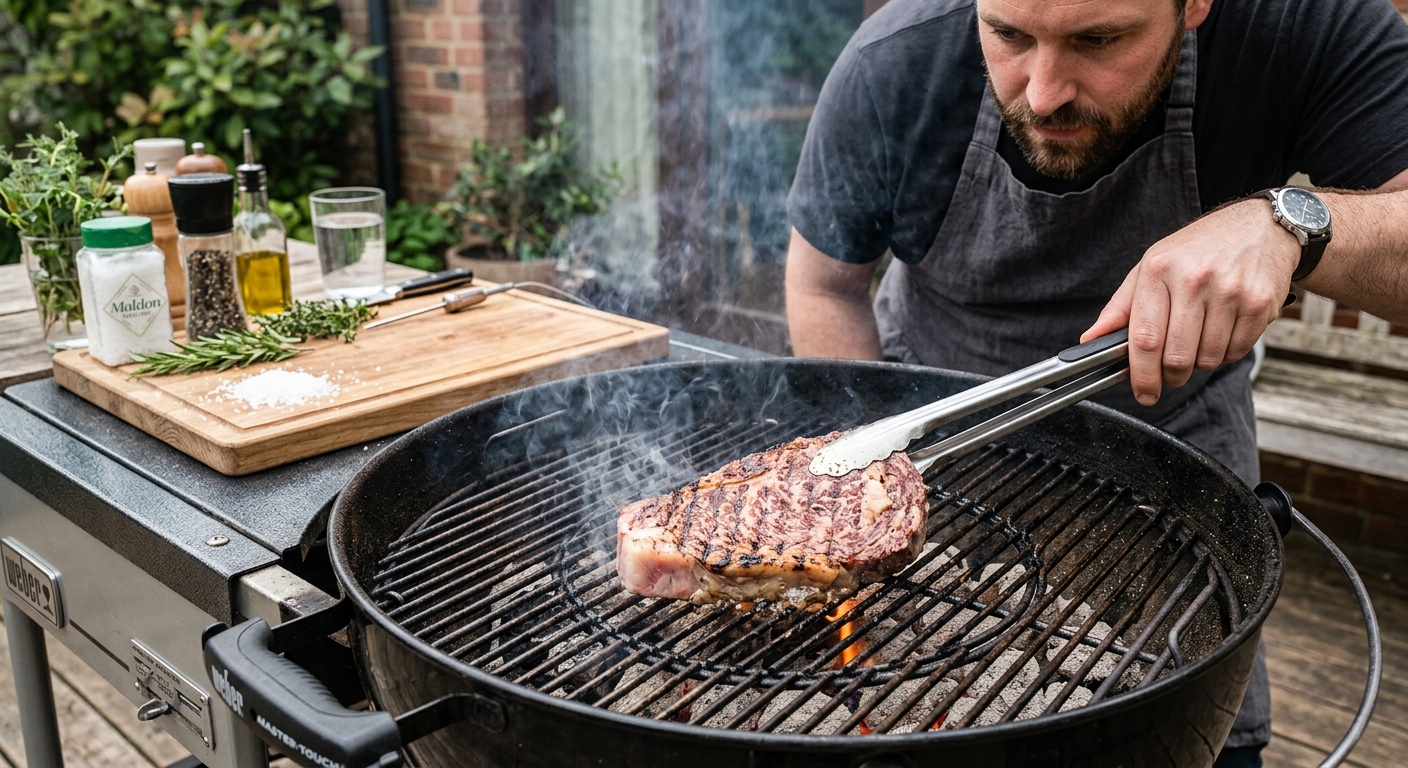
Using tongs, hold the steak on its sides to render the fat cap and sear the edges. This takes about 30 seconds per edge.
Step 3: Indirect Cooking (If Necessary)
If you are cooking a thicker cut (over 1 inch), move the skillet to the cooler side of the grill, or transfer the steak to the indirect heat zone on the grates. Close the lid and let it roast until it reaches your desired internal temperature.
If you are planning a large outdoor gathering and the stress of perfecting Wagyu for twenty people seems overwhelming, you might want to look into Elevate Your Event: Backyard Teppanyaki Party Catering in Orange County to handle the luxury meats while you enjoy the party.
Temperature Guide for Wagyu
Using a reliable instant-read meat thermometer is critical. Wagyu is best served medium-rare to medium. Cooking it too rare means the fat will not render completely, resulting in a chewy texture. Overcooking it will melt all the fat out, leaving it dry.
| Doneness | Internal Temperature (Remove from Heat) | Final Resting Temperature |
|---|---|---|
| Rare (Not Recommended) | 115F – 120F | 125F |
| Medium Rare (Ideal) | 125F – 130F | 135F |
| Medium (Also Good) | 135F – 140F | 145F |
| Well Done | Not Recommended | Not Recommended |
Resting and Serving
Resting the meat is just as important as the cooking process. Once your Wagyu steak reaches the target temperature, remove it from the grill and let it rest on a cutting board for at least 5 to 10 minutes. This allows the muscle fibers to relax and the juices to redistribute throughout the meat.
When slicing, always cut against the grain in thin, bite-sized strips. Wagyu is incredibly rich, so smaller portions are typically favored. A typical serving size for A5 Japanese Wagyu is 3 to 4 ounces per person.
If you find that you love the theatrical, teppanyaki-style preparation of Wagyu and other premium ingredients, you can bring that experience to your backyard. Read The Ultimate Guide to Finding the Best Hibachi Chef for Hire in Los Angeles for insights on hiring professionals who can entertain and cook flawlessly for your guests.
Conclusion
Grilling Wagyu steak at home is a rewarding culinary endeavor that requires respect for the ingredient, careful temperature management, and the right equipment. By utilizing a cast-iron skillet on your grill to manage the rendering fat, monitoring internal temperatures meticulously, and allowing the meat to rest, you can replicate a Michelin-star dining experience in your own backyard. Remember to keep the seasoning simple to let the natural, buttery flavors of the Wagyu shine through.
Frequently Asked Questions (FAQ)
Can I grill Wagyu directly on the grill grates?
While possible, it is highly discouraged for highly marbled cuts like Japanese A5 Wagyu. The immense amount of rendering fat will cause severe flare-ups, which can quickly burn the exterior of the steak and leave a bitter taste. Using a cast-iron skillet or plancha on the grill is the safest and most effective method.
What is the best seasoning for Wagyu steak?
The best seasoning for Wagyu is simply a high-quality coarse salt, such as sea salt or kosher salt. Because Wagyu has such a delicate and distinct flavor profile, heavy marinades, rubs, or even excessive black pepper can overpower the natural taste of the beef.
Why should I cook Wagyu to medium-rare rather than rare?
Unlike lean steaks which are often enjoyed rare, the defining feature of Wagyu is its intramuscular fat. If the steak is cooked rare, this fat does not have a chance to properly heat and melt (render). Cooking it to medium-rare or even medium ensures the fat melts into the muscle fibers, delivering that signature melt-in-your-mouth texture.
Do I need to oil the pan before grilling Wagyu?
No, you do not need to add cooking oil or butter to your pan or grill surface. The fat within the Wagyu will begin to render almost instantly upon contact with the hot surface, providing more than enough natural lubrication to sear the steak perfectly without sticking.
2 responses to “How to Grill Wagyu Steak at Home: The Comprehensive Guide”
[…] experience. If you are considering adding beef to your menu, you might be interested in learning How to Grill Wagyu Steak at Home: The Comprehensive Guide, which highlights the incredible quality of Wagyu beef that top-tier caterers can […]
[…] The stars of the show are the proteins. High-quality catering services offer a range of options, including tender chicken breast, succulent shrimp, diver scallops, and premium cuts of steak. For steak enthusiasts, Wagyu beef is highly recommended. The marbling and rich flavor of Wagyu melt beautifully on the high-heat teppan grill. If you are curious about replicating this luxurious meat experience yourself before or after the event, you can read How to Grill Wagyu Steak at Home: The Comprehensive Guide. […]