
Introduction to Wagyu Steak Teppanyaki
Teppanyaki cooking represents a seamless blend of culinary artistry and pure, unadulterated flavor. When you combine this traditional Japanese cooking method with the unparalleled quality of Wagyu beef, the result is nothing short of spectacular. This easy Wagyu steak teppanyaki recipe will guide you through the meticulous yet straightforward process of preparing a restaurant-quality meal in the comfort of your own kitchen. Whether you are hosting an intimate dinner party or treating yourself to a luxurious weekend meal, mastering the art of teppanyaki requires understanding both the ingredients and the precise heating techniques involved.
Wagyu beef is globally renowned for its extraordinary marbling, which contributes to a rich, buttery texture and profound umami flavor. When prepared on a flat iron griddle—the hallmark of teppanyaki—the high heat sears the exterior rapidly, locking in the natural juices and allowing the intramuscular fat to melt harmoniously into the meat. If you have ever experienced fine dining and sought out The Ultimate Guide to the Best Wagyu Steak Restaurants in Los Angeles, you know that the magic lies in high-quality sourcing and precise execution. Now, you can replicate that magic at home.
Selecting the Perfect Wagyu Cut
The success of your teppanyaki dish hinges primarily on the quality of the beef. For an authentic teppanyaki experience, you should look for A4 or A5 Japanese Wagyu, or highly marbled American Wagyu. Sirloin, ribeye, and tenderloin are the most favored cuts for this style of cooking. Ribeye offers the most decadent fat content, while tenderloin provides an incredibly soft texture with a milder beef flavor. Sirloin strikes a beautiful balance between the two.
When selecting your steak, observe the marbling. The fat should appear pure white and evenly distributed throughout the bright red muscle. Remember that Wagyu is rich; a smaller portion per person (usually 4 to 6 ounces) is generally sufficient. If you are looking to create a multi-course teppanyaki feast, you might consider pairing your steak with seafood. For inspiration, explore this Teppanyaki Grilled Lobster and Scallop Recipe: A Guide to Perfect Seafood to complement your rich beef main course.
Essential Equipment for Home Teppanyaki
To achieve the distinctive sear and rapid cooking associated with teppanyaki, the right equipment is vital. While professional chefs utilize large, gas-powered iron griddles, home cooks can achieve excellent results with a few key items:
- Teppanyaki Grill or Cast Iron Griddle: A heavy flat-top grill that fits over your stovetop burners is ideal. It retains heat beautifully and provides ample space.
- Teppanyaki Spatulas: Two metal spatulas with wooden handles will allow you to flip, press, and slice the meat swiftly.
- A Very Sharp Knife: Wagyu should be handled with care. A sharp Japanese chef’s knife (Gyuto) ensures clean cuts without tearing the delicate fibers.
- Digital Meat Thermometer: Precision is critical when cooking high-end beef.
If you prefer to leave the cooking to the professionals while still enjoying an at-home experience, you might want to look into The Ultimate Guide to Mobile Teppanyaki Catering in Calabasas, CA. Alternatively, for comprehensive professional catering solutions, visit our catering services to elevate your next event.
The Easy Wagyu Steak Teppanyaki Recipe
Ingredients
Simplicity is the key to highlighting Wagyu’s natural flavors. Avoid heavy marinades that mask the beef’s profile.
- 1 lb A4 or A5 Wagyu Ribeye or Sirloin (about 1 inch thick)
- Sea salt (preferably flake salt like Maldon)
- Freshly ground black pepper
- 1 tablespoon Wagyu beef tallow (or a high smoke-point oil like grapeseed oil)
- 2 cloves of garlic, thinly sliced
- 1 tablespoon unsalted butter
- 1 tablespoon soy sauce (premium quality)
- 1 teaspoon mirin (optional)
Step-by-Step Preparation and Cooking Instructions
Step 1: Preparation
Remove the Wagyu steak from the refrigerator at least 30 to 45 minutes before cooking. It must reach room temperature to ensure even cooking. Trim any excess fat from the edges of the steak—save these trimmings to render down and use as the cooking fat on your griddle. Pat the steak completely dry with paper towels. Moisture on the surface will create steam, preventing a proper crust from forming.
Step 2: Seasoning
Just before placing the steak on the grill, season it generously with coarse sea salt and freshly ground black pepper. Do not season too early, as salt will draw out the precious moisture from the meat.
Step 3: Heating the Teppan
Heat your cast iron griddle or teppanyaki plate over medium-high heat. Wait until the surface is very hot. If a drop of water dances and evaporates instantly, the griddle is ready.
Step 4: Garlic Chips (Optional but Recommended)
Place the beef fat trimmings or a small amount of oil onto the hot griddle. Once the fat has rendered, add the thinly sliced garlic. Fry them until they are golden brown and crispy. Remove them immediately and set them aside on a paper towel. This infuses the cooking surface with a mild garlic flavor.
Step 5: Searing the Wagyu
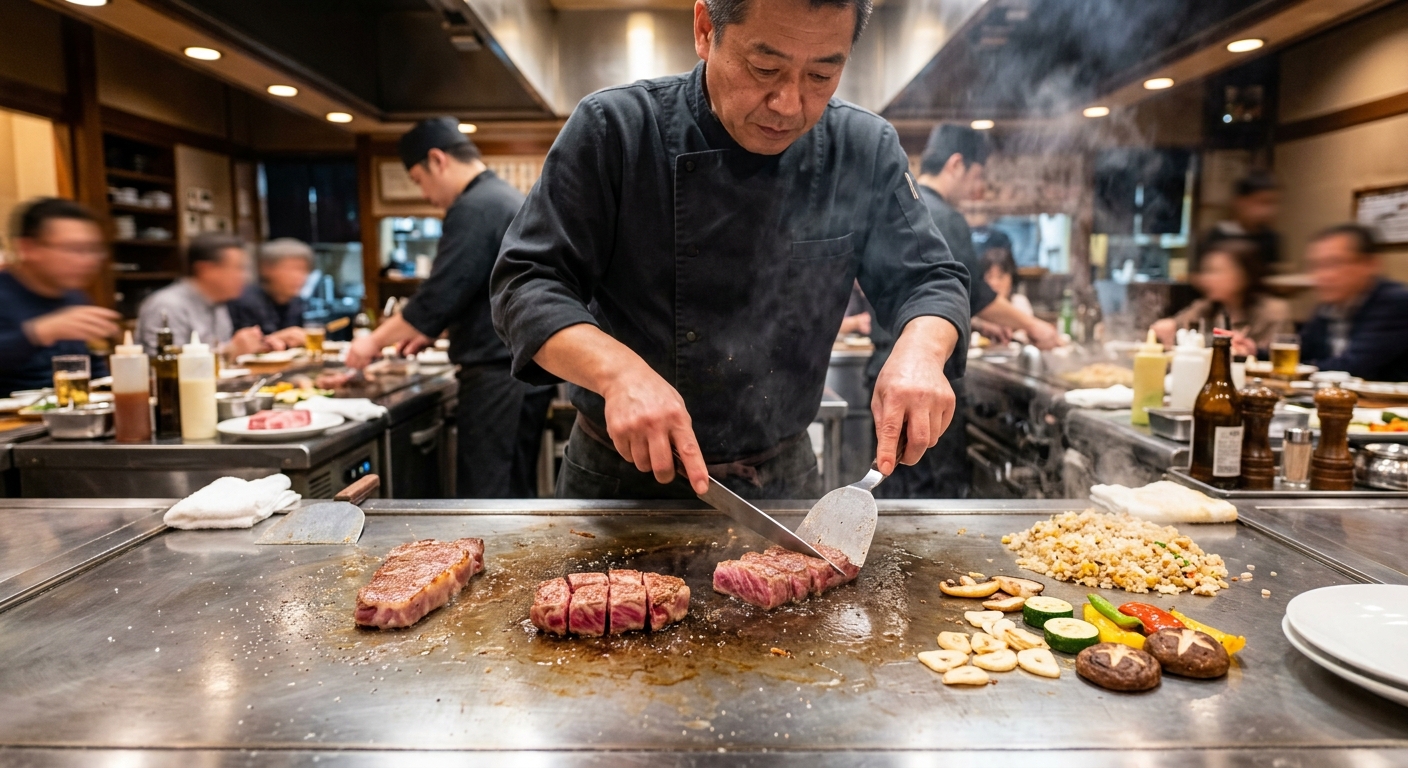
Place the seasoned Wagyu steak onto the hottest part of the griddle. You should hear an immediate, vigorous sizzle. For a 1-inch thick steak, sear for about 1.5 to 2 minutes on the first side until a deep, caramelized crust develops. Flip the steak and cook for another 1 to 1.5 minutes for a perfect medium-rare. Because of the high fat content, Wagyu cooks faster than conventional beef.
Step 6: The Teppanyaki Cut
Using your teppanyaki spatulas or a sharp knife right on the griddle (if your surface allows), quickly slice the steak into bite-sized cubes. Toss the cubes briefly on the hot surface for 10-15 seconds to sear the freshly cut edges.
Step 7: The Glaze
Lower the heat slightly. Add the butter, soy sauce, and mirin directly to the cubed steak. Toss the meat rapidly in the bubbling sauce for 15 seconds until every piece is coated in a glossy glaze. Remove the meat from the heat immediately to prevent overcooking.
Serving Suggestions and Side Dishes
Serve the Wagyu teppanyaki cubes immediately on warmed plates, garnished with the crispy garlic chips. Traditional accompaniments include:
- Teppanyaki Fried Rice: Utilize the leftover wagyu fat on the griddle to fry day-old short-grain rice with egg, scallions, and a dash of soy sauce.
- Grilled Vegetables: Zucchini, mushrooms, onions, and bean sprouts cooked on the teppan are classic pairings that cut through the richness of the beef.
- Dipping Sauces: While Wagyu is flavorful enough on its own, small side dishes of ponzu sauce or a mustard-soy blend can provide a refreshing acidic contrast.
Nutritional Information
| Nutrient | Amount per Serving (approx. 4 oz) |
|---|---|
| Calories | ~ 350 – 450 kcal |
| Protein | 22g |
| Fat (Total) | 30g – 40g |
| Carbohydrates | 2g (from glaze) |
| Sodium | 450mg |
Note: Nutritional values vary heavily depending on the specific grade and cut of Wagyu used.
Conclusion
Mastering this easy Wagyu steak teppanyaki recipe brings the sophisticated flair and exquisite taste of high-end Japanese dining straight to your dining room. By sourcing premium beef, utilizing the correct tools, and respecting the high-heat, quick-cooking nature of teppanyaki, you ensure that every bite is tender, juicy, and packed with umami. Whether you cook it yourself or hire professionals to entertain your guests, Wagyu teppanyaki is an unforgettable culinary experience.
Frequently Asked Questions (FAQ)
What is the best doneness for Wagyu steak?
Professional chefs highly recommend serving Wagyu steak medium-rare to medium. This temperature allows the abundant intramuscular fat to melt properly, resulting in a buttery texture. Cooking it rare may leave the fat unrendered and chewy, while well-done will melt away all the fat, leaving the meat dry.
Can I use a regular frying pan instead of a teppanyaki griddle?
Yes, you can use a heavy-bottomed cast iron skillet or a stainless steel frying pan if you do not have a teppanyaki griddle. The key is to ensure the pan can hold high heat evenly to achieve a rapid, aggressive sear.
Do I need to rest Wagyu steak if I am cutting it on the grill?
In traditional teppanyaki, the steak is often cut on the grill and served immediately. Because the pieces are bite-sized and cooked rapidly, resting is less critical than with a large, whole roasted steak. However, removing it from the heat promptly is essential so the residual heat does not overcook the cubes.
3 responses to “Easy Wagyu Steak Teppanyaki Recipe: A Professional Guide to Grilling Perfection”
[…] Japanese and Californian flavors. For instance, incorporating a premium culinary experience like an Easy Wagyu Steak Teppanyaki Recipe: A Professional Guide to Grilling Perfection into your customized menu can provide a memorable, interactive dining element that guests will talk […]
[…] Furthermore, backyard catering provides a personalized and private environment. You can avoid the noise, crowds, and rigid time limits often associated with traditional restaurant dining. The menu can also be customized to accommodate various dietary restrictions, ensuring that every guest can enjoy the feast. For those who appreciate the finer things, incorporating premium ingredients is a must. If you are interested in creating a luxurious experience, you might enjoy this Easy Wagyu Steak Teppanyaki Recipe: A Professional Guide to Grilling Perfection. […]
[…] about the techniques used by top chefs to prepare such delicacies, you might appreciate the Easy Wagyu Steak Teppanyaki Recipe: A Professional Guide to Grilling Perfection. This level of culinary artistry is exactly what a top-tier private chef brings to your […]