
Introduction to Homemade Teppanyaki
Cooking Japanese Teppanyaki at home offers a unique blend of culinary precision and entertaining flair. Originating in Japan, Teppanyaki refers to dishes cooked using an iron griddle. This cooking method is celebrated worldwide for its ability to sear meats, seafood, and vegetables at high temperatures, sealing in juices and flavors while providing a spectacular visual experience. Whether you are hosting a family dinner or looking to recreate the excitement of a restaurant at home, mastering Teppanyaki requires the right equipment, quality ingredients, and a few fundamental techniques.
For those who love exploring culinary delights, it is often inspiring to look at how professionals handle their events. For instance, you might want to read about Private Hibachi Chef Backyard Party Los Angeles: Ultimate Guide to see how private chefs bring the experience to your backyard. Or, if you are looking for culinary inspiration in Southern California, check out the Los Angeles Hidden Gem Restaurants List: A Culinary Guide.
Essential Equipment for Teppanyaki
The foundation of Teppanyaki is the cooking surface. While professional restaurants use large built-in iron griddles, home cooks can achieve excellent results with specialized equipment designed for residential kitchens or outdoor spaces.
The Griddle (Teppan)
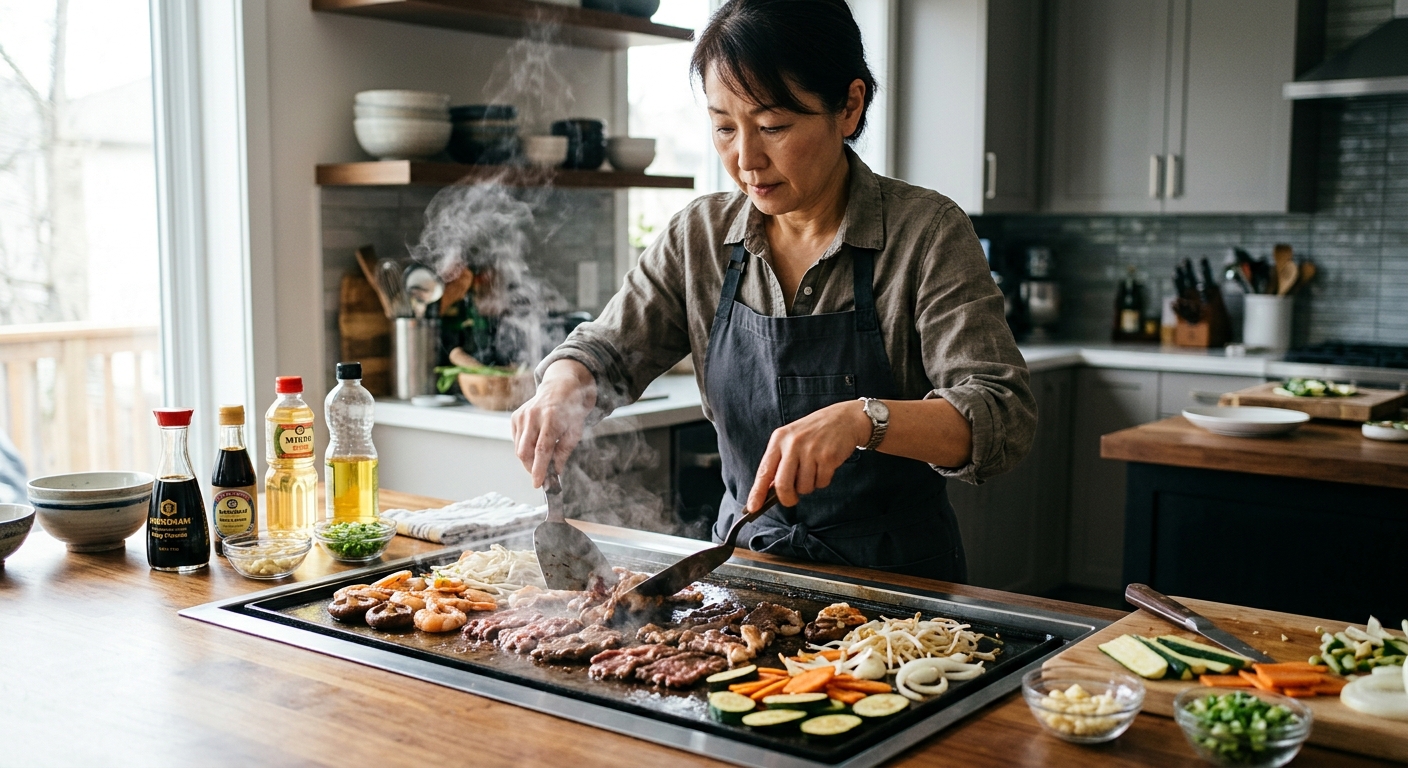
To cook authentic Teppanyaki, you need a flat, smooth cooking surface that can retain and distribute heat evenly. Heavy-duty cast iron griddles or thick stainless steel plates are ideal. You can purchase standalone electric Teppanyaki grills, stovetop griddle pans, or dedicated outdoor flat-top grills.
Tools of the Trade
- Spatulas: Two metal spatulas (turners) are essential for flipping, cutting, and tossing ingredients on the grill.
- Scraper: A sturdy bench scraper is vital for keeping the grill clean between courses and preventing flavors from mixing.
- Squeeze Bottles: Use these for oils, water (for steaming), and soy sauce to ensure precise application.
- Grill Dome: A metal melting dome is used to trap steam, which helps cook thick cuts of meat and vegetables quickly and evenly.
When selecting equipment, it is important to understand the differences between the common types of home griddles available.
The following table compares three popular types of home griddles used for Teppanyaki.
| Griddle Type | Heat Source | Portability | Ideal Location |
|---|---|---|---|
| Electric Teppanyaki Grill | Electric Plug-in | High | Indoor Dining Table |
| Cast Iron Stovetop Griddle | Gas or Induction Stove | Medium | Indoor Kitchen |
| Outdoor Flat-Top Grill | Propane or Natural Gas | Low | Outdoor Patio |
Choosing the Right Ingredients
Teppanyaki is a celebration of fresh, high-quality ingredients. Because the cooking process is fast and uses minimal seasoning, the natural flavors of the food must shine.
Proteins
Beef, particularly Wagyu or high-quality Angus (such as ribeye, tenderloin, or sirloin), is a staple of Teppanyaki. Seafood is also incredibly popular, with shrimp, scallops, and lobster tails being the top choices. For a lighter option, boneless, skinless chicken thighs are preferred over breasts as they remain juicier on the high heat of the griddle.
Vegetables
Traditional Teppanyaki vegetables include zucchini, onions, mushrooms (shiitake or button), carrots, and bean sprouts. The key is to slice them uniformly so they cook at the same rate. Cabbage and bell peppers also make excellent additions to the grill.
Sauces and Seasonings
While the ingredients are the stars, traditional dipping sauces elevate the meal. The two most common are a ginger sauce (often used for seafood and vegetables) and a mustard sauce (typically paired with beef and chicken). Essential cooking seasonings include cooking oil (such as safflower or canola oil, which have high smoke points), soy sauce, garlic butter, salt, and freshly ground black pepper.
Preparation and Cooking Techniques
Success in Teppanyaki lies in the preparation (mise en place). Because the cooking happens rapidly over high heat, all ingredients, sauces, and tools must be ready before you turn on the grill.
Preparation Steps
- Slice uniformly: Cut meats into bite-sized pieces and slice vegetables evenly.
- Prepare the sauces: Make your ginger and mustard sauces in advance and set them aside in small bowls.
- Preheat the grill: The griddle must be hot before any food touches it. Aim for a temperature around 400°F to 450°F (200°C to 230°C).
The Cooking Sequence
Professional Teppanyaki chefs usually follow a specific sequence to ensure flavors build correctly and the grill remains relatively clean. First, start with garlic chips to flavor the oil. Then, cook the vegetables, starting with dense items like carrots and onions, followed by zucchini and mushrooms. Use a splash of water and the grill dome to steam them to perfection. Next, move on to seafood, which cooks quickly. Finally, sear the beef or chicken, using garlic butter and a splash of soy sauce for a savory finish.
If hosting a large party seems overwhelming, you can always seek professional help. Check out A Complete Guide to the Best Catering Services in Calabasas CA for large-scale event planning, or consider hiring a private chef through a reputable private catering service.
Conclusion
Cooking Japanese Teppanyaki at home is a highly rewarding endeavor that combines culinary skill with interactive dining. By investing in a quality griddle, gathering premium ingredients, and practicing your spatula techniques, you can recreate the magic of a Japanese steakhouse right in your own kitchen or backyard. Remember that preparation is just as important as the cooking itself. Take your time, prepare everything in advance, and most importantly, enjoy the dynamic process of griddle cooking with your family and friends.
Frequently Asked Questions
What kind of oil should I use for Teppanyaki?
You should use an oil with a high smoke point, such as canola, safflower, soybean, or grapeseed oil. Avoid extra virgin olive oil or butter for the initial cooking, as they will burn at the high temperatures required for Teppanyaki. Butter can be added at the end for flavor.
Can I cook Teppanyaki on a regular frying pan?
While a large frying pan can cook the ingredients, it lacks the expansive surface area needed to manage multiple items at different temperature zones simultaneously, which is characteristic of true Teppanyaki. A stovetop griddle pan is a better alternative if you do not have a dedicated flat-top.
How do I clean my Teppanyaki grill?
While the griddle is still warm, use a bench scraper to remove food debris. Pour a little water on the surface to loosen stubborn spots, scrape again, and wipe clean with paper towels. Once completely clean and dry, apply a light coat of cooking oil to season the metal and prevent rust.
What is the difference between Hibachi and Teppanyaki?
In Japan, a Hibachi is a traditional, small, open-grate charcoal heater, while Teppanyaki refers to cooking on a solid iron griddle. However, in North America, the terms are often used interchangeably to describe Japanese steakhouse-style griddle cooking.
One response to “How to Cook Japanese Teppanyaki at Home: A Professional Guide”
[…] style. If you are inspired by the culinary theatrics and want to try your hand at it, you can learn How to Cook Japanese Teppanyaki at Home: A Professional Guide. However, nothing beats the authentic experience provided by skilled chefs in a dedicated […]