Introduction to Teppanyaki Style Vegetables
Teppanyaki, derived from the words “teppan” (iron plate) and “yaki” (grilled, broiled, or pan-fried), is a post-World War II Japanese cooking style that has captivated diners worldwide. While meats and seafood often steal the spotlight, mastering how to cook teppanyaki style vegetables is an art form that elevates any meal. The high-heat flat-top grilling locks in the natural juices and crunch of the vegetables, resulting in a savory, slightly caramelized flavor profile that is both healthy and delicious.
Bringing this experience into your own kitchen requires an understanding of the right equipment, preparation methods, and seasonings. Whether you are hosting a dinner party or simply wanting to recreate a restaurant-quality side dish, learning these techniques will transform your home cooking. If you are looking to explore professional culinary experiences, consider Discovering Hidden Gem Japanese Restaurants in Los Angeles for inspiration.
Essential Equipment for Teppanyaki Cooking
The foundation of teppanyaki is, of course, the iron griddle. While commercial teppanyaki tables are massive and built into dining surfaces, home cooks can achieve similar results with a few key pieces of equipment.
- Flat-Top Griddle: A cast-iron or carbon steel griddle that can span across two stovetop burners is ideal. It provides the large surface area needed to toss and sear vegetables without steaming them.
- Teppanyaki Spatulas: Two sturdy, wide stainless steel spatulas are essential for tossing, chopping, and pressing the vegetables on the hot surface.
- Squeeze Bottles: Used for holding cooking oils, soy sauce, and water. These allow for precise application of liquids during the rapid cooking process.
- Dome Cover: A metal dome or basting cover is used to trap steam, helping to cook denser vegetables quickly without burning the exterior.
Choosing the Right Vegetables
The beauty of teppanyaki lies in its versatility. Almost any vegetable can be cooked using this method, but some fare better than others due to their water content and texture. The key is to select vegetables that can withstand high heat and maintain a pleasant crunch.
Classic Teppanyaki Vegetables
- Zucchini: Slice into rounds or half-moons. They cook quickly and absorb flavors beautifully.
- Onions: Yellow or sweet onions, sliced thickly, caramelize perfectly on the griddle.
- Mushrooms: Button or cremini mushrooms are traditional favorites, offering an earthy balance to the dish.
- Carrots: Because they are dense, carrots should be julienned or sliced thinly on a bias to ensure they cook through.
- Bell Peppers: Red, green, or yellow peppers add vibrant color and a sweet crunch.
- Broccoli: Florets can be steamed slightly under a dome before searing.
For those who want to experience the finest ingredients prepared by experts before trying it at home, looking into Luxury Sushi Catering with Private Chef LA: Elevating Your Next Event can provide a benchmark for quality and presentation.
The Role of Fats and Seasonings
The secret to authentic teppanyaki flavor lies in the simple yet impactful seasonings. The high heat of the griddle amplifies these foundational ingredients.
- Cooking Oil: Use a neutral oil with a high smoke point, such as vegetable oil, canola oil, or safflower oil. Avoid extra virgin olive oil, as it will burn and become bitter.
- Butter: Often added towards the end of the cooking process, butter provides a rich, savory glaze to the vegetables. Many teppanyaki chefs use a garlic-infused compound butter.
- Soy Sauce: A splash of high-quality soy sauce provides essential umami and a beautiful brown caramelization.
- Garlic and Ginger: Freshly minced garlic and ginger are foundational aromatics.
- Salt and Pepper: Simple seasoning is crucial. Kosher salt and freshly ground black pepper are standard.
- Sesame Seeds: Used as a garnish for added texture and a nutty flavor.
If you prefer to have a professional handle the complexities of Japanese cuisine for your gatherings, you can always hire a private chef to deliver an authentic experience right to your door.
Step-by-Step Cooking Guide
Cooking teppanyaki style vegetables is a fast-paced process. Having all your ingredients prepped and within reach (mise en place) is critical.
1. Preparation
Wash, dry, and chop all vegetables uniformly. Uniform cuts ensure even cooking. Denser vegetables like carrots should be cut smaller than softer vegetables like zucchini. Mince your garlic and ginger, and have your oil, soy sauce, and water ready in squeeze bottles.
2. Heating the Griddle
Preheat your griddle over medium-high heat. It needs to be hot enough that a drop of water dances and evaporates instantly. If the griddle is too cold, the vegetables will steam in their own juices rather than sear.
3. Searing the Vegetables
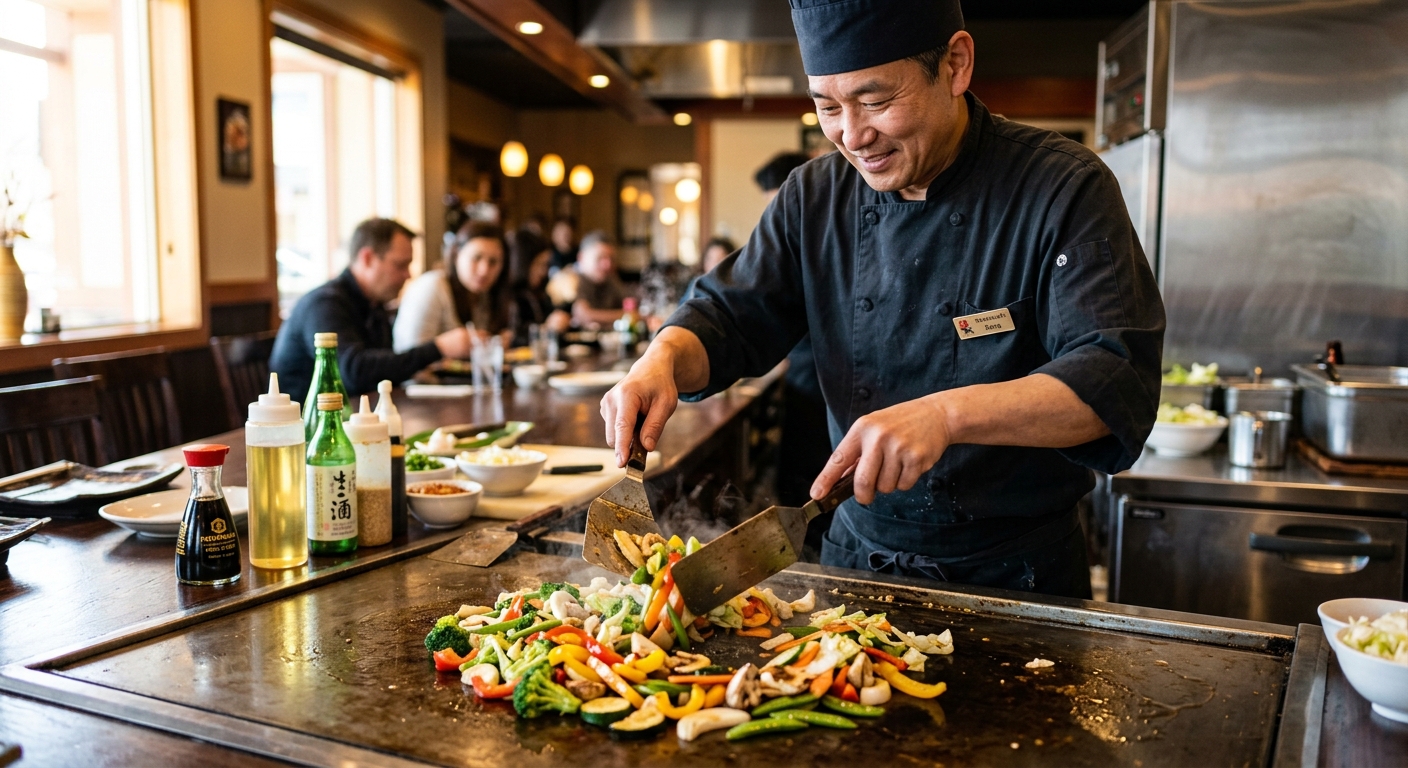
Apply a generous squirt of cooking oil to the hot surface. Add the denser vegetables first (onions, carrots, broccoli). Use your two spatulas to toss them constantly, coating them in the oil. After a minute or two, add the softer vegetables (zucchini, mushrooms, peppers).
4. Steaming (Optional)
If you are cooking large broccoli florets or thick carrot slices, you may need to introduce a little steam. Squirt a small amount of water onto the griddle next to the vegetables and immediately cover them with the metal dome for about 30-60 seconds. Remove the dome and let any excess water evaporate.
5. Seasoning and Glazing
Once the vegetables are tender-crisp and have developed brown, caramelized edges, create a small well in the center of the vegetable pile. Add a pat of butter, minced garlic, and ginger into the well. As the butter melts and the aromatics become fragrant, toss everything together. Finally, squirt a splash of soy sauce over the vegetables, toss rapidly one last time to distribute the flavors, and remove from the heat immediately to prevent burning.
Common Mistakes to Avoid
Even seasoned home cooks can stumble when attempting teppanyaki for the first time. Keep these common pitfalls in mind:
- Overcrowding the Griddle: If you add too many vegetables at once, the temperature of the griddle will drop significantly. The vegetables will steam rather than sear, resulting in a mushy texture. Cook in batches if necessary.
- Not Enough Heat: Teppanyaki requires high heat. Don’t be afraid to let your griddle get very hot before adding the oil and vegetables.
- Adding Soy Sauce Too Early: Soy sauce contains sugars that will burn quickly on a hot griddle. Always add it at the very end of the cooking process.
- Cutting Vegetables Unevenly: Pieces of vastly different sizes will cook at different rates, leaving some raw and others mushy.
For those interested in how these techniques translate to other areas of high-end Japanese dining, exploring options like Luxury Sushi Bar Catering Los Angeles: An Unforgettable Culinary Experience showcases the importance of precision and high-quality ingredients.
Below is a quick comparison of the best oils to use for teppanyaki grilling based on their smoke points and flavor profiles.
| Cooking Oil Type | Smoke Point | Flavor Profile | Best Use in Teppanyaki |
|---|---|---|---|
| Vegetable Oil | 400°F (204°C) | Neutral | General searing and sautéing |
| Canola Oil | 400°F (204°C) | Neutral | General searing and sautéing |
| Peanut Oil | 450°F (232°C) | Mildly nutty | High-heat searing, adds subtle flavor |
| Safflower Oil | 510°F (265°C) | Neutral | Very high-heat searing |
| Sesame Oil | 410°F (210°C) | Strong, nutty | Finishing oil only; not for primary cooking |
Conclusion
Learning how to cook teppanyaki style vegetables is an incredibly rewarding culinary endeavor. It requires only a few basic tools and ingredients, but the result is a flavorful, vibrant dish that highlights the natural beauty of the vegetables. By mastering heat control, preparation, and the timely application of seasonings like butter and soy sauce, you can bring the excitement and taste of a Japanese steakhouse right into your own dining room. Remember to keep the heat high, toss frequently, and serve immediately for the best texture and flavor.
Frequently Asked Questions (FAQ)
Can I make teppanyaki vegetables without a flat-top griddle?
Yes, while a flat-top griddle is traditional and provides the best results due to its large surface area, you can use a large, heavy-bottomed cast iron skillet or a wok. The key is to ensure the pan is very hot and not to overcrowd it, cooking in batches if necessary.
Why do teppanyaki chefs use water when cooking?
Chefs use water to create a quick burst of steam, which is trapped under a metal dome. This technique quickly cooks denser vegetables like broccoli and carrots all the way through without burning the outside.
Can I prepare the vegetables ahead of time?
Absolutely. In fact, having all your vegetables washed, dried, and chopped (mise en place) before you start cooking is highly recommended since the actual cooking process is very fast. Store the prepped vegetables in the refrigerator until you are ready to cook.
What is the typical sauce served with teppanyaki vegetables?
While the vegetables are seasoned on the grill with soy sauce, butter, and garlic, they are often served with dipping sauces on the side. Common sauces include a mustard-based sauce (often called “magic mustard”) and a ginger dipping sauce.