Introduction to Wagyu Steak Teppanyaki at Home
Teppanyaki, a style of Japanese cuisine that uses an iron griddle to cook food, is a spectacular culinary art form. When combined with the unparalleled richness and marbling of Wagyu beef, the experience reaches extraordinary heights. Creating a Wagyu steak teppanyaki recipe at home might seem daunting, but with the right ingredients, equipment, and technique, you can replicate this luxurious dining experience right in your own kitchen or backyard.
Wagyu beef is renowned worldwide for its intense marbling, tenderness, and rich flavor. Cooking it teppanyaki-style allows the high heat to quickly sear the exterior while melting the intricate fat within, resulting in a melt-in-your-mouth texture. This article will guide you through the process of preparing a professional-grade Wagyu steak teppanyaki meal at home, covering everything from selecting the right cut to mastering the griddle techniques.
Selecting the Perfect Wagyu Steak
The foundation of an exceptional Wagyu teppanyaki experience is the meat itself. Wagyu beef is graded on a strict scale based on marbling, color, brightness, and texture. For the best results, look for A4 or A5 grade Japanese Wagyu, or high-quality American or Australian Wagyu.
- Ribeye: Highly marbled, rich, and flavorful. Excellent for teppanyaki.
- Striploin (New York Strip): Slightly firmer texture but still incredible marbling and flavor.
- Tenderloin (Filet Mignon): Extremely tender, though less marbled than ribeye or striploin.
When purchasing your Wagyu, ensure the steak is at least 3/4 to 1 inch thick to allow for a proper sear without overcooking the delicate interior. If you are planning to entertain a large group and want to make the experience truly memorable, consider exploring How to Host a Hibachi Party at Home: A Complete Guide to perfect your hosting skills.
Essential Equipment for Home Teppanyaki
To achieve the authentic teppanyaki sizzle, you need the right tools. While a built-in teppanyaki grill is ideal, there are practical alternatives for the home cook.
- Flat Top Griddle or Teppanyaki Pan: A heavy cast-iron or stainless steel griddle that spans across two stove burners is perfect. Alternatively, a high-quality electric griddle can also work, provided it reaches high enough temperatures.
- Teppanyaki Spatulas: Two large stainless steel spatulas are essential for flipping, cutting, and serving the meat and vegetables directly on the grill.
- Grill Scraper: To keep the cooking surface clean between courses.
- Squeeze Bottles: For dispensing oil, soy sauce, sake, and water easily and accurately.
If you prefer a night out instead of cooking at home, you might want to check out The Best Calabasas Restaurants with Outdoor Dining: A Comprehensive Guide for some exquisite dining options.
Ingredients for Wagyu Teppanyaki
For this premium Wagyu steak teppanyaki recipe, less is more. The goal is to enhance, not mask, the natural flavor of the beef.
| Ingredient | Quantity | Purpose |
|---|---|---|
| Wagyu Steak (Ribeye or Striploin) | 16 oz (approx. 1 inch thick) | The star of the dish |
| Beef Tallow or High-Smoke Point Oil | 2 tablespoons | For searing |
| Sea Salt (Flaky) | To taste | Seasoning |
| Freshly Ground Black Pepper | To taste | Seasoning |
| Garlic Cloves | 4-5 cloves, thinly sliced | Aromatic flavor enhancement |
| Sake or Mirin | 2 tablespoons | Deglazing and flavor |
| Soy Sauce (High Quality) | 1 tablespoon | Finishing touch |
Step-by-Step Wagyu Steak Teppanyaki Recipe
1. Preparation
Take the Wagyu steak out of the refrigerator at least 30 to 45 minutes before cooking. Allowing the meat to come to room temperature ensures even cooking. Pat the steak dry with paper towels to remove excess moisture, which is crucial for achieving a perfect crust. Season generously with flaky sea salt and freshly ground black pepper immediately before placing it on the grill.
2. Heating the Griddle
Preheat your teppanyaki griddle to a high temperature (around 450°F to 500°F). It is vital that the surface is smoking hot to sear the Wagyu quickly without overcooking the center. If you are hosting a larger gathering and want to add more variety to your menu, you might consider reading about a Mobile Sushi Bar for Private Events in LA: A Complete Guide to pair sushi with your teppanyaki feast.
3. The Garlic Chips
Add a small amount of beef tallow or oil to the griddle. Place the thinly sliced garlic cloves on the oil and fry them until they are crispy and golden brown. Remove the garlic chips and set them aside. The remaining garlic-infused oil on the griddle will add incredible flavor to the steak.
4. Searing the Wagyu
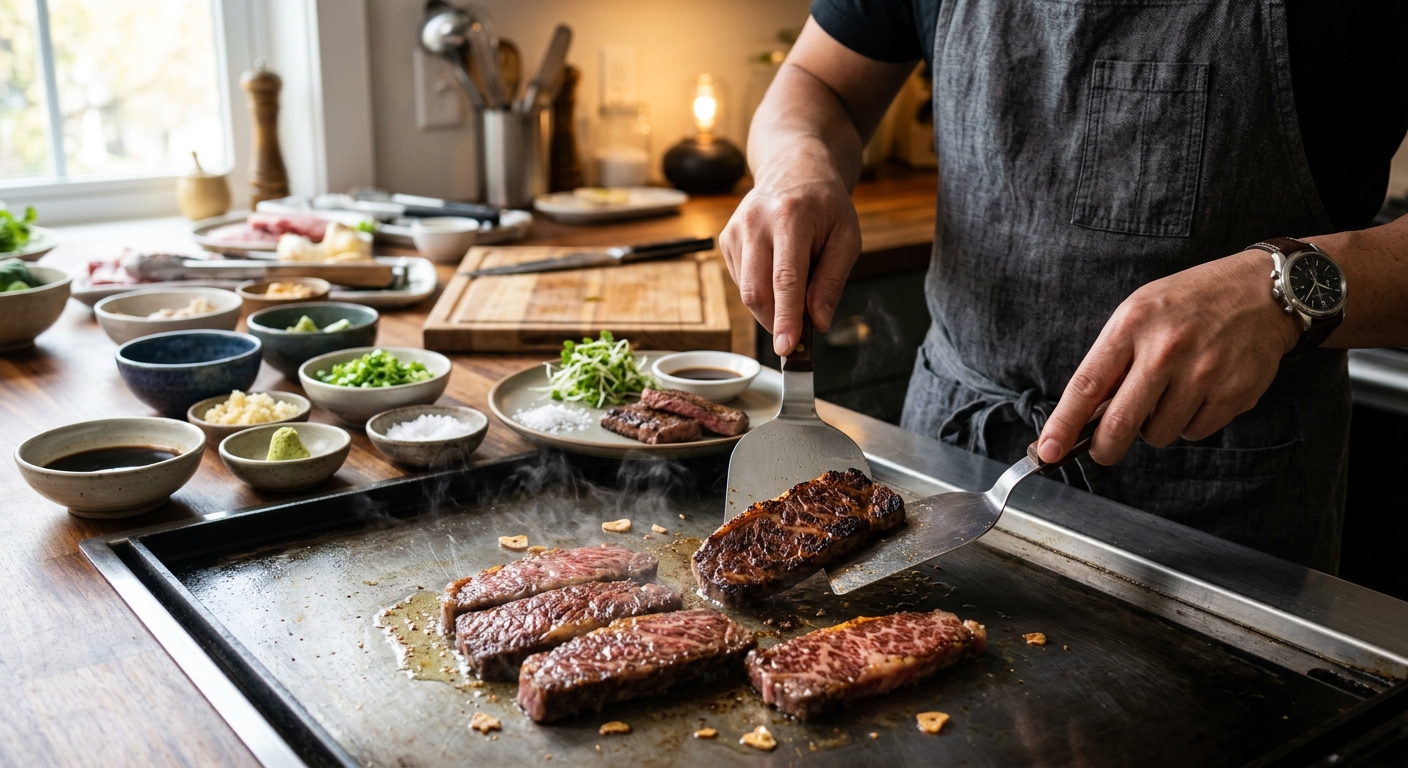
Place the seasoned Wagyu steak onto the hottest part of the griddle. Let it sear undisturbed for about 1.5 to 2 minutes to develop a rich, caramelized crust. Because Wagyu has a high fat content, it will render its own fat quickly. Flip the steak and sear the other side for another 1.5 to 2 minutes for a perfect medium-rare.
5. The Teppanyaki Technique
Using your teppanyaki spatulas, quickly slice the steak into bite-sized cubes directly on the griddle. Toss the cubes briefly to sear the freshly cut edges. Pour the sake or mirin over the meat to deglaze the surface and add a touch of sweetness. Follow immediately with a drizzle of high-quality soy sauce. Toss the meat for another 15-30 seconds until the liquids evaporate and coat the steak.
6. Serving
Remove the Wagyu cubes from the heat immediately to prevent overcooking. Serve the steak topped with the crispy garlic chips prepared earlier. Accompany the dish with grilled vegetables, such as zucchini, onions, and mushrooms, cooked in the leftover Wagyu fat on the griddle. For those who love the idea of an outdoor teppanyaki party but prefer not to cook, Elevate Your Event: Backyard Teppanyaki Party Catering in Orange County offers professional catering solutions.
Complementary Side Dishes
A classic teppanyaki meal is not complete without the perfect accompaniments. Consider preparing the following side dishes on your griddle alongside the Wagyu:
- Teppanyaki Fried Rice: Utilize leftover day-old rice, eggs, scallions, soy sauce, and a touch of butter. Cook it on the griddle after the meat to absorb the leftover Wagyu flavors.
- Grilled Vegetables: Slice zucchini, onions, carrots, and shiitake mushrooms. Grill them until tender-crisp, seasoning lightly with soy sauce and sesame seeds.
- Dipping Sauces: While Wagyu is best enjoyed with minimal seasoning, offering a light ponzu sauce or a creamy mustard sauce can provide a delightful contrast.
Conclusion
Mastering a Wagyu steak teppanyaki recipe at home allows you to enjoy one of the culinary world’s finest delicacies in a fun, interactive, and personalized setting. By selecting top-tier Wagyu beef, utilizing the correct high-heat equipment, and executing precise teppanyaki techniques, you can create a memorable dining experience that rivals top Japanese steakhouses. Remember to keep the seasoning simple to let the luxurious flavor and buttery texture of the Wagyu shine through. Whether you are cooking for a special occasion or simply treating yourself, homemade Wagyu teppanyaki is an unforgettable gastronomic journey.
Frequently Asked Questions (FAQ)
What is the best grade of Wagyu for teppanyaki?
For the ultimate teppanyaki experience, Japanese A4 or A5 Wagyu is highly recommended due to its exceptional marbling and tenderness. However, high-grade American or Australian Wagyu also provides fantastic results for home cooking.
Do I need to use oil to cook Wagyu beef?
Wagyu beef contains a significant amount of intramuscular fat, which renders quickly upon contact with heat. Therefore, you only need a very small amount of oil, or ideally beef tallow, just to start the cooking process. Often, the steak’s own rendered fat is sufficient.
Can I cook Wagyu steak well-done on a teppanyaki grill?
While you can cook Wagyu to any temperature, it is strongly advised to cook it only to rare or medium-rare. Cooking it well-done will melt away the delicate intramuscular fat, resulting in a loss of the unique flavor and tender texture that makes Wagyu so prized.
How do I clean my teppanyaki griddle after cooking Wagyu?
While the griddle is still warm (but not dangerously hot), use a grill scraper to remove large food particles. Pour a little water or club soda on the surface to loosen stubborn bits, scrape again, and wipe clean with a thick towel. Finish by applying a thin layer of cooking oil to season and protect the surface from rust.