Introduction to Wagyu Steak Teppanyaki
Teppanyaki is a captivating style of Japanese cuisine that relies on an iron griddle to cook food rapidly at high temperatures. When you combine this traditional method with the luxurious marbling and tenderness of Wagyu beef, you elevate a simple meal into an unforgettable culinary experience. Cooking Wagyu steak teppanyaki is an art form that balances intense heat, precise timing, and profound respect for premium ingredients.
In this comprehensive guide, we will explore the techniques, tools, and secrets required to master Wagyu steak teppanyaki in your own home or backyard. Whether you are hosting an intimate dinner or planning an extravagant gathering, these methods will ensure your steak is cooked to absolute perfection.
Understanding Wagyu Beef
Before diving into the cooking process, it is essential to understand what makes Wagyu beef so extraordinary. The term “Wagyu” translates directly to “Japanese cow” and refers to specific breeds known for their intense intramuscular fat marbling. This marbling is rich in monounsaturated fats, which melt at lower temperatures, giving the meat its signature buttery texture and rich, umami flavor.
Grading Systems
When selecting Wagyu for teppanyaki, you may encounter various grading systems. Japanese Wagyu is graded on a scale from A1 to A5, with A5 representing the highest possible quality. Australian and American Wagyu have their own grading systems, but they also prioritize marbling and yield. For teppanyaki, an A4 or A5 Japanese Wagyu ribeye or striploin is ideal, as the fat will render beautifully on the hot iron griddle.
Essential Equipment for Teppanyaki
Cooking authentic teppanyaki requires specific tools to achieve the right sear and handle the delicate Wagyu beef properly.
- Teppan (Iron Griddle): A flat, solid iron cooking surface is crucial. It provides consistent, high heat. If you don’t have a built-in teppan, a high-quality cast-iron flat top or griddle pan can work as a substitute.
- Spatulas: Two stainless steel teppanyaki spatulas are necessary for flipping, chopping, and maneuvering the steak efficiently.
- Cloche (Dome Lid): Used to trap steam and heat for a brief moment, ensuring the meat cooks evenly without losing moisture.
- Sharp Knife: A high-quality chef’s knife for precise slicing before serving.
If you prefer to leave the cooking to the professionals while you entertain, you might want to look into the Best Backyard Hibachi Catering in Los Angeles: The Ultimate Guide to find top-tier culinary artists who specialize in this craft.
Preparation: Respecting the Meat
Proper preparation is the foundation of a successful Wagyu teppanyaki experience. Because Wagyu is so rich and flavorful on its own, minimalism is key.
Bringing the Steak to Room Temperature
Never cook a Wagyu steak straight from the refrigerator. Allow the meat to sit at room temperature for 30 to 45 minutes before cooking. This ensures even cooking and prevents the muscle fibers from seizing up when they hit the hot griddle.
Seasoning
Keep the seasoning simple. Premium Wagyu does not need heavy marinades or complex rubs. A generous sprinkle of high-quality sea salt and freshly ground black pepper right before cooking is all that is required. Some chefs prefer to add a touch of garlic or a splash of soy sauce during the cooking process, but the goal is to enhance, not mask, the beef’s natural flavor.
The Teppanyaki Cooking Process
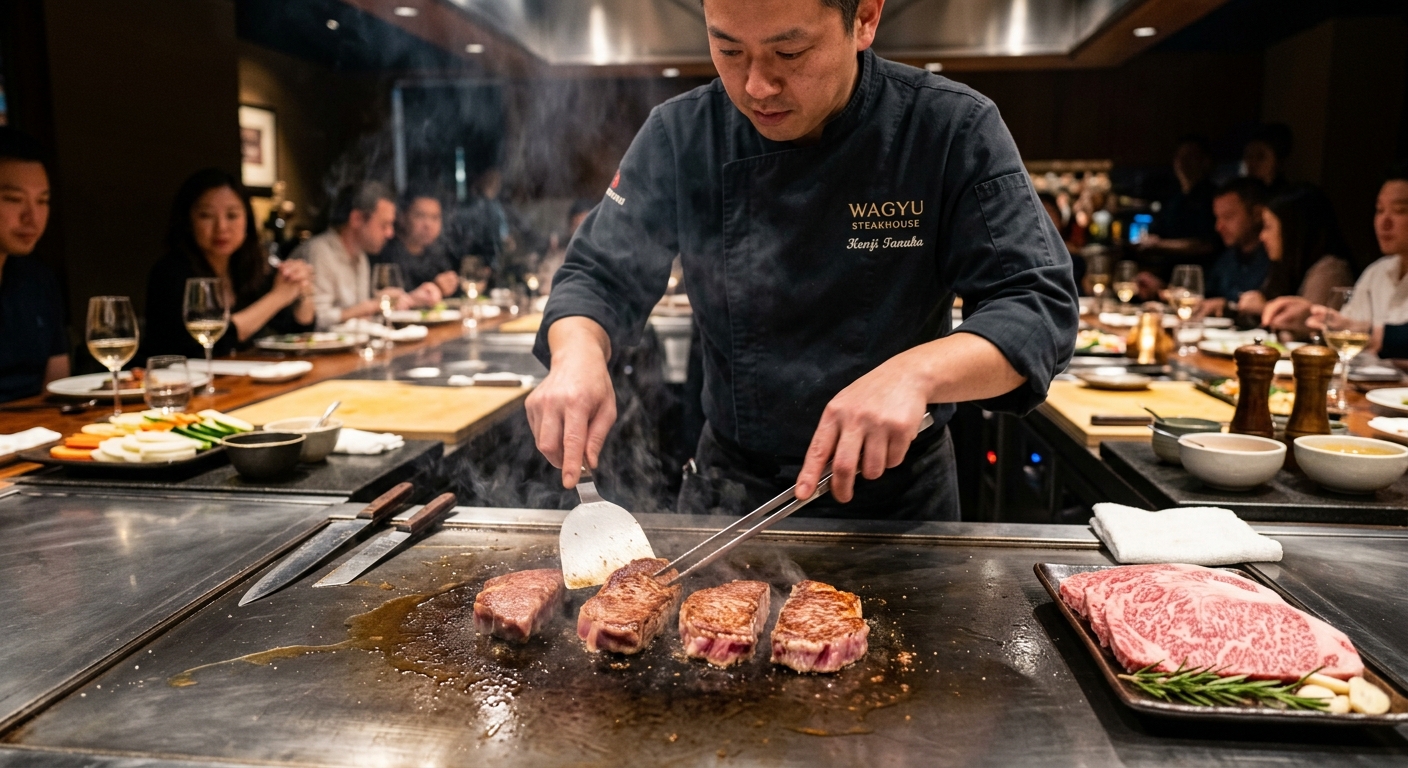
Cooking Wagyu on a teppan is a fast-paced process that requires your full attention. The high heat sears the exterior quickly, creating a delicious crust while the interior remains tender and juicy.
Heating the Teppan
Preheat your teppan or griddle to a high temperature, ideally around 400°F to 450°F (200°C to 230°C). You can test the heat by flicking a few drops of water onto the surface; they should dance and evaporate almost instantly. Because Wagyu is so well-marbled, you do not need to add much oil to the griddle. You can use a small piece of fat trimmed from the steak to grease the surface.
Searing the Steak
Place the seasoned Wagyu onto the hot teppan. You will hear an immediate, satisfying sizzle. Allow the steak to sear undisturbed for 1.5 to 2 minutes to develop a rich, caramelized crust. Using your spatulas, carefully flip the steak and sear the other side for an equal amount of time. For an authentic touch, you might find inspiration by exploring options like hiring a Private Hibachi Chef for Hire in Malibu: Ultimate Luxury Backyard Dining, where experts execute this sear flawlessly.
Resting and Slicing
Wagyu is best enjoyed medium-rare to medium. Cooking it further will cause the delicate fats to melt away completely, resulting in a loss of texture and flavor. Once the steak reaches your desired doneness, remove it from the heat immediately. Allow the meat to rest for 5 to 10 minutes on a warm plate. Resting allows the juices to redistribute throughout the meat. After resting, use a sharp knife to slice the steak against the grain into bite-sized strips, traditional for teppanyaki presentation.
Accompaniments and Presentation
Teppanyaki is not just about the meat; it is also about the complementary side dishes that balance the richness of the Wagyu.
| Accompaniment | Preparation Method | Flavor Profile |
|---|---|---|
| Garlic Fried Rice | Cooked on the teppan with beef fat, garlic, and soy sauce. | Savory, aromatic, and deeply flavorful. |
| Sautéed Vegetables | Zucchini, onions, and mushrooms seared with butter and soy. | Earthy and slightly sweet, providing a fresh contrast. |
| Dipping Sauces | Ponzu (citrus soy) and Sesame sauce. | Acidic and nutty notes to cut through the richness. |
For those looking to create an entire event around this culinary style, checking out a Private Hibachi Chef Backyard Party Los Angeles: Ultimate Guide can provide excellent ideas for menus and pairings.
Conclusion
Cooking Wagyu steak teppanyaki is a rewarding culinary endeavor that brings the excitement of Japanese steakhouses right into your home. By sourcing high-quality meat, utilizing the correct equipment, and mastering the high-heat sear, you can create a dish of unparalleled texture and flavor. Remember to keep the seasoning simple, monitor the heat closely, and allow the meat to rest before slicing. With practice, you will be able to perform this culinary art with confidence, impressing your family and guests with every buttery, melt-in-your-mouth bite.
Frequently Asked Questions
What is the difference between Hibachi and Teppanyaki?
While often used interchangeably in the West, they are different. Teppanyaki uses a flat, solid iron griddle to cook food, which allows for cooking smaller, finer ingredients like rice and chopped vegetables. Hibachi traditionally refers to a small, open-grate charcoal grill used for cooking meats and larger vegetables.
Do I need oil to cook Wagyu steak on a teppan?
Generally, you need very little to no cooking oil. Wagyu is highly marbled with fat. As it hits the hot griddle, this fat renders down rapidly, providing its own cooking fat. You can trim a small piece of fat from the edge of the steak and rub it on the griddle before placing the meat down.
What is the best doneness for Wagyu steak?
The ideal doneness for Wagyu is medium-rare to medium. This temperature allows the intense intramuscular fat to render and melt, providing the signature buttery texture. Cooking it rare might leave the fat unrendered and chewy, while cooking it well-done will melt all the fat away, leaving the meat dry.
Can I cook Wagyu teppanyaki in a regular frying pan?
Yes, if you do not have a flat-top teppan, a high-quality, heavy-bottomed cast-iron skillet is the best alternative. Cast iron retains heat well and provides an even surface for achieving the crucial hard sear that makes teppanyaki so delicious.