
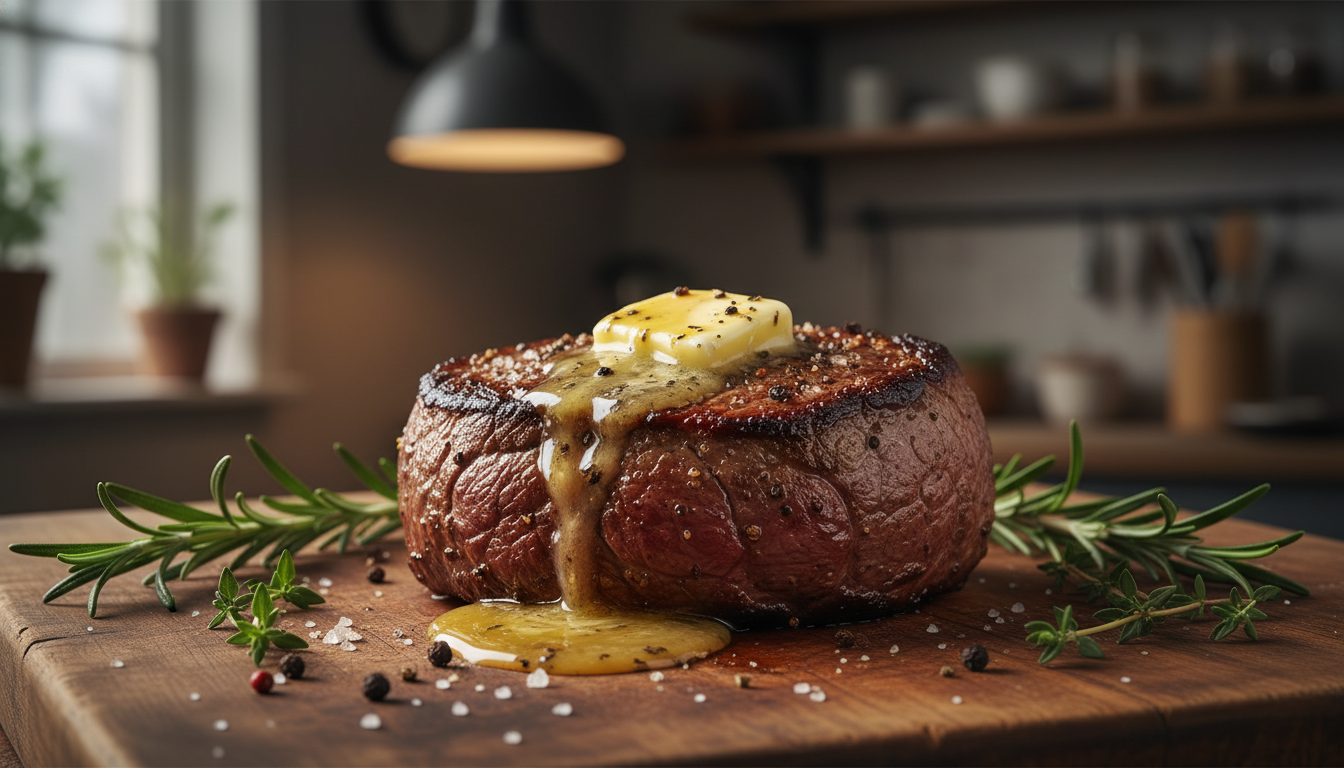
Creating a restaurant-quality meal at home is easier than you might think. When you start with an imported tender filet mignon, you are already halfway to culinary success. This cut is prized for its melt-in-your-mouth texture and rich flavor profile.
The secret to achieving professional results lies in your selection process. Before you begin, it is vital to learn how to choose premium ingredients to ensure your dish stands out. High-quality beef requires very little effort to shine, as the natural juices provide a deep, savory base.
Precision is key when preparing your steak. By keeping the preparation simple, you allow the quality of the meat to take center stage. Finishing your filet mignon in butter adds a luxurious, velvety coating that elevates every single bite. With the right technique, you can transform your kitchen into a five-star dining destination.
Key Takeaways
- Select high-quality, well-marbled beef for the best texture.
- Bring your meat to room temperature before starting the sear.
- Use high-smoke point oils for the initial crust development.
- Apply salt early to draw out moisture and improve the sear.
- Finish with a touch of dairy to add richness and shine.
The Allure of Premium Imported Filet Mignon
When you choose an imported tender filet mignon, you are investing in a superior culinary experience. This specific cut is prized for its incredible softness and mild flavor, making it a favorite among home chefs who value quality above all else. Preparing a filet mignon in butter allows the natural richness of the meat to shine through with every bite.
Understanding the Cut and Its Origins
High-end beef, such as the renowned Sterling Silver brand, is selected specifically for its consistent texture and superior marbling. These cuts undergo a rigorous aging process, often for a minimum of 21 days, which is essential for developing maximum tenderness. This patience in the aging process ensures that the muscle fibers break down, resulting in a melt-in-your-mouth sensation.
Understanding where your meat comes from provides peace of mind and better results in the kitchen. When you start with a premium, well-aged product, you eliminate much of the guesswork associated with achieving the perfect sear. Quality starts at the source, and choosing reputable, imported options is a hallmark of a dedicated cook.
Why Importing Makes a Difference in Quality
Importing high-end beef allows for access to strict quality standards that often bridge the gap between standard grades. These selections are carefully curated to ensure that every piece offers the same level of excellence. By opting for these premium imports, you gain several distinct advantages for your home cooking:
- Consistent Marbling: Ensures even fat distribution for a juicy finish.
- Superior Aging: Guarantees the tenderness that defines a great steak.
- Reliable Grading: Provides confidence that your meat meets high-tier standards.
Ultimately, the difference is noticeable the moment the meat hits the pan. Whether you are a novice or a seasoned pro, starting with an imported tender filet mignon sets the stage for success. When you finish your filet mignon in butter, the quality of the beef will elevate the entire meal to a professional level.
Selecting the Perfect Cut for Your Kitchen
When you bring home a premium cut, you set the stage for a truly memorable dining experience. Choosing the right filet mignon is the most critical step in ensuring your final dish meets the high standards of a gourmet meal.
Identifying Marbling and Texture
Look for consistent marbling throughout the meat when you are shopping. This intramuscular fat is the secret to achieving that melt-in-your-mouth texture that defines a high-quality steak.
When you have a tender filet butter cooked to perfection, the marbling renders down to create a rich, buttery flavor profile. Avoid cuts with large, uneven chunks of fat, as these will not provide the uniform tenderness you desire.
Freshness Indicators for High-End Beef
Freshness is paramount when selecting your beef. You should always look for a vibrant, deep red color, which indicates that the meat has been handled and stored correctly.
The structure of the filet mignon should feel firm to the touch rather than soft or mushy. A firm, dry surface is a reliable sign that the butcher has maintained the integrity of the cut, ensuring it is ready for your kitchen.
The Art of Light Seasoning
When you prepare a high-quality cut, less is often significantly more. The goal is to highlight the inherent richness of the beef rather than masking it with heavy spice blends. By keeping your approach simple, you ensure that every bite of your filet mignon remains the star of the plate.
Enhancing Natural Flavors Without Overpowering
High-end beef possesses a delicate, buttery profile that deserves respect. Over-seasoning can easily distract from the texture and the subtle, savory notes that define a premium steak. A light touch allows the natural juices to develop a beautiful, caramelized crust during the searing process.
Many professional chefs prefer to rely on the interaction between heat and high-quality salt. This creates a savory exterior that perfectly complements the tender interior. When you keep the seasoning minimal, you honor the quality of the imported beef.
The Best Salts and Spices for Filet Mignon
Choosing the right salt is the most important decision you will make at the seasoning stage. Coarse sea salt or kosher salt works best because the larger grains adhere well to the surface of the meat. These salts draw out moisture just enough to create a perfect sear without drying out the center.
While salt is the foundation, a light dusting of freshly cracked black pepper adds a necessary layer of complexity. You might also consider a hint of garlic powder or dried herbs if you want a subtle aromatic boost. However, always remember that the goal is to maintain the integrity of the tender filet butter cooked to perfection.
| Seasoning Type | Best Use Case | Flavor Impact |
|---|---|---|
| Coarse Sea Salt | Pre-sear crust | Enhances natural beefiness |
| Black Pepper | Finishing touch | Adds mild, earthy heat |
| Garlic Powder | Subtle infusion | Provides savory depth |
| Tender filet butter cooked | Final basting | Rich, velvety finish |
Imported tender filet mignon lightly seasoned, cooked in butter.
The secret to a restaurant-quality steak often lies in the final moments of cooking. When you prepare a tender filet, the goal is to achieve a perfect crust while maintaining a succulent interior. This is where the classic French technique of butter basting, or arroser, becomes your best friend in the kitchen.
The Science of Butter Basting
Butter basting involves spooning foaming butter over the steak as it finishes in the pan. As the butter melts and begins to foam, the milk solids toast, creating a rich, nutty aroma that infuses the meat. This process cooks the steak gently, ensuring the heat penetrates evenly without burning the exterior.
By using a filet mignon seasoned butter, you lock in moisture and add a layer of complexity that simple searing cannot achieve. This technique is essential for anyone looking to elevate their home cooking to a professional level. You can learn more about perfecting this cut by visiting this guide to cooking filet mignon.
Choosing the Right Butter for High-Heat Cooking
Cooking with butter requires a keen understanding of smoke points to ensure the fat does not burn. Standard butter contains milk solids that can turn bitter if exposed to high heat for too long. To avoid this, many chefs prefer using clarified butter or ghee, which has a much higher smoke point.
If you choose to use regular butter, keep the heat at a moderate level during the basting phase. Adding a splash of high-quality oil can also help stabilize the fat. Using the right filet mignon seasoned butter approach ensures your tender filet remains flavorful and perfectly cooked every single time.
Essential Tools for the Perfect Steak
Equipping your kitchen with high-quality tools is the secret to mastering the art of the perfect sear. When you prepare a tender filet, the equipment you choose directly impacts the final texture and flavor profile of your meal.
Cast Iron Skillets and Their Benefits
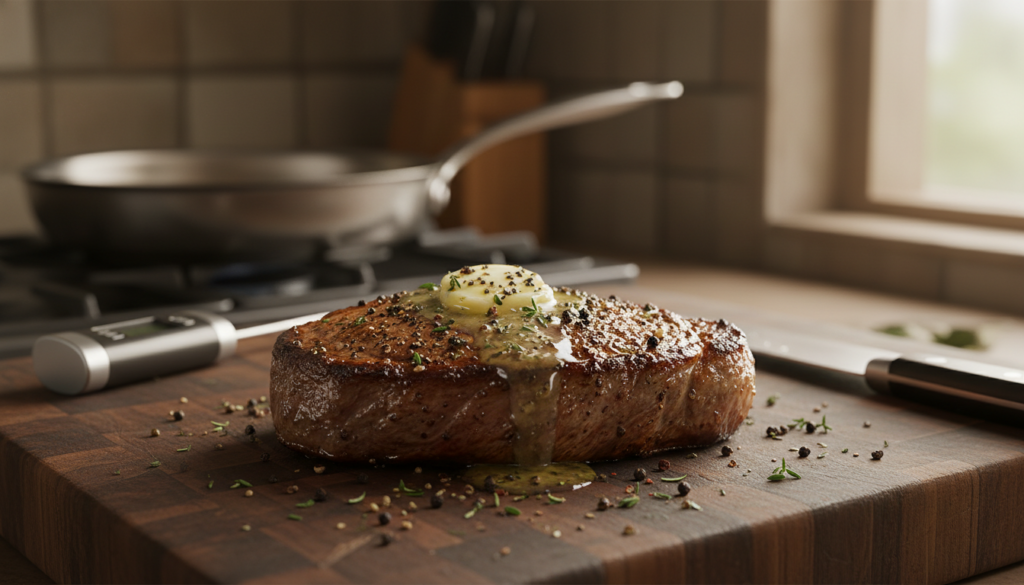
A heavy-duty cast iron skillet is the gold standard for home chefs who want professional results. These pans are prized for their ability to retain heat, which ensures that your filet mignon seasoned butter preparation develops a deep, flavorful crust.
The benefits of using cast iron include:
- Superior heat retention for a consistent sear across the entire surface.
- Natural non-stick properties that improve with every use.
- Durability that lasts for generations in a busy kitchen.
Precision Temperature Control with Meat Thermometers
Even the most experienced chefs rely on technology to remove the guesswork from cooking. Using a digital meat thermometer is the only way to guarantee that your steak reaches the exact internal temperature you desire every single time.
“Precision is the difference between a good steak and a masterpiece. Always use a thermometer to ensure your meat is cooked to your exact preference.”
For a tender filet, aim for an internal temperature of 115°F for a rare finish or 125°F for a perfect medium-rare. Once you master the balance of heat and timing, your filet mignon seasoned butter will rival the quality found in the finest steakhouses.
Step-by-Step Preparation for Home Chefs
Achieving that signature crust on your beef is the hallmark of a skilled home chef. When you work with high-quality cuts, the process becomes an exercise in patience and timing. By following a structured approach, you ensure that every bite is tender and flavorful.
Preparing the Meat for the Pan
Before the heat touches the beef, you must ensure the meat is ready for the transformation. Proper preparation starts long before you turn on the stove.
- Remove the steak from the refrigerator 15 to 20 minutes before cooking.
- Allow the meat to sit at room temperature to ensure even heat distribution.
- Pat the surface of the steak completely dry with a paper towel to prevent steaming.
A dry surface is essential for a beautiful sear. Moisture on the exterior will create steam, which prevents the development of that deep, savory crust you desire.
Achieving the Ideal Sear
Once your skillet is hot and the oil begins to shimmer, you are ready to begin. Place your steak carefully into the pan and let it develop a rich, golden-brown exterior without moving it too often.
Sear each side for 2 to 3 minutes in a heavy cast-iron skillet. This initial phase is critical for locking in the natural juices of the meat. When you enjoy a filet mignon cooked in butter, this crust acts as the perfect foundation for the flavors that follow.
The goal is to create a consistent, caramelized finish across the entire surface. By mastering this technique, you elevate your imported filet mignon butter experience to a professional level right in your own kitchen.
Mastering the Butter Basting Technique
Transforming a simple piece of meat into a culinary masterpiece often comes down to the final minutes in the pan. When you focus on the filet mignon cooked in butter, you are essentially creating a self-basting environment that locks in moisture and builds a complex flavor profile. This technique is the hallmark of professional kitchens and is surprisingly accessible for home cooks.
Aromatic Additions for the Butter Bath
Once your steak has developed a beautiful sear, it is time to introduce aromatics to the pan. Adding fresh sprigs of rosemary or thyme infuses the fat with earthy, herbal notes that penetrate the meat. Crushed garlic cloves are another essential addition, providing a savory depth that complements the richness of the beef.
The secret lies in the infusion. As the butter melts and begins to foam, these aromatics release their essential oils directly into the liquid gold. This process ensures that every bite of your imported filet mignon butter-basted steak is infused with layers of flavor.
“The butter bath is not just about cooking; it is about layering flavors that transform a good steak into an unforgettable dining experience.”
| Aromatic | Flavor Profile | Best Pairing |
|---|---|---|
| Fresh Rosemary | Piney and Woody | Classic Beef |
| Thyme | Floral and Earthy | Delicate Cuts |
| Garlic | Pungent and Savory | All Steak Cuts |
Timing and Temperature Management
Managing the heat is critical during the basting stage to ensure the butter does not burn. You should tilt your pan slightly, allowing the foaming butter to pool at the bottom with your aromatics. Use a large spoon to continuously pour this hot, flavored liquid over the steak for the final two minutes of cooking.
This constant motion ensures even heat distribution and helps the butter penetrate the fibers of the meat. By keeping the temperature steady, you maintain a clean, nutty flavor profile that elevates your imported filet mignon butter preparation. Proper timing prevents the butter from turning bitter, ensuring your filet mignon cooked in butter remains succulent and perfectly seasoned.
Resting Your Steak for Maximum Tenderness
Achieving a truly succulent bite requires patience after the cooking is done. Many home chefs feel the urge to serve their meal immediately, but taking a pause is essential for the best results.
Why Resting is Non-Negotiable
When you cook a high-quality cut, the heat causes the muscle fibers to contract and push the juices toward the center. If you slice into the meat right away, those flavorful juices will spill out onto your cutting board instead of staying inside the steak. Resting allows these juices to redistribute throughout the meat, ensuring every bite remains moist and flavorful.
This process is especially vital when you have prepared a tender filet mignon seasoned to perfection. By waiting, you ensure that the texture remains buttery and soft rather than becoming dry or tough. Consider these key benefits of letting your meat rest:
- Improved moisture retention for a juicier mouthfeel.
- Even temperature distribution throughout the center of the cut.
- Enhanced flavor profile as the juices settle back into the fibers.
How to Keep Your Steak Warm While Resting
For the best results, you should let your imported filet mignon rest for about 30 to 45 minutes depending on the thickness of the cut. This duration might seem long, but it is the gold standard for achieving professional-level tenderness. You do not want your meal to get cold during this time, so proper insulation is key.
The most effective method is to place the steak on a warm plate and cover it loosely with a piece of aluminum foil. This creates a small tent that traps heat without steaming the crust you worked so hard to create. Avoid wrapping the foil too tightly, as this can cause the steak to sweat and lose its crisp exterior.
Pairing Sides to Complement Your Filet
When you serve a high-quality steak, the accompanying dishes should elevate the plate without stealing the spotlight. A tender filet mignon seasoned to perfection deserves sides that provide a harmonious balance of flavor and texture. By choosing the right partners, you create a cohesive dining experience that feels truly special.
Classic Vegetable Accompaniments
Fresh vegetables offer a vibrant contrast to the rich, buttery profile of premium beef. Consider roasting seasonal vegetables like asparagus or heirloom carrots to bring out their natural sweetness. These earthy notes provide a delightful brightness that cleanses the palate between bites.
Alternatively, a crisp arugula salad tossed with a light lemon vinaigrette adds a necessary acidic kick. This simple addition cuts through the richness of the meat, ensuring every mouthful remains as exciting as the first. Freshness is key when selecting greens to accompany your main course.
Starch Pairings That Elevate the Meal
For those seeking a more indulgent experience, the right starch can turn a simple dinner into a feast. Creamy mashed potatoes are a timeless choice, offering a velvety texture that pairs beautifully with an imported filet mignon. The smooth consistency of the potatoes complements the melt-in-your-mouth quality of the beef.
If you prefer a bit of crunch, try roasting fingerling potatoes with fresh rosemary and sea salt. These golden, crispy bites provide a satisfying contrast to the tender steak. Whether you choose creamy or crispy, these starches ensure your meal is perfectly rounded and deeply satisfying.
Wine and Beverage Pairings for Steak Lovers
Discovering the ideal harmony between your glass and your plate is the secret to a professional-grade meal at home. When you prepare a premium imported filet mignon, the beverage you choose acts as a bridge that connects the flavors of the meat to your palate. A thoughtful pairing transforms a standard dinner into an unforgettable culinary event.
Red Wine Selections That Cut Through the Butter
Bold red wines are the traditional choice for a reason. The tannins found in varieties like Cabernet Sauvignon or Merlot work effectively to cut through the richness of the butter-basted steak. This interaction cleanses the palate, ensuring that every bite of your tender filet mignon seasoned to perfection tastes as vibrant as the first.
“Great wine is not just a drink; it is the soul of the meal that brings out the hidden character of the ingredients.”
If you are looking for inspiration beyond the home kitchen, you might want to discover the top hibachi grill in Los Angeles to see how professional chefs balance these bold flavors. A well-structured wine should never overpower the meat but rather complement its delicate texture.
Non-Alcoholic Pairings for a Sophisticated Palate
You do not need alcohol to achieve a balanced and sophisticated dining experience. Sparkling juices, such as a crisp pomegranate or tart cranberry blend, provide the necessary acidity to contrast the buttery finish of the beef. These options keep the palate refreshed and ready for the next savory bite.
Sophisticated mocktails featuring fresh herbs like rosemary or thyme also pair beautifully with high-end beef. By focusing on bright, acidic profiles, you can elevate your meal without the need for spirits. These choices ensure that every guest enjoys a refined and balanced dining experience.
Conclusion
Elevating your home kitchen starts with the right ingredients and a passion for technique. Mastering the preparation of an imported filet mignon is a rewarding skill that brings professional dining into your own space.
Focusing on high-quality beef and precise heat control allows you to create a meal that is both elegant and deeply satisfying. A tender filet mignon seasoned with care highlights the natural richness of the meat. You will find that simple additions like fresh herbs and high-quality butter transform a standard dinner into a memorable event.
We hope this guide empowers you to host your next special gathering with confidence and flair. Experiment with different side dishes or wine pairings to discover your personal signature style. Your kitchen is the perfect place to explore these flavors and share a delicious meal with those you value most.