Grilling a Wagyu ribeye steak is an experience unlike any other. Known for its intense marbling, buttery texture, and rich umami flavor, Wagyu beef requires a delicate touch and a specific set of techniques to truly shine. Unlike standard cuts of beef, Wagyu’s high fat content means it cooks differently, rendering quickly and creating a luxurious mouthfeel that is prized by culinary experts worldwide. In this comprehensive guide, we will walk you through the professional methods for selecting, preparing, and grilling a Wagyu ribeye steak to perfection.
Understanding Wagyu Beef
Before you fire up the grill, it is crucial to understand what makes Wagyu so special. “Wagyu” literally translates to “Japanese cow.” The meat is categorized by its marbling score, with A5 being the highest and most coveted grade in the Japanese system. This intricate webbing of intramuscular fat melts at a lower temperature than regular beef fat, which is the secret behind its legendary melt-in-your-mouth texture.
Because of this rich fat content, portion sizes for Wagyu are typically smaller than traditional steaks. A few ounces per person are often enough to satisfy, especially if you are planning a multi-course meal. If you are looking to impress your guests with a full culinary event, consider exploring Creative Dinner Party Themes for Adults: Elevate Your Next Gathering to build a memorable evening around this exquisite centerpiece.
Selecting the Perfect Wagyu Ribeye
When purchasing a Wagyu ribeye, you will generally encounter three main types: Japanese Wagyu, Australian Wagyu, and American Wagyu. Each offers a different experience.
- Japanese Wagyu (A5): The pinnacle of marbling and luxury. Extremely rich, buttery, and best served in small portions.
- Australian Wagyu: A crossbreed that offers excellent marbling, falling somewhere between Japanese and American profiles.
- American Wagyu: Typically a cross between Japanese Wagyu and Angus cattle. It retains the robust beefy flavor of Angus with enhanced marbling.
The table below provides a quick comparison of the three primary types of Wagyu beef to help you choose the best option for your palate and budget.
| Wagyu Origin | Marbling Intensity | Flavor Profile | Ideal Portion Size |
|---|---|---|---|
| Japanese A5 | Extremely High | Rich, buttery, delicate | 2 to 4 ounces |
| Australian | High | Balanced, savory | 4 to 8 ounces |
| American | Moderate to High | Beefy, robust, tender | 8 to 12 ounces |
Preparation: Treating the Meat with Respect
1. Thawing and Resting
If your Wagyu ribeye is frozen, thaw it slowly in the refrigerator for 24 to 48 hours. Never use a microwave or warm water, as this will compromise the delicate fat. Before grilling, take the steak out of the refrigerator and let it sit at room temperature for about 30 to 45 minutes. This ensures even cooking.
2. Trimming and Portioning
If you are working with an A5 Japanese Wagyu ribeye, you may want to trim the edges slightly and cut the steak into smaller strips or blocks, rather than serving a massive slab. This is a common practice in fine dining and is similar to techniques used when learning How to Cook Japanese Teppanyaki at Home: A Professional Guide.
3. Seasoning
With Wagyu, less is more. The flavor of the beef itself should be the star. Generously season both sides with coarse sea salt or kosher salt just before placing it on the grill. Avoid marinades, heavy rubs, or pepper before cooking, as pepper can burn at high heat and introduce a bitter taste. You can add freshly ground black pepper after the steak has rested.
The Grilling Process
Equipment Setup
Wagyu can be cooked on a gas grill, charcoal grill, or even a cast-iron skillet on the grill grates. Charcoal, specifically binchotan if you have it, imparts a subtle smokiness that complements the meat beautifully. Ensure your grill grates are impeccably clean to prevent sticking.
Temperature Control
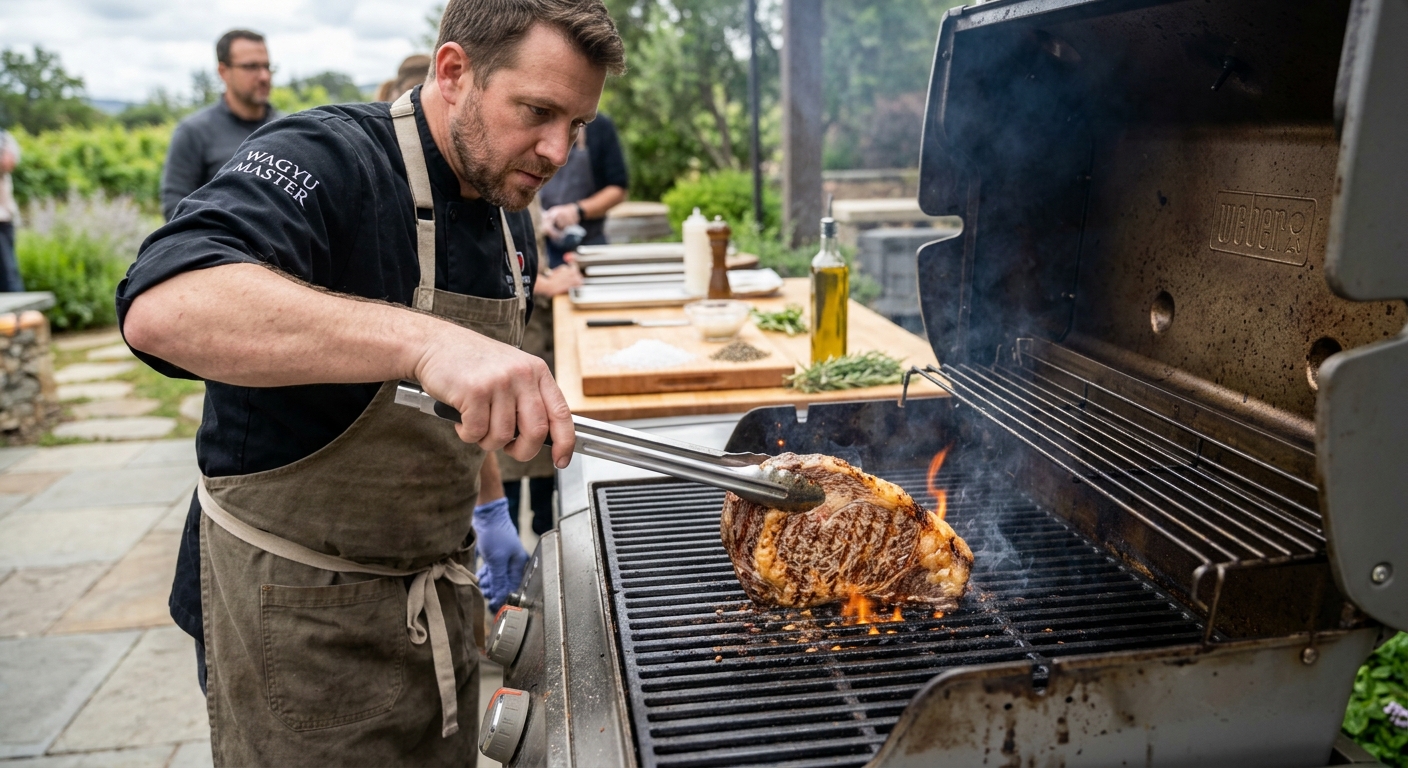
Because of the high fat content, flare-ups are virtually guaranteed when grilling Wagyu directly over an open flame. To manage this, set up a two-zone fire. Have one side of the grill blazing hot for searing, and the other side at a lower temperature (or unlit) as a safe zone to move the meat to when flare-ups occur.
Searing and Cooking
Place the Wagyu ribeye on the hottest part of the grill. You want to develop a deep, caramelized crust quickly. Sear the steak for about 1 to 2 minutes per side, depending on thickness. Watch closely—do not walk away from the grill. If the flames rise too high, gently move the steak to the cooler side until the fire subsides.
For Japanese A5 Wagyu, a quick sear is often all that is needed to reach the ideal internal temperature of medium-rare. Cooking past medium will melt away all the precious fat, leaving the steak dry and ruining the investment.
Resting and Serving
Resting is a critical step for any steak, but it is absolute paramount for Wagyu. Remove the steak from the grill when it is about 5 degrees Fahrenheit below your target temperature (aim for 125°F for rare, 130°F for medium-rare). Place it on a warm plate, tent loosely with foil, and let it rest for 5 to 10 minutes. This allows the muscle fibers to relax and the juices and rendered fats to redistribute evenly throughout the meat.
When it comes time to serve, slice the Wagyu ribeye against the grain into thin strips. This maximizes tenderness. Serve immediately, perhaps with a side of freshly grated wasabi, flaky sea salt, or a light ponzu sauce to cut through the richness of the fat. If you are looking to provide this level of culinary excellence at a larger scale, you might want to consult A Guide to Luxury Japanese Catering in Los Angeles for professional inspiration.
Conclusion
Grilling a Wagyu ribeye steak is a culinary triumph when executed correctly. By understanding the unique properties of the meat, utilizing a two-zone fire to control flare-ups, and respecting the need for minimal seasoning and proper resting, you can achieve a steakhouse-quality result at home. Remember that Wagyu is an exercise in richness and restraint; treat the ingredient with the care it deserves, and it will reward you with an unforgettable dining experience.
Frequently Asked Questions
What is the best temperature to cook Wagyu ribeye?
The optimal doneness for Wagyu ribeye is rare to medium-rare (an internal temperature of 120°F to 130°F). Cooking it beyond medium will cause the delicate intramuscular fat to render out completely, resulting in a loss of the steak’s signature buttery texture and flavor.
Should I oil the Wagyu steak before grilling?
No, there is no need to add oil to a Wagyu steak. The meat contains an abundance of natural fat that will render as soon as it hits the hot grill, providing plenty of lubrication and preventing it from sticking to the grates.
How do I prevent flare-ups when grilling Wagyu?
Because Wagyu fat melts quickly, flare-ups are common over an open flame. To prevent burning, set up a two-zone fire with a hot sear zone and a cooler safety zone. If flames erupt, immediately move the steak to the cooler side until the fire dies down.
Can I marinate Wagyu ribeye?
It is highly recommended not to marinate Wagyu beef. The flavor profile of Wagyu is delicate, rich, and highly prized. Heavy marinades will mask the natural taste of the beef. Stick to high-quality coarse salt for seasoning before cooking.