Introduction to Teppanyaki Seafood Excellence
Teppanyaki dining represents a beautiful synergy between culinary skill, high-quality ingredients, and interactive entertainment. When you combine luxurious seafood like lobster and scallops with the intense, even heat of a teppanyaki grill, the result is nothing short of spectacular. This grilled lobster and scallops recipe teppanyaki style will guide you through the professional techniques required to recreate this upscale steakhouse experience in your own home or for your next gathering.
Creating restaurant-quality teppanyaki seafood requires precision, timing, and an understanding of how high heat interacts with delicate proteins. For those planning a high-end gathering where flawless execution is paramount, you might consider professional assistance, such as Upscale Event Catering Services in Los Angeles: Elevating Your Special Occasion. However, with the right equipment and guidance, mastering this recipe is highly rewarding.
Essential Ingredients for Teppanyaki Lobster and Scallops
The secret to exceptional teppanyaki lies in the quality of the ingredients. Since the cooking method is rapid and the seasoning is typically minimalist, there is nowhere to hide subpar seafood.
- Lobster Tails: 2 to 4 large, cold-water lobster tails (5-8 oz each). Cold-water lobsters generally offer a firmer, sweeter meat compared to warm-water varieties.
- Sea Scallops: 1 lb of large, dry-packed sea scallops. ‘Dry-packed’ means they have not been treated with sodium tripolyphosphate (STPP), which causes scallops to absorb excess water and prevents a good sear.
- Clarified Butter or Ghee: 4 tablespoons. Clarified butter has a higher smoke point than regular butter, making it ideal for the teppanyaki grill.
- Garlic: 3 cloves, finely minced.
- Soy Sauce: 2 tablespoons (low sodium preferred).
- Lemon Juice: Freshly squeezed from 1 lemon.
- Salt and Pepper: Sea salt and freshly ground black pepper to taste.
- Garnish: Thinly sliced green onions and lemon wedges.
Preparing the Seafood for the Grill
Proper preparation is crucial before the seafood touches the hot grill. If you are hosting a large event and want a seamless culinary performance, researching Hiring a Japanese Chef for a Private Dinner Party in LA: The Ultimate Guide can provide insights into how professionals prep their stations.
Prepping the Scallops
Remove the tough, crescent-shaped muscle on the side of each scallop. Pat the scallops completely dry with paper towels. Any surface moisture will create steam on the grill, preventing the desirable caramelized crust from forming. Season lightly with salt and pepper just before grilling.
Prepping the Lobster Tails
Using sharp kitchen shears, cut down the center of the hard top shell of the lobster tail, stopping just before the tail fin. Gently pry the shell open and lift the meat out, letting it rest on top of the shell (butterflying). Alternatively, for true teppanyaki style, remove the meat entirely from the shell and cut it into bite-sized medallions. This allows for even cooking and easy eating.
The Teppanyaki Cooking Process
A teppanyaki grill (or a large cast-iron griddle on your stovetop) should be heated to a medium-high temperature, approximately 400°F (200°C). Ensuring an even cooking surface is vital for a consistent sear.
Grilling the Scallops
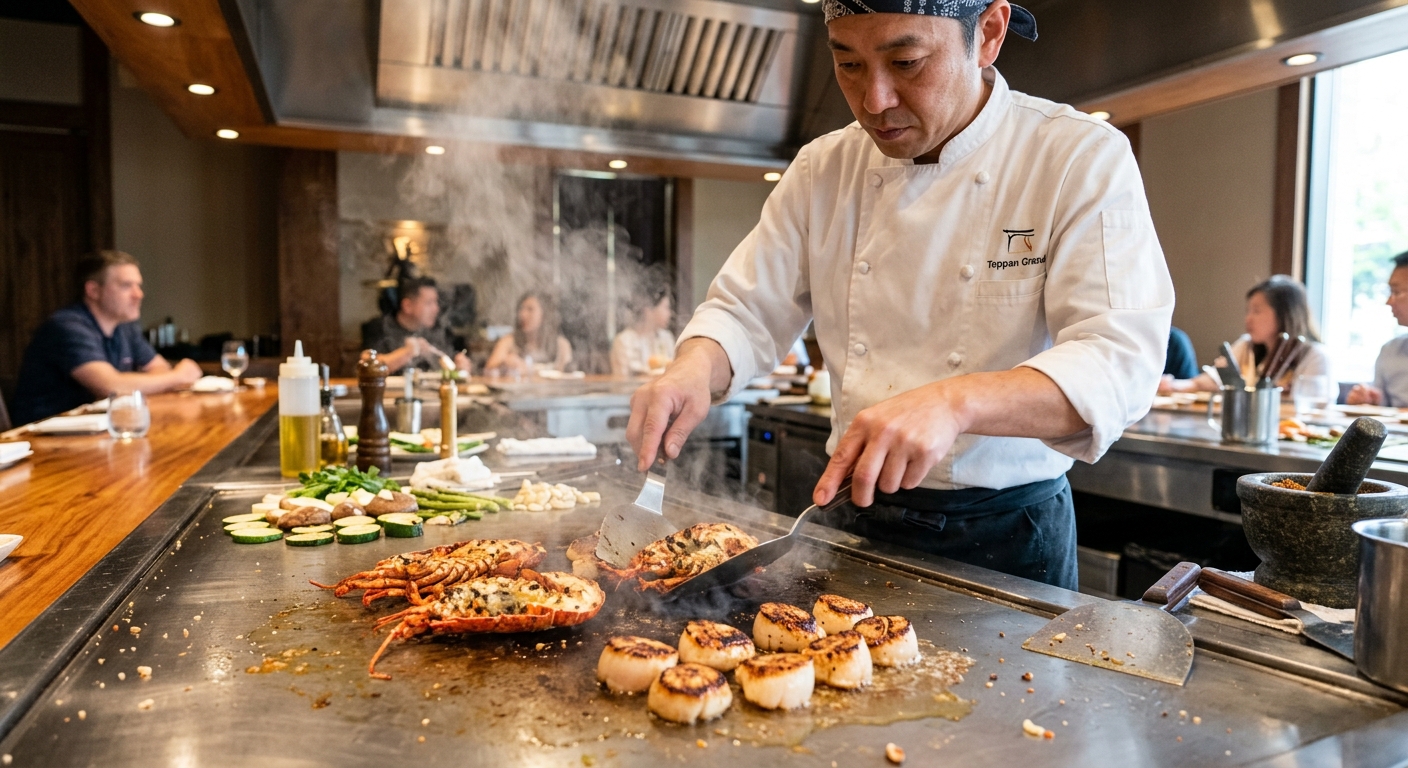
Add a tablespoon of clarified butter to the hot grill. Place the scallops down, ensuring they have enough space between them. Do not move them for approximately 2 minutes to allow a golden-brown crust to develop. Flip the scallops, add a touch more butter and a splash of lemon juice, and cook for another 1 to 2 minutes. The center should remain slightly translucent to ensure they are tender and not rubbery. Remove from the grill immediately.
Grilling the Lobster
In a separate area of the grill, melt another tablespoon of clarified butter along with the minced garlic. Add the lobster meat. Sauté the lobster pieces for about 2 minutes, turning them frequently. As the meat begins to turn opaque and firm up, splash with soy sauce and lemon juice. Cook for an additional 1-2 minutes until the meat is fully cooked but still tender. Overcooking lobster will render it tough.
For those looking to expand their teppanyaki repertoire beyond just cooking the food to creating a full atmospheric experience with beverages, exploring options like On Site Hibachi Catering with Bartenders in LA: The Ultimate Event Experience can be incredibly inspiring.
Serving and Pairing Suggestions
Teppanyaki seafood is best served immediately, straight from the grill to the plate. Garnish the lobster and scallops with freshly sliced green onions and serve with extra lemon wedges.
Traditional accompaniments include garlic fried rice, grilled vegetables (such as zucchini, onions, and mushrooms), and dipping sauces like a mustard sauce or a ginger-soy glaze. A crisp, dry white wine like a Chablis or a Sancerre pairs beautifully with the rich, buttery flavors of the seafood.
Comparing Seafood for Teppanyaki
When selecting seafood for your teppanyaki grill, understanding the characteristics of different proteins helps in managing cooking times and heat levels. The following table compares sea scallops and lobster tails in a teppanyaki setting.
| Seafood Type | Ideal Grill Temp | Avg. Cooking Time | Flavor Profile |
|---|---|---|---|
| Dry-Packed Sea Scallops | High (400°F+) | 3-4 minutes total | Sweet, delicate, buttery |
| Cold-Water Lobster Meat | Medium-High (375°F) | 4-5 minutes total | Rich, firm, slightly sweet |
Expanding Your Japanese Culinary Experience
While mastering the grilled lobster and scallops recipe teppanyaki style is a fantastic achievement, Japanese cuisine offers a vast array of culinary arts. Incorporating sushi into your teppanyaki event can provide a delightful contrast in temperatures and textures. If you are hosting a substantial event, you might explore services detailed in Private Party Sushi Chef San Fernando Valley: Elevate Your Next Event to provide your guests with a multi-course, authentic Japanese dining experience.
Conclusion
Executing a flawless grilled lobster and scallops recipe on a teppanyaki grill is a testament to the beauty of simple, high-quality ingredients cooked with precision. By sourcing dry-packed scallops and cold-water lobster, managing your grill’s heat, and utilizing clarified butter, you can achieve a restaurant-quality sear and delicate, tender seafood. Whether you are cooking for a small family dinner or aiming to impress guests at a larger gathering, this teppanyaki method offers a reliable and delicious way to enjoy premium seafood.
Frequently Asked Questions
Can I use regular butter instead of clarified butter?
It is not recommended for high-heat teppanyaki grilling. Regular butter contains milk solids and water, which will burn quickly at the temperatures required to properly sear scallops and lobster. Clarified butter or ghee has a much higher smoke point.
How do I know when the scallops are perfectly cooked?
Scallops cook very quickly. They are done when they have a deep golden-brown crust on the outside but remain slightly springy to the touch. The very center should remain slightly translucent; if they are completely opaque all the way through, they are likely overcooked and will be rubbery.
Do I need a special teppanyaki grill to make this recipe?
While a flat-top teppanyaki grill offers the best experience and space, you can absolutely replicate this recipe indoors using a large, heavy-duty cast-iron skillet or a cast-iron griddle placed over two stovetop burners. The key is ensuring the cooking surface is very hot and retains heat well.