Introduction to Cooking Wagyu Steak on a Hibachi
Wagyu beef is renowned globally for its unparalleled marbling, tender texture, and rich, buttery flavor. Originating from Japan, this premium meat requires careful handling and precise cooking methods to ensure its delicate fats render perfectly without losing its signature melt-in-your-mouth quality. One of the most traditional and effective ways to cook Wagyu is on a hibachi grill. The high, concentrated heat of a charcoal hibachi sears the exterior quickly, locking in the savory juices while allowing the internal fat to melt gently. This comprehensive guide will walk you through everything you need to know about how to cook Wagyu steak on a hibachi, from selecting the right cut to mastering the grill.
Choosing the Perfect Wagyu Cut
Before you even light the coals, selecting the right piece of Wagyu is crucial. Wagyu comes in various grades, with A5 being the highest quality Japanese Wagyu, boasting intense marbling. When shopping for Wagyu to cook on a hibachi, consider cuts like Ribeye, Striploin, or Filet Mignon. Ribeye and Striploin are particularly excellent for high-heat grilling because their fat content protects the meat from drying out and enhances the flavor during the searing process. If you want to experience professional grade Wagyu, it’s worth noting the standards set by top-tier dining establishments. For inspiration on authentic Japanese culinary experiences, you can read about The Best Japanese Restaurants in Los Angeles Downtown: A Culinary Guide.
Essential Preparation Steps
Preparing Wagyu for the grill requires a minimalist approach to let the natural flavors shine.
- Temperature: Remove the Wagyu steak from the refrigerator about 30 to 45 minutes before cooking. Allowing it to reach room temperature ensures even cooking. Because of its high fat content, cold Wagyu placed directly on a hot grill will seize up, resulting in a tough texture.
- Seasoning: Keep it simple. A generous sprinkle of coarse sea salt (like Maldon or kosher salt) and freshly cracked black pepper just before grilling is all you need. Avoid marinades or heavy rubs that will mask the beef’s delicate flavor profile.
- Trimming: If your steak has a thick fat cap, you may want to trim a small piece off to use as a greasing agent for the hibachi grates later.
Setting Up the Hibachi Grill
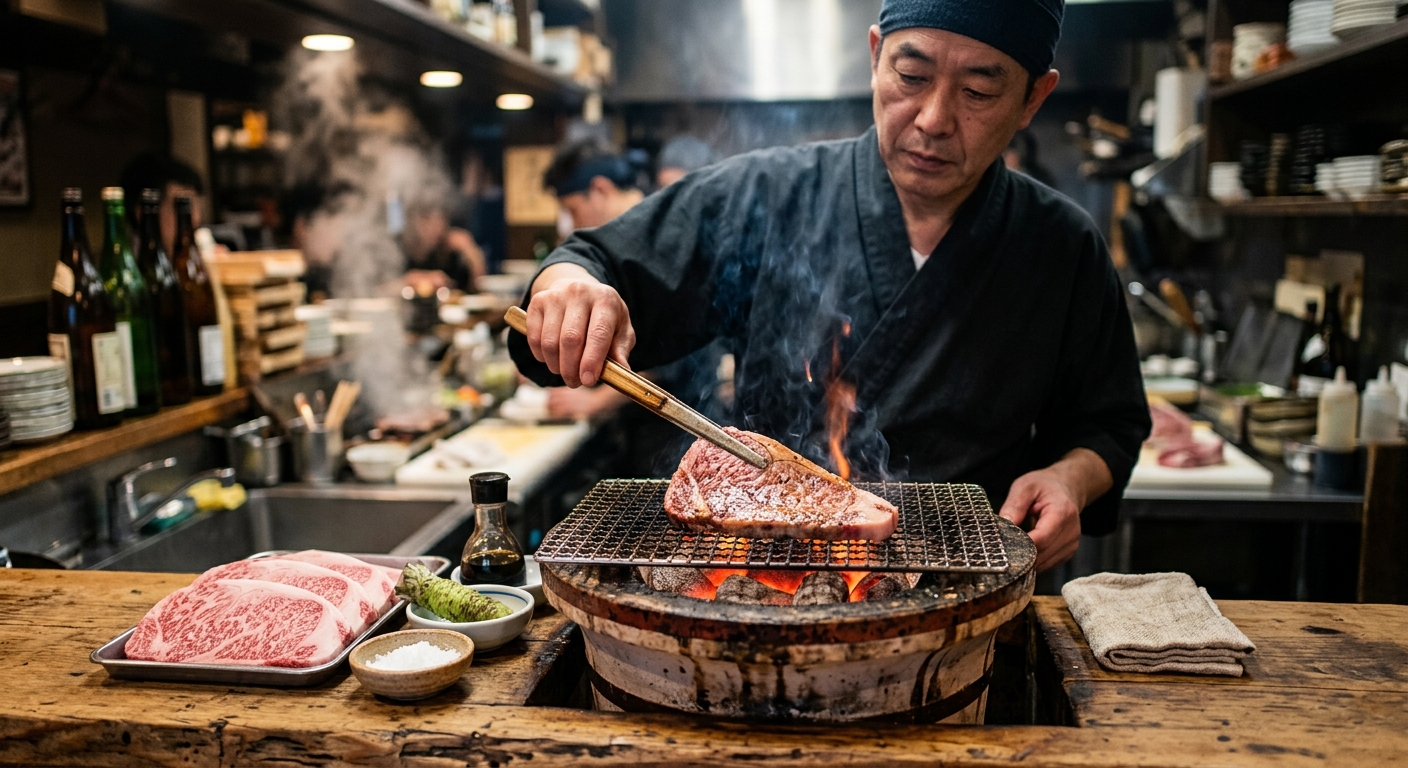
The hibachi grill, a traditional Japanese heating device, is perfect for grilling meat due to its open-grate design and use of binchotan (Japanese white charcoal). Binchotan is highly recommended because it burns exceptionally hot, clean, and without producing smoke or chemical odors that could taint the meat.
Light your binchotan and let it burn until it is covered in a fine white ash, indicating it has reached optimal temperature (often exceeding 1000 degrees Fahrenheit). Arrange the coals to create a two-zone cooking surface: a hot zone for searing and a cooler zone for resting or gentle cooking if the steak is particularly thick. If you are considering hosting a Japanese-style barbecue at home but prefer professional help, you might find Mobile Teppanyaki Chef Los Angeles Cost: A Comprehensive Guide useful for planning your event budget.
The Grilling Process
Cooking Wagyu is a fast process. You must be attentive and ready to move quickly to avoid overcooking this expensive piece of meat.
1. Greasing the Grates
Using a pair of tongs, rub the small piece of Wagyu fat you trimmed earlier (or a paper towel lightly dipped in neutral oil) across the hot grates. This prevents sticking and adds a baseline of flavor.
2. The Sear
Place the seasoned Wagyu steak directly over the hottest part of the hibachi (the hot zone). You should hear an immediate, vigorous sizzle. Because Wagyu fat melts at a lower temperature than regular beef fat, flare-ups are common. Do not panic, but be prepared to move the steak slightly if the flames threaten to burn the meat. Sear for about 1 to 2 minutes per side to develop a beautiful, crusty Maillard reaction.
3. Reaching the Perfect Doneness
Wagyu is best served medium-rare. Cooking it too rare means the fat won’t render properly, leaving a chewy texture. Cooking it past medium will melt away all the fat, leaving a dry, expensive disappointment. For a standard 1-inch thick steak, 1.5 to 2 minutes per side is usually sufficient. Use an instant-read meat thermometer if you are unsure; aim for an internal temperature of 125°F to 130°F. If you enjoy the spectacle of professional grilling right in your backyard, consider looking into The Ultimate Guide to Mobile Teppanyaki Catering in Calabasas, CA for a premium culinary event.
Resting and Slicing
Resting the Wagyu is just as important as cooking it. Once removed from the hibachi, place the steak on a warm plate or cutting board and let it rest for at least 5 to 10 minutes. This allows the muscle fibers to relax and the juices to redistribute throughout the meat.
When slicing, always cut against the grain. Wagyu is incredibly rich, so it is traditionally served in small, thin strips rather than large portions. This bite-sized approach allows diners to savor the intense flavor without feeling overwhelmed.
Serving Suggestions
Wagyu cooked on a hibachi needs little accompaniment. However, traditional Japanese pairings can elevate the experience:
| Accompaniment | Description |
|---|---|
| Wasabi and Soy Sauce | Freshly grated wasabi and a high-quality soy sauce provide a sharp, salty contrast to the rich fat. |
| Yuzu Kosho | A fermented paste of chili peppers, yuzu peel, and salt that adds a bright, spicy, and citrusy kick. |
| Garlic Chips | Thinly sliced, fried garlic provides a delightful crunch and savory depth. |
| Ponzu Sauce | A citrus-based soy sauce that cuts through the richness of the beef perfectly. |
Pairing these simple, elegant sides with your perfectly cooked steak will recreate a restaurant-quality experience at home. For those residing in Southern California who wish to elevate their private events, reading the Ultimate Guide to Hiring a Private Party Teppanyaki Chef in the San Fernando Valley offers great insights into professional catering options.
Conclusion
Cooking Wagyu steak on a hibachi is a rewarding culinary endeavor that brings out the absolute best in this premium ingredient. By choosing the right cut, allowing the meat to reach room temperature, utilizing the intense, clean heat of binchotan charcoal, and monitoring the sear carefully, you can achieve a steak with a flawlessly crispy exterior and a lush, melting interior. Remember that simplicity is key; let the exceptional quality of the Wagyu speak for itself with minimal seasoning and classic, light accompaniments. With practice and attention to detail, mastering the hibachi will allow you to enjoy one of the world’s most luxurious meats exactly as it was meant to be experienced.
Frequently Asked Questions (FAQ)
What is the best type of charcoal to use for a hibachi?
Binchotan (Japanese white charcoal) is the best choice for a hibachi grill. It burns at extremely high temperatures, lasts a long time, and produces virtually no smoke or odors, ensuring the pure flavor of the Wagyu is not altered.
Why shouldn’t I cook Wagyu steak well-done?
Wagyu is prized for its high percentage of intramuscular fat (marbling). Cooking it well-done will cause all this delicate fat to melt away and drip into the fire, leaving the meat dry, tough, and devoid of the rich flavor that makes Wagyu so expensive and sought after.
Do I need to marinate Wagyu beef before grilling?
No, you should never marinate high-quality Wagyu. The meat’s natural flavor and buttery texture are its main attractions. A simple seasoning of high-quality coarse salt and freshly ground black pepper just before cooking is all that is required.
How do I prevent dangerous flare-ups when cooking Wagyu?
Because Wagyu is very fatty, flare-ups are inevitable when the fat drips onto the hot coals. To manage this, ensure your hibachi has a two-zone fire (a hot side and a cooler side). If the flames get out of control, temporarily move the steak to the cooler side until the fire subsides.