Introduction to Cooking Wagyu on a Hibachi Grill
Cooking Wagyu beef is a culinary endeavor that requires precision, respect for the ingredient, and an understanding of heat dynamics. When you combine the unparalleled marbling of Wagyu with the intense, direct heat of a traditional hibachi grill, you create a gastronomic experience that is truly extraordinary. The hibachi grill, known for its ability to reach soaring temperatures, is the perfect vessel for searing the rich, buttery fat of Wagyu beef, locking in moisture and creating a delicate, caramelized crust. This guide will walk you through the professional techniques required to master this cooking method at home.
While exploring the Los Angeles Hidden Gem Restaurants List: A Culinary Guide can inspire your palate and show you how top chefs utilize high-end ingredients, mastering the hibachi grill allows you to bring that restaurant-quality experience directly to your own backyard. Whether you are hosting an intimate dinner or a lavish outdoor gathering, understanding how to handle Wagyu is essential for culinary success.
Understanding Wagyu Beef: Selecting the Right Cut
Before igniting your hibachi grill, it is crucial to understand what makes Wagyu beef so special. ‘Wagyu’ translates simply to ‘Japanese cow,’ but the term represents specific breeds known for their genetic predisposition to intense intramuscular fat, or marbling. This fat has a lower melting point than typical beef fat, which is why it requires a unique cooking approach.
When selecting Wagyu for a hibachi grill, you will often encounter different grades and origins. Below is a comparison of common Wagyu types to help you choose the best option for your grilling session.
| Wagyu Type | Marbling Score (BMS) | Ideal Cooking Temperature | Primary Flavor Profile |
|---|---|---|---|
| Japanese A5 Wagyu | 8 to 12 | High Heat (Quick Sear) | Extremely rich, buttery, and melting |
| Japanese A4 Wagyu | 6 to 8 | Medium-High Heat | Balanced meat flavor with rich fat |
| American Wagyu | 3 to 5 | Medium-High Heat | Robust, traditional beefy flavor |
Preparing Your Hibachi Grill for Wagyu
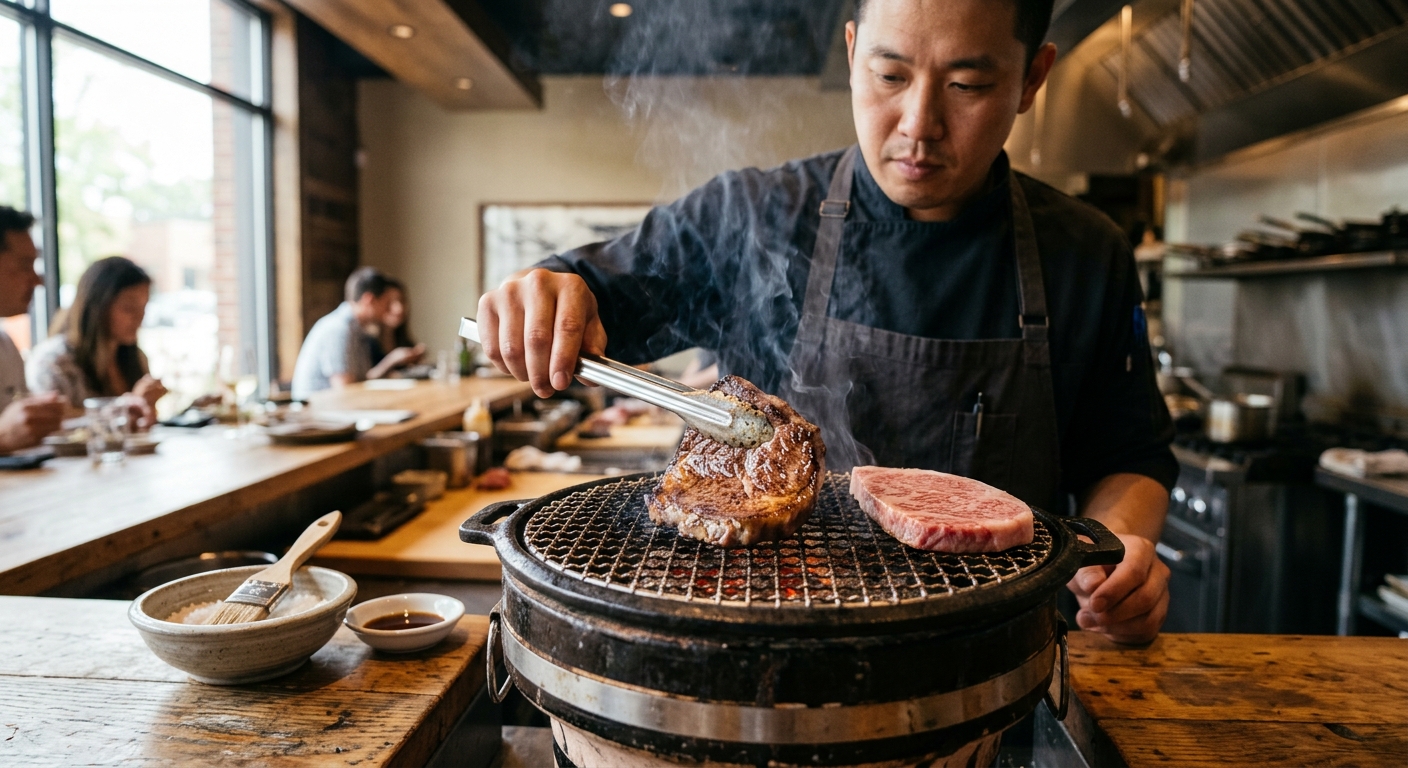
The traditional hibachi grill is a small, portable cooking device that utilizes charcoal as its primary fuel source. To cook Wagyu properly, you must establish a two-zone fire. This setup provides a high-heat zone for searing the exterior of the beef and a slightly cooler zone for gently finishing the cooking process without causing dangerous flare-ups from the rendering fat.
Start by using high-quality lump charcoal rather than briquettes. Binchotan, a traditional Japanese white charcoal, is highly recommended for cooking Wagyu. It burns incredibly hot, emits very little smoke, and imparts a clean flavor that will not overpower the delicate taste of the meat. Light the charcoal using a chimney starter to avoid any chemical flavors from lighter fluid. Once the coals are glowing red and covered with a fine white ash, arrange them predominantly on one side of your hibachi grill.
If you are planning a large event and feel overwhelmed by the precise temperature management required, you might want to look into The Ultimate Guide to Backyard Hibachi Party Catering in Los Angeles for insights on how professionals manage multi-course meals on traditional grills.
Preparing the Wagyu Beef
Preparation is arguably as important as the cooking process itself. Wagyu should be treated with the utmost care. Remove the steak from the refrigerator at least thirty to forty-five minutes before cooking. Allowing the meat to come to room temperature ensures that it will cook evenly; if the center is too cold, the exterior will overcook before the interior reaches the desired temperature.
When it comes to seasoning, less is more. The flavor of Wagyu is complex and luxurious, and heavy marinades or complex rubs will mask its natural beauty. Liberally season the steak with coarse sea salt or kosher salt just moments before placing it on the grill. Avoid using black pepper before cooking, as the intense heat of the hibachi can burn the pepper, resulting in an acrid taste. Instead, save the freshly ground black pepper for finishing the steak after it has cooked.
Step-by-Step: How to Cook Wagyu on a Hibachi Grill
Cooking Wagyu on a hibachi is a fast-paced process. Because of the high fat content, the steak will cook much faster than traditional lean beef. Follow these professional steps to achieve the perfect medium-rare doneness.
- Step 1: The Initial Sear. Place the Wagyu directly over the hottest part of the charcoal. You should immediately hear a rigorous sizzle. Do not walk away; Wagyu requires constant monitoring.
- Step 2: Managing Flare-ups. As the intricate webbing of fat begins to melt, it will drip onto the hot coals, causing flare-ups. While a brief kiss of flame adds flavor, sustained fire will deposit bitter soot onto the meat. If the flames grow too high, use tongs to temporarily move the meat to the cooler side of the grill.
- Step 3: Flipping the Meat. For a standard one-inch thick cut of A5 Wagyu, you will only need about one to two minutes per side. Look for a deeply caramelized, golden-brown crust. Use tongs to flip the steak, taking care not to puncture the surface and lose precious juices.
- Step 4: Checking Internal Temperature. The ideal internal temperature for Wagyu is between 125 and 130 degrees Fahrenheit (medium-rare). At this temperature, the fat has melted completely, integrating into the muscle fibers, while the meat remains incredibly tender.
For those who wish to elevate their entertaining skills to a grand scale, drawing inspiration from Outdoor Teppanyaki Catering in Westlake Village: The Ultimate Event Experience can provide exceptional ideas on presentation and guest engagement while grilling.
Resting, Slicing, and Serving Wagyu
Once the Wagyu has reached the perfect temperature, remove it from the hibachi grill immediately. This next step is non-negotiable: you must let the meat rest. Place the steak on a warm cutting board or plate and tent it loosely with aluminum foil. Resting allows the muscle fibers to relax and the internal juices to redistribute evenly throughout the cut. For a standard Wagyu steak, a resting period of five to ten minutes is optimal.
When slicing Wagyu, always cut against the grain. This shortens the muscle fibers, maximizing tenderness. Because Wagyu is so incredibly rich, it is traditionally served in smaller portions than conventional steaks. Slices of one-quarter to one-half inch are perfect. Serve the Wagyu with simple accompaniments: a dab of fresh freshly grated wasabi, high-quality soy sauce, or a sprinkle of flaky finishing salt. Sometimes, it is best to hire professional teppanyaki chefs for your event to ensure every slice is served with theatrical perfection and culinary precision.
Conclusion
Cooking Wagyu on a hibachi grill is an exercise in culinary restraint and precision. By sourcing high-quality charcoal, managing intense heat zones, and treating the meat with the respect it deserves, you can unlock a flavor profile and texture that is unmatched in the culinary world. Remember to keep the seasoning simple, monitor the high heat constantly, and allow the beef adequate time to rest. With practice, your hibachi-grilled Wagyu will rival the finest steakhouses and provide a memorable dining experience for you and your guests.
Frequently Asked Questions (FAQ)
What is the best cut of Wagyu for a hibachi grill?
The best cuts for a hibachi grill are Ribeye and Striploin. These cuts possess the optimal balance of meat and intense marbling, which renders beautifully over the high heat of the charcoal, creating a delicious crust while remaining incredibly tender inside.
Should I oil the hibachi grill grate before cooking Wagyu?
Generally, it is not necessary to heavily oil the grill grates when cooking A5 or highly marbled Wagyu. The meat contains so much internal fat that it will naturally lubricate the grill as soon as it begins to render. However, ensuring your grates are clean and hot is essential to prevent sticking.
Can I cook Wagyu past medium-rare?
While you technically can, it is highly discouraged by culinary professionals. Cooking Wagyu beyond medium (135 degrees Fahrenheit) causes the delicate fat to render out completely, leaving the meat dry and significantly diminishing the luxurious, buttery texture that you paid a premium to experience.
How do I prevent the charcoal from giving the Wagyu an ashy flavor?
To prevent an ashy flavor, ensure your charcoal is fully lit and covered in white ash before placing the meat on the grill. Additionally, actively manage flare-ups. Continuous direct flames from dripping fat will carry ash and soot upwards onto the meat, resulting in a bitter taste.