
Introduction to Teppanyaki Wagyu Grilling
Grilling Wagyu steak teppanyaki style is a culinary art that combines the unmatched quality of Wagyu beef with the theatrical and precise cooking method of the traditional Japanese iron griddle. Wagyu, known for its intense marbling, rich flavor, and melt-in-your-mouth texture, requires special care when cooking. The high, even heat of a teppanyaki grill (teppan) is perfect for searing the exterior while rendering the delicate intramuscular fat without losing the meat’s tender qualities.
Whether you are trying to replicate the experience of a high-end Japanese steakhouse at home or preparing for an elegant dinner party, mastering the teppanyaki technique will elevate your Wagyu steak to new heights. If you prefer to leave the cooking to professionals for a special occasion, you might consider Licensed Teppanyaki Catering in Los Angeles: Elevating Your Events, but learning the skills yourself is incredibly rewarding.
Understanding Wagyu Beef
Before diving into the cooking process, it is essential to understand what makes Wagyu so special. The term “Wagyu” literally translates to “Japanese cow.” These cattle are genetically predisposed to intense fat marbling (sashi), which consists of unsaturated fats that melt at lower temperatures than typical beef fat. This unique characteristic means that Wagyu cooks faster and richer than standard Angus or Hereford beef.
When selecting your steak for teppanyaki, you will generally encounter two main types: Japanese A5 Wagyu and American or Australian Wagyu crossbreeds. Here is a brief comparison to help you choose the right cut for your teppanyaki experience.
Here is a comparison of common Wagyu types used in teppanyaki:
| Wagyu Type | Marbling Score (BMS) | Fat Melting Point | Flavor Profile |
|---|---|---|---|
| Japanese A5 Wagyu | 8-12 | Low (approx. 77°F) | Intensely rich, buttery, umami |
| American Wagyu | 4-7 | Medium (approx. 95°F) | Beefy, moderately rich, balanced |
| Australian Wagyu | 5-9 | Medium-Low (approx. 85°F) | Rich, tender, consistent |
Essential Equipment for Teppanyaki Grilling
To successfully grill Wagyu steak teppanyaki style, you need the right tools. The teppan itself is the most crucial piece of equipment. A solid, flat cast iron or stainless steel griddle provides the uniform heat distribution necessary for a perfect sear.
- Teppanyaki Grill or Flat Top Griddle: Must be able to maintain high, consistent temperatures.
- Teppanyaki Spatulas: Two stainless steel spatulas for flipping, pressing, and cutting the meat.
- Sharp Chef’s Knife: Essential for trimming and preparing the steak before it hits the grill.
- Infrared Thermometer: Helpful for ensuring the griddle is at the exact right temperature.
- Dome Cover (Cloche): Useful for melting garlic butter or resting the meat slightly.
Preparation: Getting the Wagyu Ready
Proper preparation is key to achieving a flawless result. Wagyu should never go straight from the refrigerator to the hot grill.
Resting at Room Temperature
Remove the Wagyu steak from the refrigerator at least 30 to 45 minutes before cooking. Because the fat melts at such a low temperature, allowing the steak to come to room temperature ensures even cooking throughout. If the center is too cold, the outside will burn before the inside reaches the desired doneness.
Trimming and Slicing
Trim any excess fat from the edges of the steak. In teppanyaki, this fat is often saved and rendered down on the grill to use as the cooking oil, adding an incredible depth of flavor to the meat and any accompanying vegetables. Unlike Western steakhouse cooking where the steak is cooked whole, teppanyaki style often involves cutting the steak into bite-sized cubes right on the grill. However, for a perfect sear, start by cooking it as a whole block or thick strips before the final cube cut.
Seasoning
Keep the seasoning simple. Authentic Wagyu requires nothing more than high-quality sea salt and freshly cracked black pepper. Season the steak generously just moments before placing it on the grill so the salt doesn’t draw out the precious moisture.
The Teppanyaki Grilling Process
Heating the Teppan
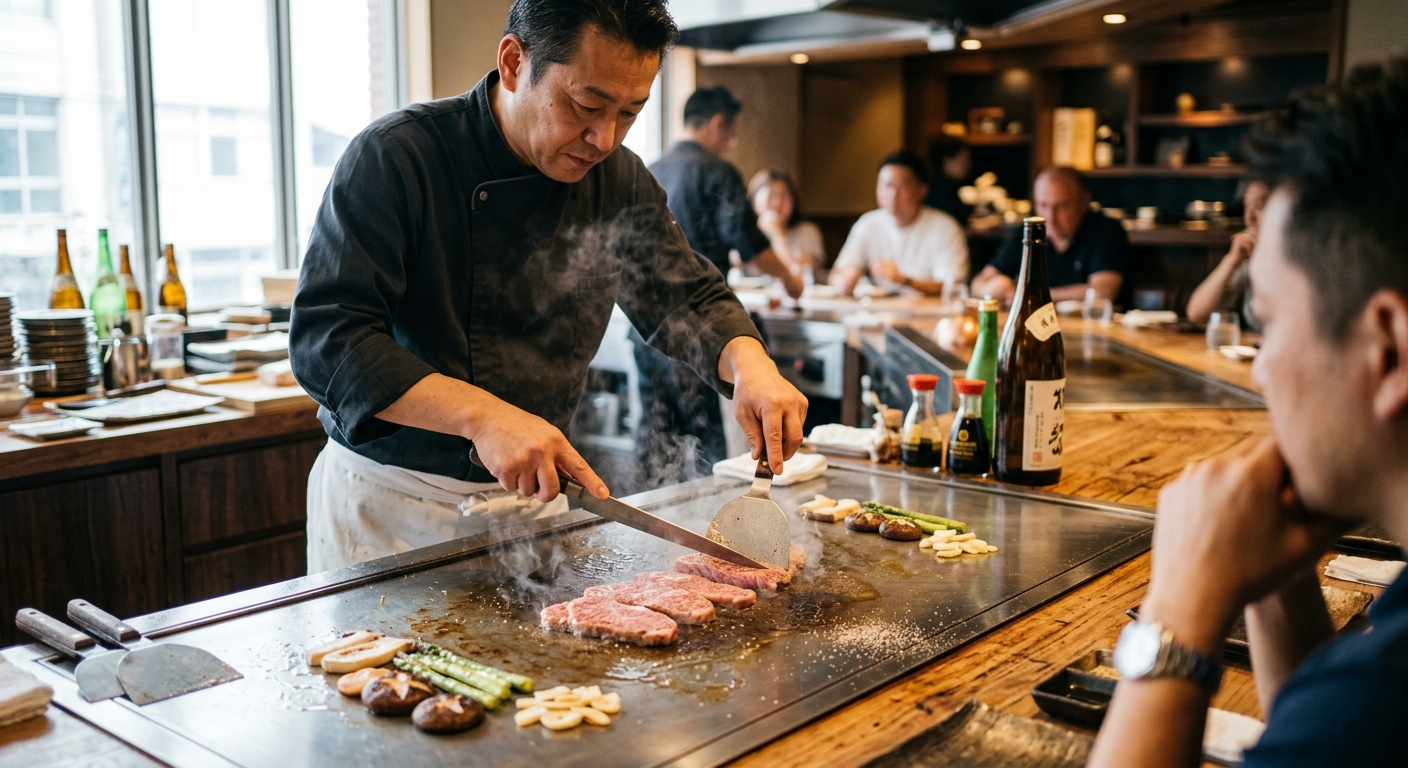
Preheat your teppanyaki grill to a medium-high heat, ideally around 400°F to 450°F. If the grill is too hot, the delicate fat will burn; if it is too cool, you won’t achieve the necessary Maillard reaction for a flavorful crust. If you happen to be dining out and want to see this done perfectly, checking out the Brentwood to Calabasas Restaurant Dining Guide: A Culinary Journey can point you to some fantastic local teppanyaki spots.
Rendering the Fat
Take the trimmings of Wagyu fat you set aside earlier and rub them across the hot griddle. As the fat melts, it creates a natural, flavorful non-stick surface. Discard the solid pieces once enough oil has been rendered.
Searing the Steak
Place the Wagyu steak on the hot, oiled griddle. You should hear an immediate sizzle. Let it sear undisturbed for about 1.5 to 2 minutes to develop a rich, caramelized crust. Using your spatulas, carefully flip the steak and sear the other side for another 1.5 to 2 minutes. The goal is to create a crust quickly without overcooking the interior.
Cutting and Flambé (Optional)
In traditional teppanyaki, the chef will use two sharp spatulas to swiftly slice the steak into bite-sized cubes directly on the grill. Once cubed, you can quickly toss the pieces for another 30 seconds to sear the freshly cut sides. For dramatic effect, some chefs add a splash of brandy or cognac and ignite it (flambé), which burns off the alcohol and leaves a subtle, sweet complexity.
Serving and Accompaniments
Wagyu cooked teppanyaki style is best served immediately, straight from the grill to the plate. It is traditionally accompanied by dipping sauces, such as a savory soy-mustard sauce or a light ponzu sauce, though many purists prefer it with just a touch of freshly grated wasabi or crispy garlic chips.
To complete the meal, consider serving alongside expertly prepared vegetables. If you are unsure how to execute this, read our guide on How to Cook Teppanyaki Style Vegetables Like a Pro. Additionally, if you are hosting a comprehensive Japanese dining experience, combining teppanyaki with sushi is a fantastic idea. You might explore Luxury Sushi Catering with Private Chef LA: Elevating Your Next Event for inspiration.
Conclusion
Grilling Wagyu steak teppanyaki style is a magnificent way to honor one of the world’s finest ingredients. By understanding the unique properties of Wagyu fat, meticulously controlling your grill temperature, and employing precise teppanyaki techniques, you can achieve a spectacular crust and a tender, juicy interior. Whether you are a home chef looking to expand your skills or planning an elegant dinner, this method ensures an unforgettable culinary experience.
Frequently Asked Questions
What is the best doneness for Wagyu steak?
Because of its high fat content, Wagyu is best served medium-rare to medium. Cooking it to medium allows the intramuscular fat to melt properly, resulting in the signature buttery texture. Cooking it rare can leave the fat unrendered and chewy.
Can I use a regular cast iron skillet instead of a teppanyaki grill?
Yes, a heavy cast iron skillet can mimic the heat retention and flat surface of a teppanyaki grill quite well. Ensure the skillet is properly preheated and use the same rendering and searing techniques described for the teppan.
Do I need to marinate Wagyu beef?
No, you should never marinate high-quality Wagyu. The flavor of the beef is so rich and distinct that marinades will only mask its natural profile. Simple seasoning with coarse salt and pepper is all that is required.
Why do teppanyaki chefs cut the steak on the grill?
Cutting the steak on the grill allows for rapid, even cooking of bite-sized pieces and creates more surface area for searing. It is also an integral part of the theatrical presentation that defines the teppanyaki dining experience.
2 responses to “How to Grill Wagyu Steak Teppanyaki Style: The Ultimate Guide”
[…] an interactive element like teppanyaki can be unforgettable. You might even refer to resources like How to Grill Wagyu Steak Teppanyaki Style: The Ultimate Guide to understand the intricacies of preparing such high-end […]
[…] sliced ribeye, is a teppanyaki staple. If you are interested in working with premium cuts, reading How to Grill Wagyu Steak Teppanyaki Style: The Ultimate Guide can provide valuable insights. Chicken, shrimp, and scallops are also popular choices. Ensure that […]