Introduction to Grilling A5 Wagyu Steak
Grilling an A5 Wagyu steak is an extraordinary culinary endeavor that requires precision, respect for the ingredient, and a thorough understanding of heat management. Recognized globally as the pinnacle of beef quality, A5 Wagyu is celebrated for its intricate web of intramuscular fat, known as marbling, which yields a buttery texture and an unparalleled umami flavor profile. Unlike traditional Western steaks, such as a USDA Prime ribeye or filet mignon, A5 Wagyu demands a distinctly different approach to cooking. The exceptional fat content melts at a much lower temperature, meaning that standard grilling techniques can easily result in a disastrously overcooked piece of meat and uncontrollable grill flare-ups.
In this comprehensive guide, we will explore the meticulous steps required to perfectly grill an A5 Wagyu steak. From sourcing and preparation to mastering the grill’s intense heat, every phase is critical. Whether you are hosting an elite dinner party or simply looking to treat yourself to a luxurious meal, mastering this technique will elevate your culinary repertoire to a professional level.
Understanding the A5 Wagyu Designation
Before placing a steak on the grill, it is vital to understand what the ‘A5’ designation actually signifies. The Japanese meat grading system is highly rigorous. The letter ‘A’ refers to the yield grade, meaning the animal produced a high yield of usable meat. The number ‘5’ represents the highest possible quality grade, assessed across four criteria: marbling, meat color and brightness, firmness and texture, and the quality of the fat. To achieve an A5 rating, the beef must score exceptionally high in the Beef Marbling Standard (BMS), typically landing between an 8 and a 12 on a 12-point scale.
Because of this high fat content, the steak is incredibly rich. A standard 16-ounce portion is generally far too heavy for one individual; instead, A5 Wagyu is meant to be savored in small, deliberate bites. When you cook this caliber of beef, you are not just preparing dinner; you are engaging in a sophisticated culinary tradition. For those seeking to elevate their luxury events even further, exploring options like A5 Wagyu Teppanyaki Catering in Los Angeles: The Ultimate Culinary Experience provides an incredible opportunity to see professional chefs handle these pristine cuts with masterful precision.
Preparation: The Crucial First Steps
The journey to a perfectly grilled A5 Wagyu steak begins long before the grill is fired up. Proper preparation is non-negotiable if you want to preserve the integrity of the meat.
Thawing the Steak
Most authentic Japanese Wagyu is shipped and sold frozen to preserve its delicate structure and flavor. Never thaw your Wagyu at room temperature or in the microwave. Instead, place the vacuum-sealed steak in the refrigerator for 24 to 48 hours. This slow thawing process ensures that the cellular structure of the meat remains intact, preventing the loss of vital juices.
Resting at Room Temperature
Once fully thawed, remove the steak from the refrigerator approximately 30 to 45 minutes before grilling. Allowing the meat to reach room temperature ensures that it will cook evenly. If the center of the steak is cold when it hits the grill, the exterior will overcook before the interior reaches the desired temperature.
Slicing and Seasoning
While traditional Western steaks are often cooked whole and sliced afterward, A5 Wagyu is frequently sliced into smaller strips or cubes before grilling, especially if you are cooking it on a flat-top grill or a fine mesh grate. If you are using a standard charcoal or gas grill, leave the steak whole but ensure it is cut at least 3/4 inch to 1 inch thick. When it comes to seasoning, less is unequivocally more. Do not use complex marinades or heavy rubs. A generous sprinkle of fine sea salt just moments before grilling is all that is required. The salt enhances the natural umami flavors without masking the delicate, buttery taste of the beef. Black pepper can be added after cooking, as it tends to burn and turn bitter under the extreme heat required for searing Wagyu.
Comparing Cooking Methods for Wagyu
While grilling provides a fantastic smoky flavor, it is not the only way to prepare Wagyu. Understanding how traditional grilling compares to other popular professional cooking methods can help you determine the best approach for your specific equipment and flavor preferences.
| Cooking Method | Heat Source | Crust Formation | Ideal Cut Thickness |
|---|---|---|---|
| Charcoal Grill | Direct Open Flame | High Char and Smoky Flavor | 1.0 to 1.5 inches |
| Cast Iron Skillet | Conductive Metal | Even, Edge-to-Edge Sear | 0.5 to 1.0 inches |
| Teppanyaki Flat Top | Conductive Steel | Moderate Sear with Rapid Heat Transfer | 0.5 to 0.75 inches |
The Grilling Process: Step-by-Step
Grilling A5 Wagyu requires high heat and an incredibly short cooking time. The goal is to achieve a deep, caramelized crust on the outside while leaving the interior rare to medium-rare. Any temperature beyond medium-rare will melt away the intramuscular fat, resulting in a loss of the steak’s signature texture and flavor.
1. Preheat the Grill
Whether you are using a charcoal grill (such as a Japanese Konkon or binchotan grill) or a high-end gas grill, the heat must be intense. Aim for a surface temperature of at least 500 degrees Fahrenheit. If using charcoal, wait until the coals are glowing red and covered in a fine layer of gray ash.
2. Oil the Grates
Because Wagyu is so rich in fat, you do not need to add oil to the meat itself. However, to prevent sticking, you can lightly oil the grill grates. Alternatively, you can trim a small piece of fat from the edge of your Wagyu steak and rub it across the hot grates. This coats the metal in rendered beef tallow, providing a naturally non-stick surface that enhances the flavor.
3. The Sear
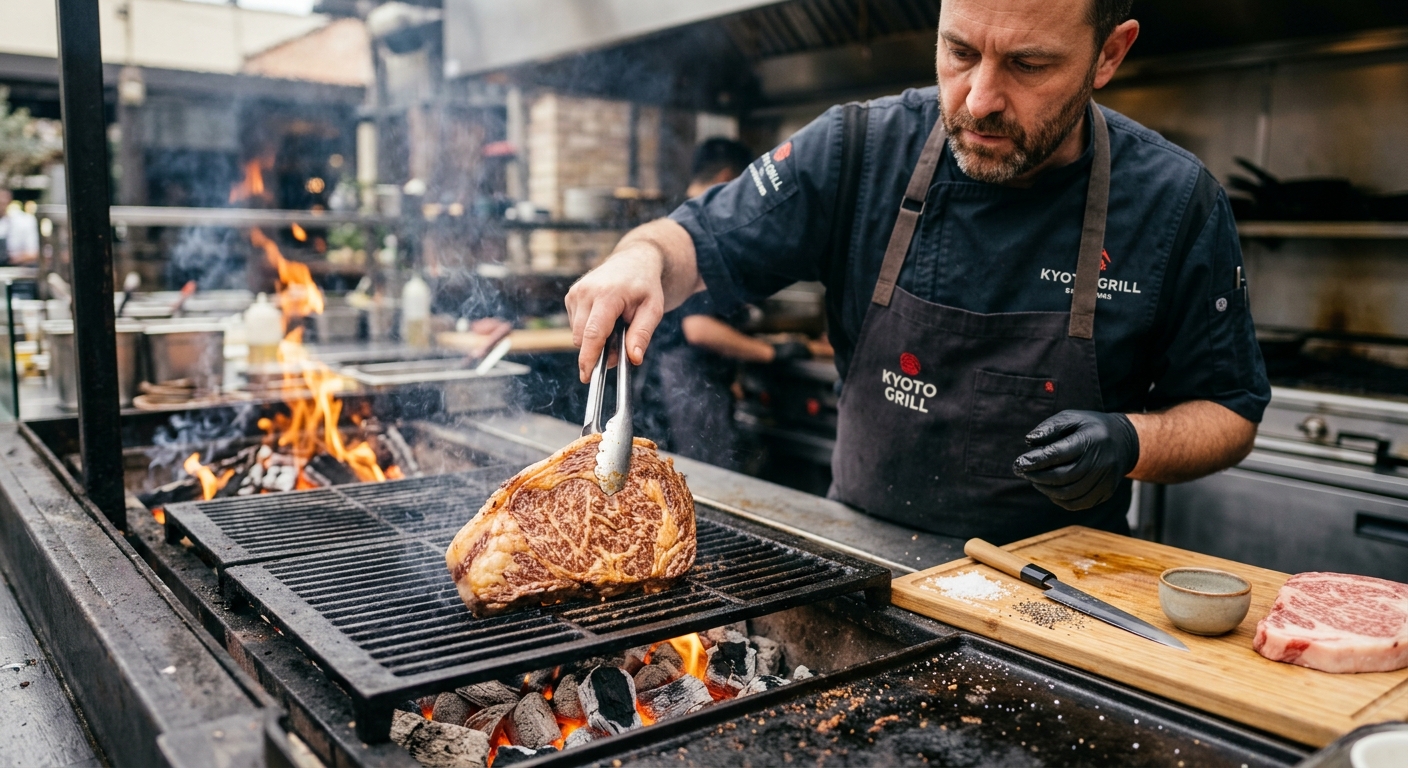
Place the seasoned steak onto the hottest part of the grill. You will hear an immediate, aggressive sizzle. Keep a close eye on the grill. The rendered fat dripping down onto the heat source will cause flare-ups. A little flame kissing the meat adds excellent flavor, but sustained flames will leave an acrid, soot-like taste on the beef. If a flare-up becomes uncontrollable, use tongs to temporarily move the steak to a cooler zone on the grill.
4. Timing is Everything
For a standard 1-inch thick A5 Wagyu steak, you will only need to cook it for about 60 to 90 seconds per side. Do not walk away from the grill. Watch the edges of the meat to gauge the cook. Once a dark, golden-brown crust has formed, flip the steak precisely once. The interior should remain a warm, ruby red.
5. The Resting Period
Once removed from the heat, the steak must rest. Place it on a warm plate or cutting board for 3 to 5 minutes. This resting phase allows the intensely heated fat to settle and the muscle fibers to relax, redistributing the juices throughout the meat. Cutting into the steak immediately upon removing it from the grill will result in a tragic loss of its savory juices.
Serving and Pairing A5 Wagyu
Serving A5 Wagyu is an art form in itself. Because of its intense richness, it is best served in small, one-ounce portions. Slice the rested steak against the grain into thin strips. Serve it immediately while the fat is still warm and luxurious on the palate.
When it comes to pairings, traditional accompaniments often include freshly grated wasabi, flaky finishing salt, or a light soy sauce and daikon radish dip. Avoid heavy side dishes like mashed potatoes or rich cream sauces. Instead, opt for lightly grilled asparagus, a crisp cucumber salad, or steamed short-grain rice to cleanse the palate between bites. If you are serving this at a larger business function, complementing the rich beef with a delicate seafood option is a spectacular choice. Consider reading The Ultimate Guide to the Best Sushi Catering for Los Angeles Corporate Events to understand how high-end sushi can provide a refreshing contrast to the heavy umami of Wagyu beef.
Exploring Professional Catering Options
While mastering the grill at home is a rewarding experience, cooking highly expensive cuts of beef can be intimidating. If you are hosting a significant gathering and want to ensure a flawless execution without the stress of managing the grill yourself, hiring a professional chef is an excellent alternative.
Having a skilled chef manage the grill allows you to focus on your guests while guaranteeing that the expensive meat is cooked to absolute perfection. For instance, incorporating teppanyaki-style preparation adds a layer of entertainment and sophistication to any event. You can learn more about finding the right professionals by checking out this resource on an Affordable Hibachi Chef for Hire in California: Your Guide to Backyard Teppanyaki. Additionally, if you are looking to provide an ultra-premium experience featuring world-renowned cuts, you should definitely review The Ultimate Guide to Luxury Catering with Kobe Beef Teppanyaki to understand the nuances of hiring high-end culinary artists.
Conclusion
Grilling A5 Wagyu steak is a meticulous process that rewards patience, attention to detail, and proper technique. By ensuring the meat is correctly thawed, brought to room temperature, and seasoned simply, you set the stage for success. Utilizing high heat for a brief duration guarantees a delectable crust while preserving the luxurious, melt-in-your-mouth interior that makes A5 Wagyu so famous. Whether you take on the challenge yourself or enlist the help of professional teppanyaki caterers, the result is bound to be an unforgettable dining experience that celebrates the pinnacle of the culinary arts.
Frequently Asked Questions (FAQ)
What is the difference between A5 Wagyu and Kobe beef?
Wagyu simply translates to ‘Japanese cow’ and refers to all Japanese beef cattle. Kobe beef is a highly specific, geographically protected brand of Wagyu that comes exclusively from the Tajima strain of Japanese Black cattle raised in Japan’s Hyogo Prefecture. All Kobe beef is Wagyu, but not all Wagyu is Kobe beef.
Should I marinate my A5 Wagyu steak?
Absolutely not. The primary appeal of A5 Wagyu is its rich, buttery, natural beef flavor and delicate fat profile. Using complex marinades will overpower the meat. A generous application of high-quality sea salt right before grilling is all that is recommended.
What is the best temperature to serve A5 Wagyu?
A5 Wagyu is best served medium-rare. At this temperature, the extensive intramuscular fat is perfectly melted, creating the signature melt-in-your-mouth texture. Cooking it beyond medium-rare will cause all the fat to render out, leaving the steak dry and tough.
How do I prevent flare-ups when grilling Wagyu?
Flare-ups are inevitable due to the high fat content melting onto the heat source. To manage them, ensure your grill has distinct heat zones. Keep a cooler zone available so you can quickly move the steak away from the direct flames if they become too aggressive, preventing the meat from tasting like soot.